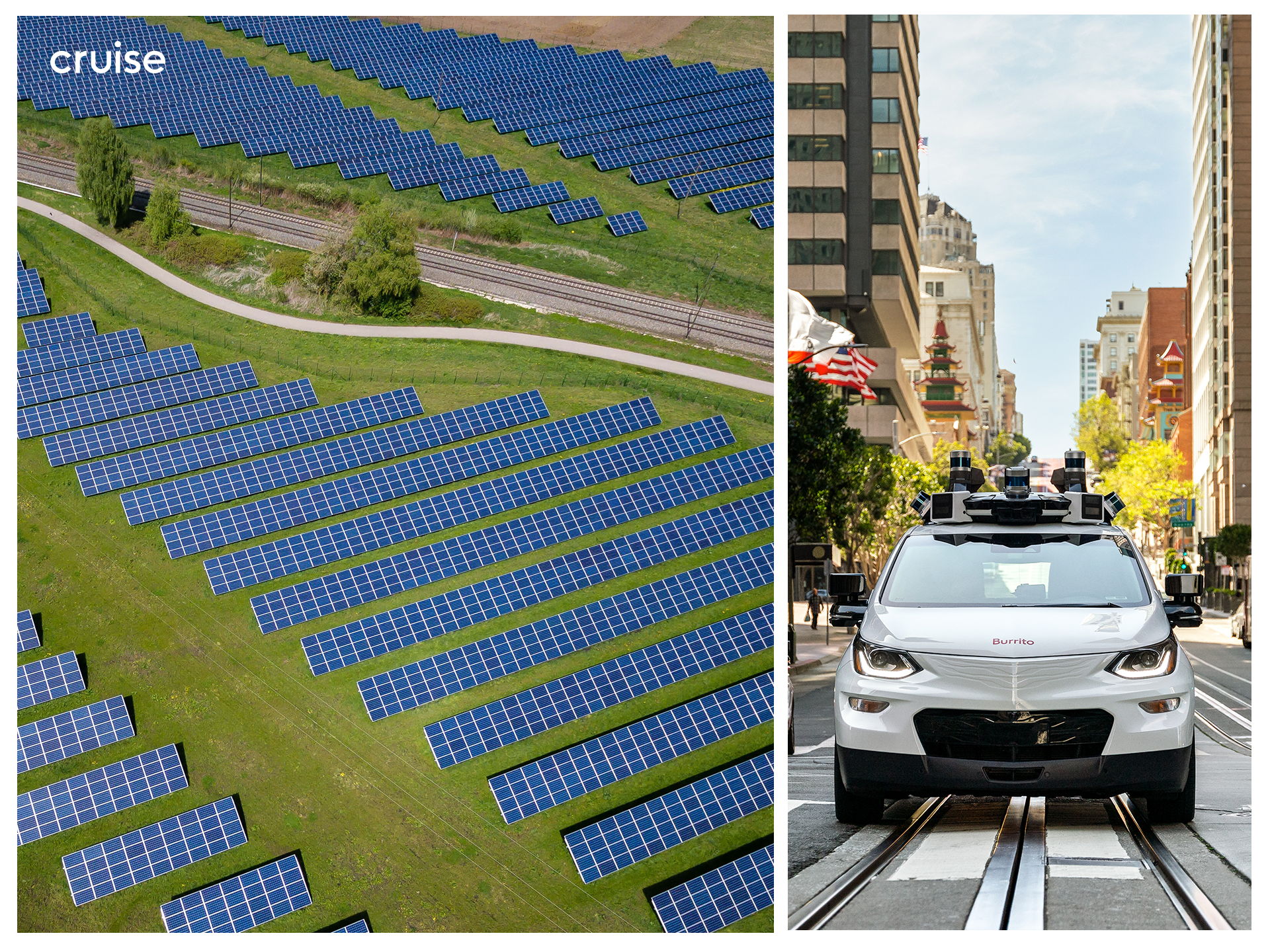
This week, Cruise announced a Farm To Fleet initiative to power our all-electric self-driving vehicle fleet with renewable energy from California’s Central Valley.
“Cruise began sourcing our solar renewable energy credits (RECs) from farms in California’s Central Valley that generate their own solar power on-site earlier this spring… Through this initiative, every mile that Cruise drives in California helps to directly generate economic opportunity for farmers.”
I learned about this initiative right after reading Scott Alexander’s blog post about carbon credits.
“I think the most important thing it could convince you of is that if you were previously planning on letting yourself be miserable to save carbon, you should buy carbon offsets instead.”
Renewable energy credits come with some real monitoring and enforcement challenges, as Alexander explains in his blog post.
But monitoring and enforcement can make renewable energy credits, like those that Cruise is sourcing from the Central Valley, an important part of fighting climate change.
Straight from Elon Musk: “FSD Beta 9.2 is actually not great imo, but Autopilot/AI team is rallying to improve as fast as possible. We’re trying to have a single stack for both highway & city streets, but it requires massive NN retraining.”
Transfer learning (e.g. from Phoenix and from trucking)
Focus
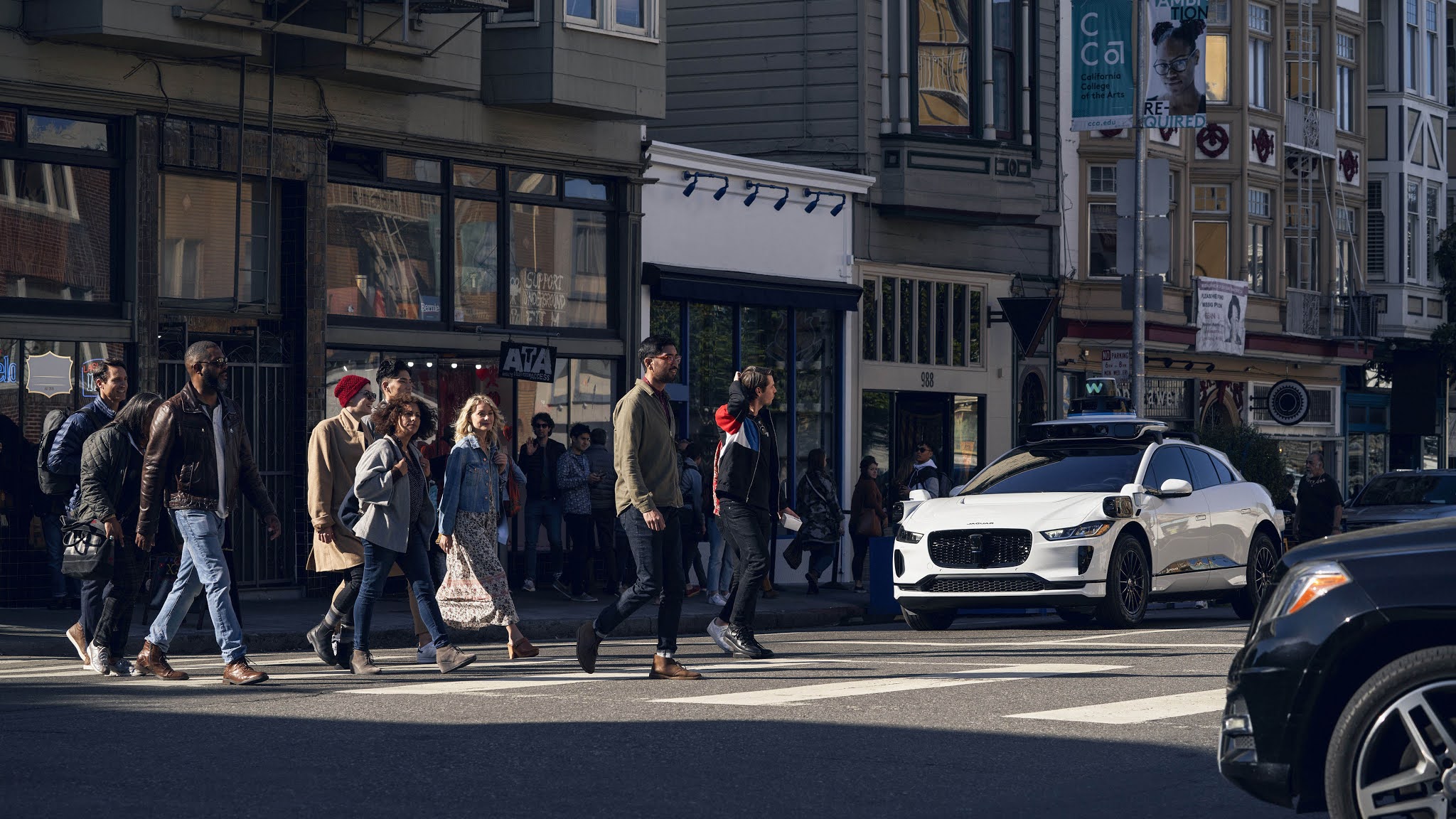
“Our machine learning models have observed and learned countless other small nuances that help us drive like locals. Through our experience of driving in San Francisco, for example, the Waymo Driver has learned that residents often drive slightly slower while traveling up steep slopes. Therefore, based on its experience and depending on the speed and flow of traffic, the Waymo Driver does, too, to provide San Franciscans with a familiar and comfortable experience navigating the city’s many hills.”
Tesla AI Day 2021 featured executives presenting the full range of the company’s artificial intelligence efforts, from computer vision to planning and controls to simulation to data infrastructure to automotive super computers to data center supercomputers. Elon Musk capped the event by announcing a humanoid robot that Tesla TSLA+0.9% is developing.
For example:
Tesla optimized the training nodes for neural network computation, with a focus on parallel matrix multiplication. And the team custom designed the D1 chip with 7 nanometer silicon etching technology.
Tens of thousands of D1 chips come together on a pizza box-sized “training tile”, which has 9 petaflops of computational power.
One million training tiles will make up the ExaPOD, Tesla’s data center supercomputer.
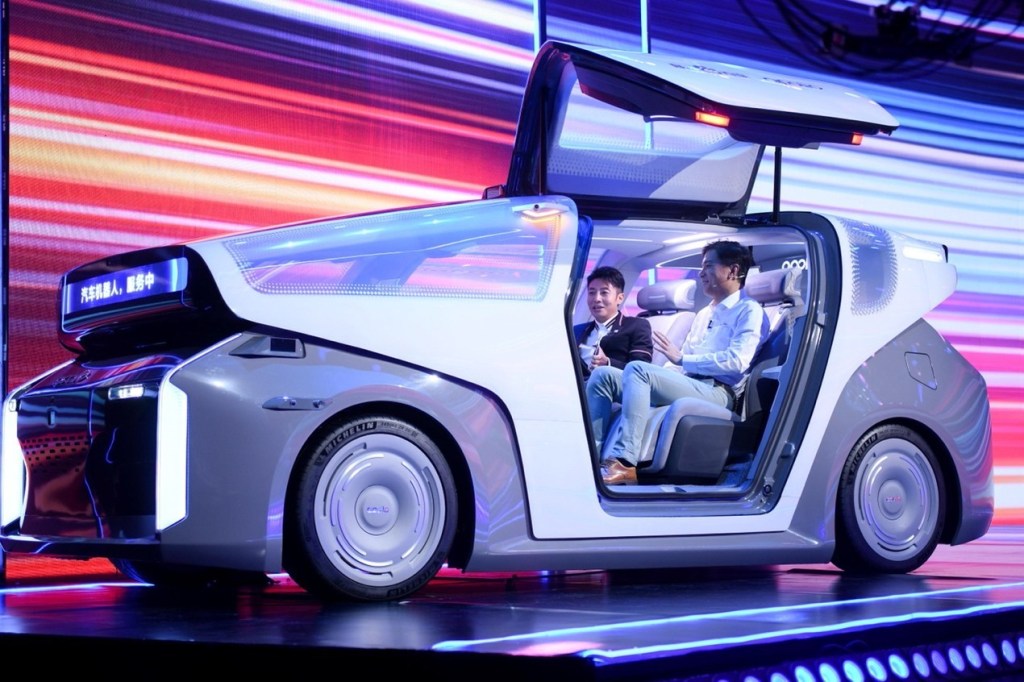
Baidu Co-founder and CEO Robin Li and CCTV host Beining Sa sit in Baidu’s newly launched robocar
Baidu World 2021 showed how central autonomous mobility is to the Chinese Internet giant. The company, which operates the most popular search engine in China, has dedicated immense resources toward next-generation transportation, first and foremost through its Apollo self-driving car program.
The three hour Baidu World presentation kicked off with CEO Robin Li unveiling the company’s new Robocar. The vehicle has two seats, no steering wheel, gull wing doors, and windshields that double as computer displays.
The vehicle has the feel of a concept car, rather than something that might ever hit real live streets. But the presentation quickly cut to a live demonstration of the car transporting Baidu employees in a suburban-style environment. The number of Robocars in existence, and their true capabilities, are unclear, but they are real enough to at least handle a demonstration route.
QCraft is building and operating autonomous shuttles in Suzhou, Shenzhen, and Wuhan. The company hinted at expansion into point-to-point or even robotaxis models.
Meituan, the lead investor in this round, is China’s largest food delivery company. Presumably they are interested in the application of this technology for that purpose.
I was just talking yesterday with a Cruiser who is currently located in Pittsburgh, because his girlfriend is in grad school there. I mentioned that Pittsburgh might have the best combination of amenities compared to cost of living in the United States.
PNC Park rivals Chicago’s Wrigley Field and San Francisco’s Oracle Park as the best stadium in baseball. Carnegie Mellon has ridden the strength of its computer science department to become of the country’s premier research institutions. The topographic location of the city, at the confluence where the Allegheny and Monongahela Rivers merge to form the Ohio, is spectacular. Plus there’s a funicular.
All of that makes Pittsburgh a first-class city, but what really sets it apart is the cost of living, which is half that of San Francisco. Cost of living in Pittsburgh is actually comparable to cost of living in Roanoke, Virginia.
And what is really striking are the employment opportunities. In addition to the old industrial behemoths like US Steel and Heinz, and alongside UPMC, Pittsburgh has built a robust technology ecosystem. The Post-Gazette just highlighted all the Pittsburgh technology companies going public: Duolingo, Aurora, Argo, Cognition Therapeutics, Stronghold Digital Mining.
Google has long had an office in Pittsburgh, along with many other companies seeking to hire Carnegie Mellon students. Waymo just opened an office, and Motional has a big presence.
I wrote last week that “driverless shuttles seem to be having a moment.” Today, I wrote about an announcement from May Mobility that seems to cut against that trend.
I confess, the economics of autonomous shuttles have never been obvious to me. On one hand, public transit generally amortizes its cost over many passengers. On the other hand, the benefit of autonomy is usually seen as the cost of removing the driver from the vehicle.
But if the cost of the driver is borne by many passengers, then per-passenger economic benefit to removing the driver would be small.
MLive actually provides some interesting data to crunch. First a disclaimer: with the exception of the MLive data I cite, I am making up all the other numbers here. I could be way off. Just a thought exercise.
Pre-COVID, ridership of the May Mobility autonomous shuttles in Grand Rapids, Michigan, was 7,000-11,000 per month. Let’s average that to 9,000 riders per month, 108,000 per year. The total cost of running the service for the year was about $900,000, paid by a combination of the city, private donors, and May Mobility itself. That’s about $8 per ride.
The new on-demand, point-to-point ridehailing program in Grand Rapids will have five May Mobility vehicles running at a time. I don’t see how many shuttles the old program had running at a time, but let’s say two. Let’s also imagine the program ran for 12 hours per day, 365 days per year, which is 4,380 total hours.
At a fully-loaded cost of $40 per hour (total guess, municipal wages tend to be low but benefits tend to be generous), that’s $175,000 to cover the cost of the drivers for the year. That’s about $2 per rider.
$2 per rider is something – in fact, it’s probably about the cost of a bus ride in many US cities. But it’s also a pretty small share of the $8 per rider cost of the autonomous shuttle program.
Probably the $8 per rider cost includes expenses for a vehicle safety operator, who presumably costs much more than $2 per passenger but also hopefully will eventually become unnecessary.
Still, even without the safety operator, the pilot program probably costs $4-$5 per ride.
But I suppose the end game is that over time the rests of the costs will tend toward zero, and you can only move the driver cost toward zero with autonomy.
May Mobility announced that it is advancing its transit program in Grand Rapids, Michigan, to an on-demand phase. Customers will be able to hail May Mobility SUVs at “more than 20” pick-up points in a 1.36 square mile area of downtown.
I have mostly associated May with low-speed shuttles services for public transit. Covid-19 has heavily reduced the demand for public transit. May initially did roll out a low-speed, shared shuttle in Grand Rapids, pre-COVID. MLivereports that ridership dropped over 70% after COVID hit.
The transition to on-demand SUVs adds convenience to riders, at the cost of complexity for May. A low-speed shuttle traversing a fixed route isn’t especially convenient, but it’s much easier to implement than an on-demand ridehailing system.
May’s move to ridehailing represents a kind of intermediate step between shuttles and robotaxis. Riders can’t hail an SUV just anywhere, they have to go to a pickup point. That also greatly simplifies the implementation of the system.