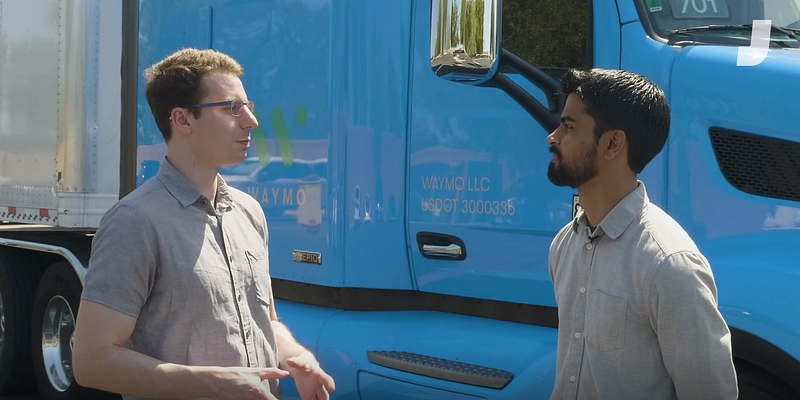
Jalopnik has a fun video interview with Vijay Patnaik, a product lead at Waymo, working on their trucks. I had the opportunity to meet Vijay at SXSW this year and listen to a couple of his talks on Waymo’s trucking operation. Waymo is doing great work in that area.
There’s nothing earth-shattering in the 5 minute Jalopnik video that you wouldn’t have heard from Waymo before, but Vijay does a nice job describing all of the sensors on the vehicle, and how they work together.
The Society of Automotive Engineers just updated their guidance for testing automated driving systems. The report, J3018, costs $81 to view and summary seems more concerned with what the report does not cover as what it does.
“This document provides safety-relevant guidance for on-road testing of vehicles being operated by prototype conditional, high, and full (Levels 3 to 5) ADS, as defined by SAE J3016. It does not include guidance for evaluating the performance of post-production ADS-equipped vehicles. Moreover, this guidance only addresses testing of ADS-operated vehicles as overseen by in-vehicle fallback test drivers (IFTD).
These guidelines do not address:
– Remote driving, including remote fallback test driving of prototype ADS-operated test vehicles in driverless operation. (Note: The term “remote fallback test driver” is included as a defined term herein and is intended to be addressed in a future iteration of this document. However, at this time, too little is published or known about this type of testing to provide even preliminary guidance.)
– Testing of driver support features (i.e., Levels 1 and 2), which rely on a human driver to perform part of the dynamic driving task (DDT) and to supervise the driving automation feature’s performance in real time. (Refer to SAE J3016.)
– Closed-course testing.
– Simulation testing (except for training purposes).
– Component-level testing.”
I have not purchased the report, so I can’t speak toward its contents. I can say that the SAE Autonomy Levels, although controversial, have been tremendously helpful in establishing a vocabulary for the industry.
Lots of automotive groups are grasping toward any sort of guidance around testing and certification. Getting the industry to converge seems like a key milestone in deploying production-level self-driving cars to the public.
The SAE might gain more by suggesting testing guidelines in the public domain, rather than behind a paywall.
For all of the talk of regulatory hurdles decelerating autonomous vehicle development, there are important swaths of society that are highly motivated to accelerate adoption.
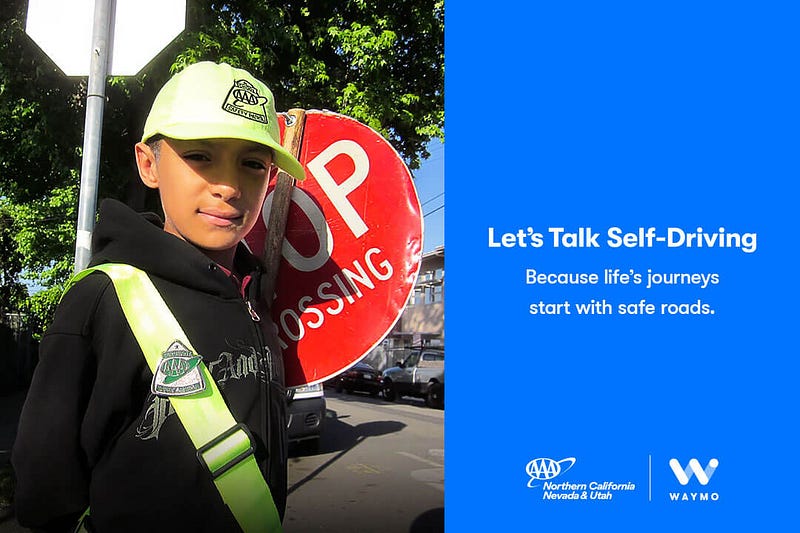
“Let’s Talk Self-Driving represents a diverse set of communities coming together with the shared belief that self-driving vehicles can save lives, improve independence, and create new mobility options for all.”
The website amalgamates lots of information that Waymo has previously shared in other formats, targeted toward reassuring communities that autonomous vehicles are safe.
Educating community groups seems like a smart regulatory strategy. Autonomous vehicles are going to improve the lives of lots of people. That will be especially true for groups that face challenges with current transportation options.
Mobilizing those groups to advocate for change is likely to be more effective than putting engineers front and center in the regulatory spotlight.
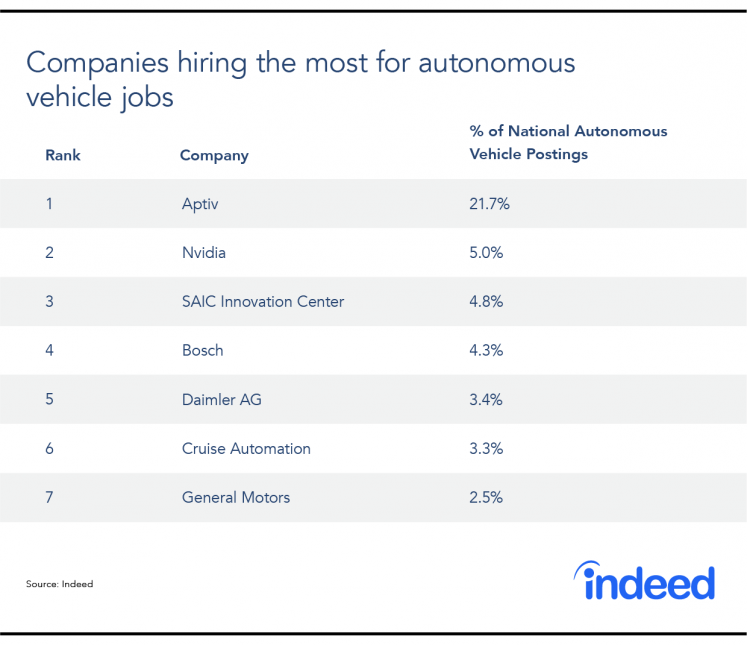
Indeed, the world’s largest job search engine, reports that Aptiv is posting far and away the most self-driving car job openings. Aptiv spun out from Delphi, a Tier 1 auto supplier, a few years ago. They also acquired nuTonomy, which at the time of acquisition had logged more self-driving car miles than all but a handful of competitors.
Following Aptiv on the list is NVIDIA, and then SAIC Innovation Center (the Chinese auto supplier, not the US government contractor of the same acronym).
It would be interesting to get an absolute number of jobs from this report, rather than a percentage. When I search Indeed for jobs at SAIC Innovation Center, I only see a handful of listings. But maybe the number has waxed and waned over time.
Bosch and Daimler, which are partnering hand and glove on autonomous technology, come in at 4 and 5.
Meanwhile, Cruise Automation, which is has plastered hiring billboards up and down highway 101 in Silicon Valley, only rings at number 6, followed by GM.
The rankings don’t really match my intuition of who is hiring and how much, but presumably Indeed has data that I don’t.
The report also lists the top geographies for these jobs.
Silicon Valley — Technically this covers two places on the list: #1 San Jose and #4 San Francisco. A combination of Stanford, UC-Berkeley, Google, and a lot of venture capital and software engineers has made this the new center of robotics.
Pittsburgh — Carnegie Mellon University has spawned a bunch of corporate robotics teams, notably Uber ATG, Argo AI and Aurora.
Detroit — The center of the automotive industry, dating back to Henry Ford.
Portland — I assume this is mainly on the list due to Daimler Trucks?
Boston — MIT has not spun out quite as many robotics efforts as CMU, but nuTonomy counts for a lot, and there are other groups, too.
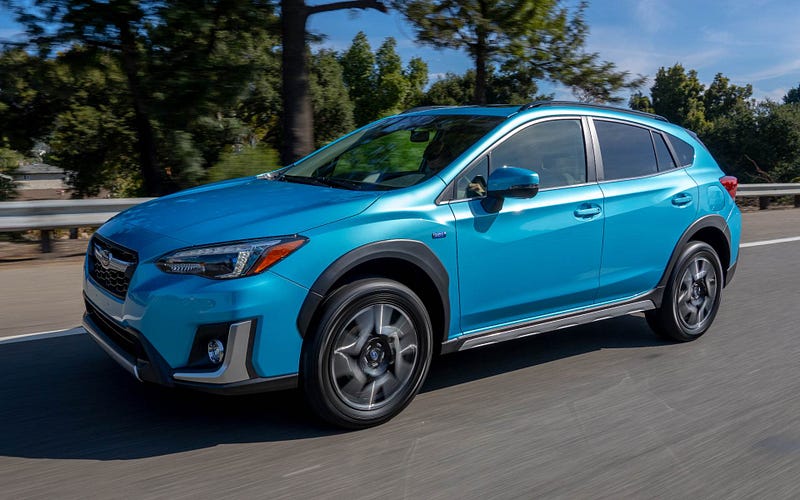
My wife drives a Subaru Crosstrek, which she loves. I too, appreciate Subaru’s dependability, particularly in snow. All Subarus are all-wheel drive, so the brand is a go-to choice for people who like to head to the mountains, as I do.
I also admire Subaru’s Eyesight driver assistance system. The stock adaptive cruise control works perfectly. The lane departure warning system works fine for what it does, although I wish it had improved more over the last few years. And it would be great if Subaru supported over-the-air updates to improve the system over time.
The logic is apparently to provide Subaru access to Toyota’s hybrid technology. In fact, Subaru already uses this technology for its new plug-in hybrid Crosstrek. Supposedly there is a parallel plug-in hybrid Impreza that is available only in Japan.
Meanwhile, Subaru will provide Toyota with insight into both all-wheel drive and driver assistance systems.
In more personal news, on Monday I’m supposed to receive the Subaru giraffe for use with the Comma EON. If OpenPilot works on the Crosstrek as well as it has on the Toyota’s I’ve tested, I’ll be tempted to buy my own Crosstrek plug-in hybrid 🙂
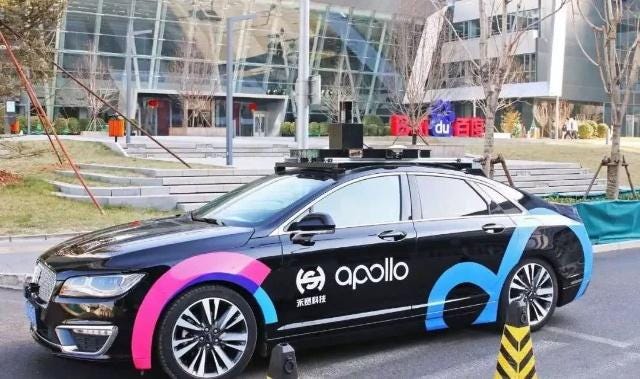
Baidu’s Apollo program has announced a self-driving car test in Changsha, Hunan, China, that is open to the general public. The program features 45 self-driving L4 Hongqi EV vehicles, the result of a joint partnership with FAW Group.
It’s always a little hard to know exactly what’s happening in China, because the non-Chinese press struggles with both access and language. The articles I’ve read use phrases like, “debuted”, “are being released”, and “kicked off”. Sounds like the program is already underway?
There is a human safety driver onboard, of course, and the geofence is limited to about 30 miles, although Baidu intends to expand.
Self-driving car deployments are trickling out, albeit not quite as fast as many of us had hoped. Opening up programs to the general public, as opposed to a limited and pre-screened group, is a big step forward.
I’m excited that Baidu is doing this. And I would love to see a video or writeup of what it’s like.
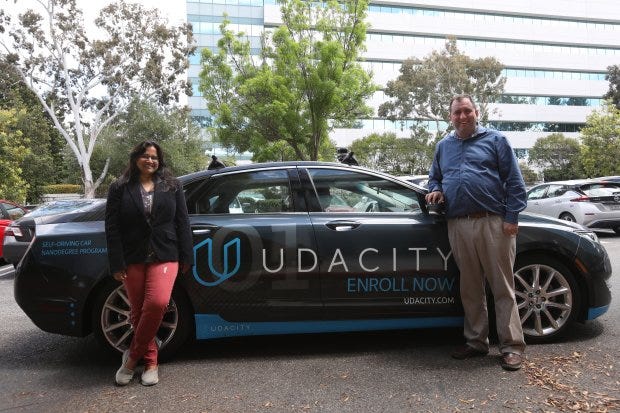
I came to Udacity three years ago to build the Self-Driving Car Engineer Nanodegree Program. Since then, we’ve had thousands of students enroll in and graduate the program, and we’ve built other Nanodegree programs:
My Udacity colleagues Leah Wiedenmann and Vienna Harvey compiled a list of female leaders in the automotive industry. Their goal is to help more conferences invite female speakers.
I imagine this list will be helpful to journalists and researchers, as well.
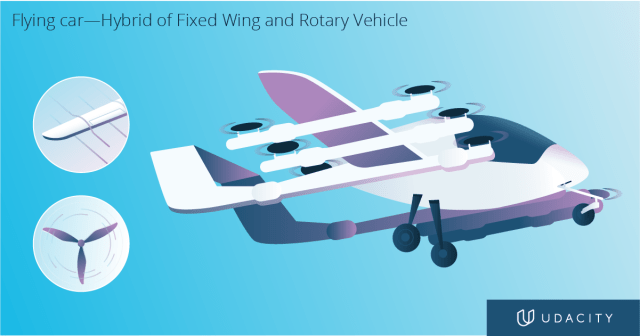
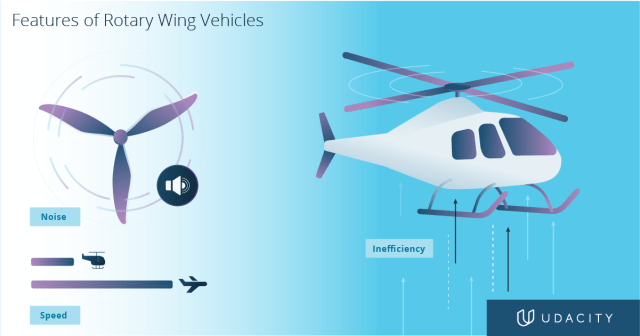
You might be able to deduce the strengths and weaknesses of each modality from these nifty graphics, but you should read the whole post for more 😊 🚁 ✈️
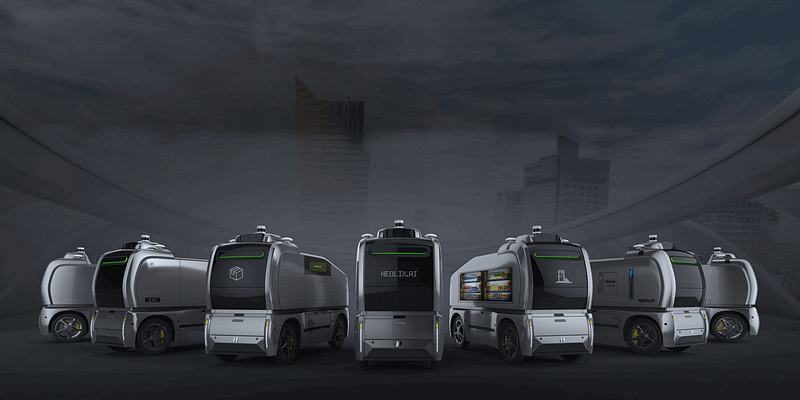
“Neolix, a start-up so Chinese that it has only barely has an English-language website, has announced mass-production of its autonomous delivery vehicles and declared itself the first company in the world to do this, according to Bloomberg.”


 David Silver