Happy Thanksgiving! At least for those of us living in the United States.
I have a lot to be thankful for this year. A new son, a wonderful family, friends, a great job working in a field that I love with a terrific team.
Nothing’s ever perfect (which, for example, is why my wife is giving me dirty looks while I edit Udacity lessons after Thanksgiving dinner), but it’s been a great year for me.
It’s been a pretty good year for the autonomous vehicle industry, too.
Production trials with real customers in Pittsburgh and Singapore
Tesla Autopilot is only a year old (!)
Ford is growing its autonomous vehicle team by multiples
Huge acquisitions of Cruise and Otto
Maybe at this time next year I’ll be thankful for my very own self-driving car 🙂
A couple of people wrote me today to ask for career advice. In both cases, they were really excited about working on self-driving cars and they had been offered jobs in the automotive industry. The jobs involved big pay cuts and were imperfect in other ways.
I tried to offer specific advice to each person, but after I fired off my two cents, I reflected back on some advice I received myself, several years ago.
I went to a talk with Marketplace radio host Kai Ryssdal, only because my wife has a crush on him.
But Kai turns out to have a pretty interesting life story. He flew planes for the US Navy, then worked in China with the US Foreign Service, and then wound up as an unhappy 34 year-old civilian shelving books at Borders while his wife was in grad school.
He had an interest in journalism, but no experience, so he applied for an unpaid internship with a San Francisco radio station.
One thing led to another, and eventually he became a (minor) national radio celebrity.
Never say no. If someone says, “Can you come in on Sunday and go to Chinatown to get us some tape for the Monday broadcast,” you have to say yes. And that goes now more than ever in journalism, when it’s so hard to find really good work. If you have an opportunity, you absolutely have to grab it.
This was pretty important career advice for me personally, as it really helped push me into the opportunity I was offered at Ford. And my wife was supportive because, after all, Kai Ryssdal basically told me to take the job.
Another version of Kai’s fascinating life story is here, although he doesn’t drop the “you have to say yes” line:
Chris Anderson has a great collection of links to articles, and classes, and communities related too autonomous car racing. But really, this would useful to anybody thinking about autonomous vehicles in any context.
I participated in an interview last week in which Alexy Khrabrov asked me about my vision for the next year in self-driving cars.
My guess is that over the next year we will start to see lots of cities crop up in which it is possible for a normal person to catch a ride in a self-driving car.
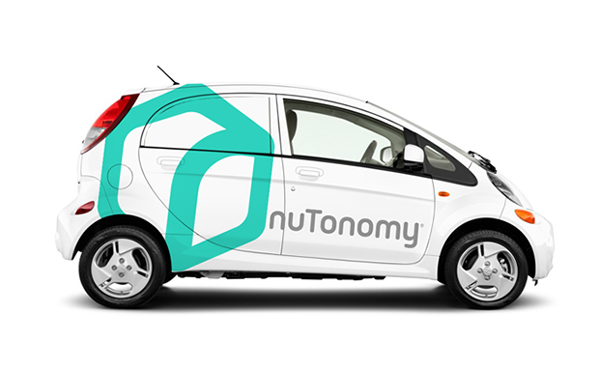
As far as I know, this is only possible right now in Singapore — where nuTonomy is running its self-driving taxis — and Pittsburgh — where Uber is running self-driving cars. (There are other locations with very restricted self-driving vehicles — like autonomous buses running on short, fixed routes.)
So that brings the number of cities to three. It’s not hard to imagine similar programs in San Francisco and Mountain View (Google), Detroit (Ford, GM, Delphi), Stuttgart (Mercedes), Munich (BMW), and London (Delphi).
Hopefully imagination will become reality in 2017.
An interesting angle on autonomous vehicles that was recently pointed out to me is the rise of vehicles with no passenger whatsoever.
This seemed obvious as soon as somebody spelled it out, but I had never really dwelt on the ramifications.
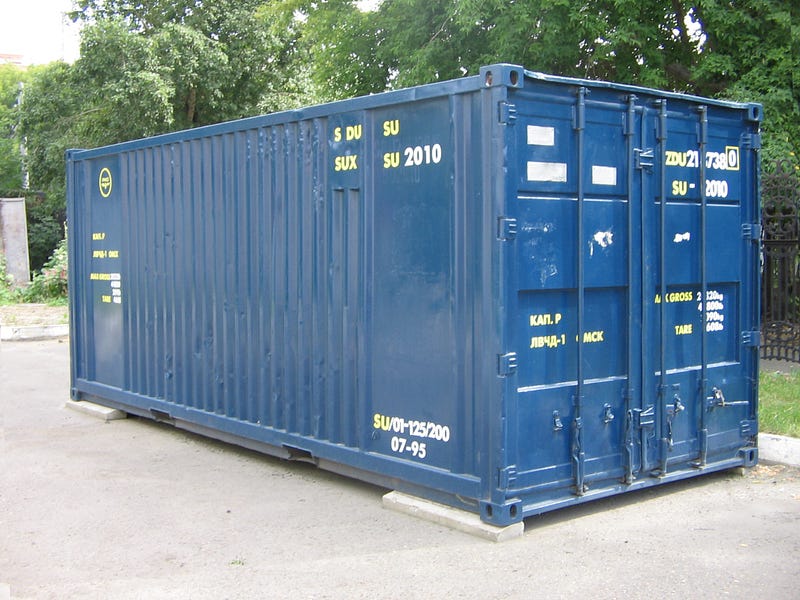
Commercial transportation often has two components: a cab and a trailer. The purpose of the cab is to provide power and (human) control, while the trailer contains the load.
With autonomous vehicles, human control is no longer necessary and I can imagine removing most of the cab. Basically what we wind up with is autonomous shipping containers.
Imagine a long stretch of rural highway where most traffic consists of self-driving shipping containers with no humans in sight. It’s kind of a wild vision.
We have been using tmux a lot at Udacity, and it is terrific for remote pair programming.
I learned about tmux years ago, but my use of it has waxed and waned depending on circumstance.
At Udacity right now, we have a developer in Toronto, another in Chicago, and then the rest of us bounce around between Mountain View, San Francisco and wherever we live. tmux lets us work on the same code together, which is a godsend.
If you’ve never used tmux, it serves two primary functions. (Actually, it probably serves a lot of functions, but I use it for two functions.)
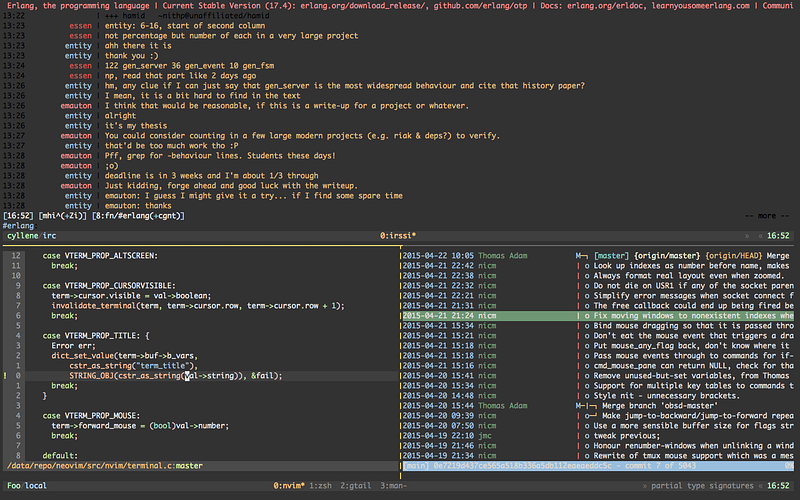
One, tmux allows me to open multiple panes in a terminal. So instead of having to switch back and forth between terminal tabs, or open and close a file to get back to the command line and run it, I can just divide the terminal in two. I leave my file editor (vim) on one half of the page and my command-line on the other. A keystroke lets me bounce back and forth.
But the real value of tmux is in its other function — pair programming. Two different developers, working in different parts of the world, can log into a machine, attach to the same tmux session, and pair program. When Cameron’s in Chicago and I’m in California, we can both type into the same vim editor at the same time. I love it.
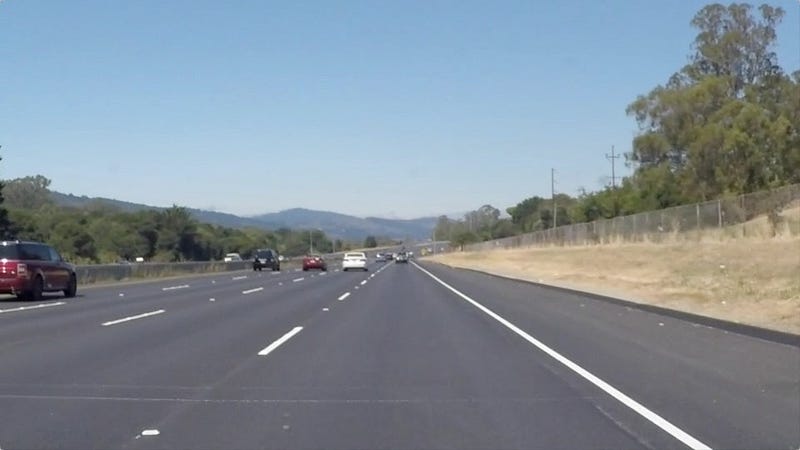
As part of the Bay Area AI Meetup at which I spoke tonight, I created a small Jupyter notebook that demonstrates using OpenCV to find lane lines in a camera image.
If you’re interested, feel free to try it yourself!
I think it’s pretty easy to follow (although let me know). First, perform the setup steps listed in the GitHub README. Then follow along through the Jupyter notebook to find your own lane lines 🙂
We do a more advanced version of this exercise, plus a whole lot more, as part of the Udacity Self-Drivng Car Engineer Nanodegree Program. If you like this exercise, consider signing up to learn all about self-driving cars with us!
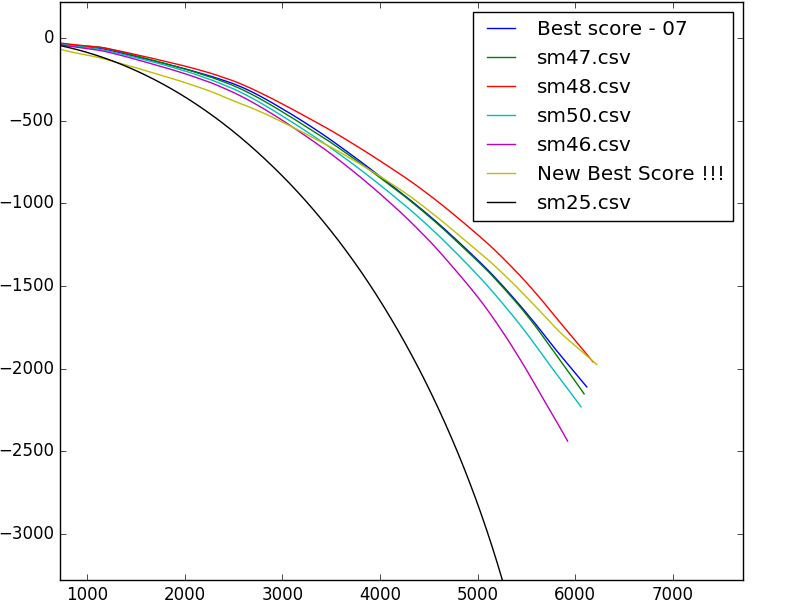
One of the students in the Udacity Self-Driving Car Program, Marius Slavescu, has a great post up about the work he’s been doing on the Self-Driving Car Challenges that Oliver Cameron and Eric and Mac have been publishing.
In particular, Marius writes about “SDC Syndrome”:
sleepless nights thinking about and working on how to get better results in the challenges, also helping people to get started (most of the things were new for me also), at the same time to ensure that what we will build there would be beneficial for our society, especially our kids.
I still wear the orange and purple, even though the Suns are 3–8 and sit near the bottom of the Western Conference. Charles Barkley 4ever.
And so I paid good money and trekked to the Oracle Arena tonight, all to watch the Suns collapse in the final minutes of the game, as soon as the Warriors decided to actually start trying.
On my way in, I saw a giant Uber sign, with an arrow pointing into the stadium lots. As far as I can tell, the Warriors are actively facilitating Uber, even though it undercuts their take from stadium parking.
Maybe it’s because fans demand it. Maybe it’s because Joe Lacob, the Warriors’ venture capitalist owner, has a stake in Uber.




 David Silver