GPUs Are Eating the World

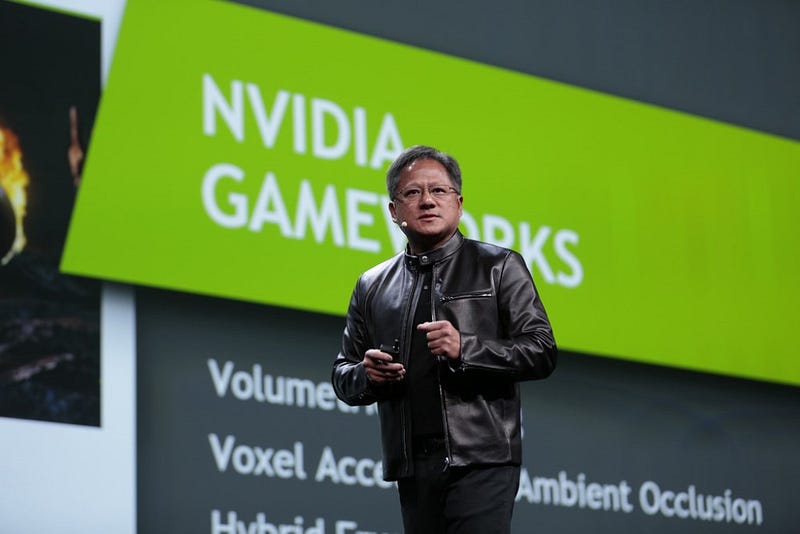
Our partners at NVIDIA just announced an amazing third-quarter, which cycled (see what I did there?) their stock price up 30%.

The bulk of NVIDIA’s present growth is in their bread and butter gaming business, where they sold $1.24 billion worth of GPUs in just the third quarter.

Headlines then mention NVIDIA’s datacenter business, where they sell GPUs to companies like Google and Facebook, which use the GPUs not for gaming, but rather for high-powered deep learning.

GPUs employ massive parallelism to stream games to computer monitors. One way to think of it is that every pixel on a monitor is doing pretty much the same thing, just with different inputs, which is how the colors change.

That massive parallelism turns out to be equally helpful for deep neural networks, in which every unit in the network is doing pretty much the same thing, just with different inputs.

The third and fastest-growing unit of NVIDIA’s business is automotive, which grew 61% year-over-year. Every automotive company in the world is pulling NVIDIA chips, particularly the DRIVE PX2, into their autonomous vehicles. These chips enable deep learning and other parallelized computations that help the car process data in real-time.

It’s a good time to be making GPUs.
Becoming a Self-Driving Car Engineer

Next Wednesday, 11/16, I will be speaking about how to become a self-driving car engineer at the Bay Area AI Meetup in San Francisco.

I’ll talk a little bit about my own back story, then about the Udacity Self-Driving Car Nanodegree Program, and then we’ll code a little bit.

The event is at 6pm downtown and there are still a few spots left, so please sign up. And say hello when you get there!

Lane Lines

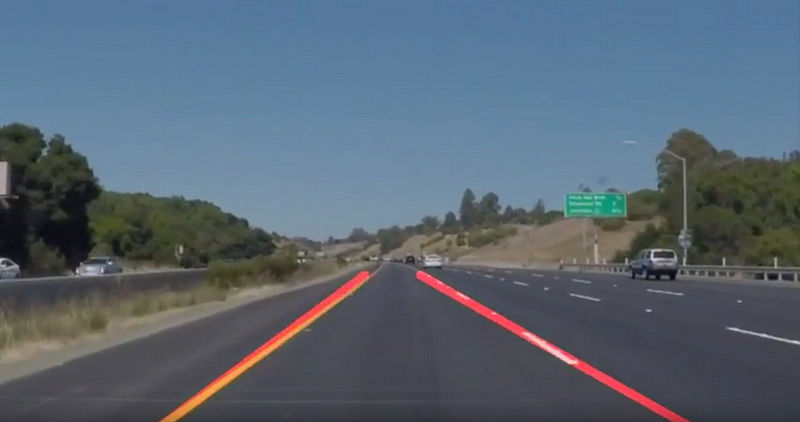
One of our goals for the Udacity Self-Driving Car Nanodegree Program is to get people excited about self-driving cars right off the bat.

To that end, we introduce a lane-finding project to students within the first few hours of the course.

It’s been a lot of fun to see students post videos and photos of their lane-finding project all over the Internet.

Joseph King uploaded his project to YouTube, and Jessica Yung wrote a blog post about it.

Check them out!

Data on Self-Driving Car Engineers

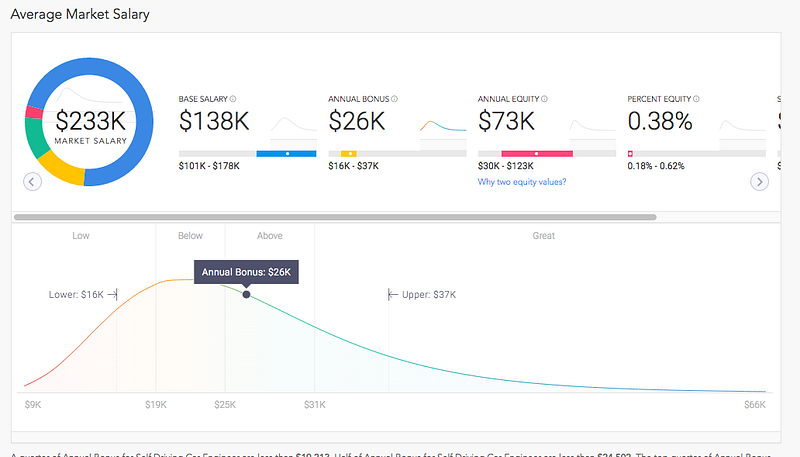
The Salary Data company Paysa (which is, full disclosure, a Udacity partner) just released a really detailed blog post on demographics and income data for autonomous vehicle engineers.

This could be interesting if you, for example, aspire to become an autonomous vehicle engineer.

Takeaways:

  • Top metro areas include Silicon Valley, Boston, and Detroit
  • Top employers include Google, HERE, Bosch, Zoox, Ford, GM, and Tesla
  • Annual Salary = $138k base + $26k bonus + $73k equity = $233k total

Read the whole thing for all the details.

Transmission.ai and DeepDrive

My colleague Oliver Cameron has created a weekly newsletter about deep learning and self-driving cars called Transmission.ai. It’s got some great content 🙂

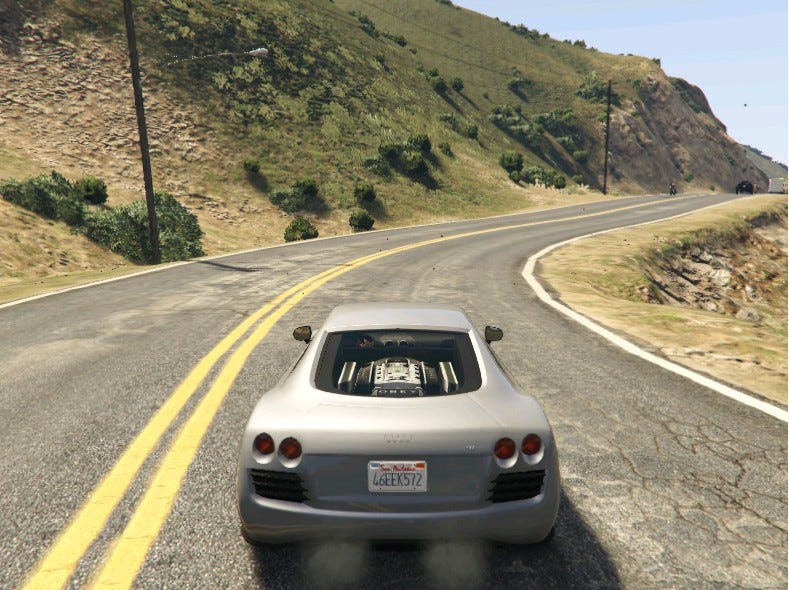
My favorite article in Oliver’s inaugural issue isn’t really an article at all. It’s a link to Craig Quiter’s GitHub deepdrive repo that lays out how to hack Grand Theft Auto and create a self-driving car within the game.

This is so cool. We’ve spoken to Craig several times about this. While it didn’t really work out for us to use as a simulator for the Self-Driving Car Program, it’s an amazing technological hack nonetheless.

And Craig has turned himself into a self-taught deep learning expert.

Check out more of Craig’s work on his website if you want to learn a little bit about self-driving cars and simulation!

Airbus is Developing Flying Taxis

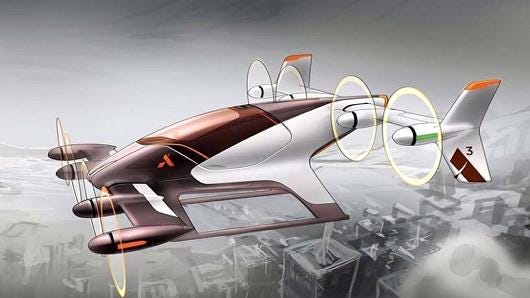
Airbus is developing flying cars out of their Silicon Valley office:

Airbus believes the global demand for the “flying cars” will run in to millions of vehicles and that demand will help reduce development costs.

“In as little as 10 years, we could have products on the market that revolutionize urban travel for millions of people,” said Lyasoff.

I know very little about aeronautical engineering and the challenges that front presents.

But I have heard speculation that in some ways autonomous flying taxis could be easier to implement than self-driving cars.

Airspace is less constrained than roadspace (at least for now), and fewer crazy things happen in the air. Cats don’t run across the road, for instance. Although I guess birds might.

Blackberry Becomes an Automotive Brand

Blackberry, the company behind the iconic mobile handsets with keyboards, has struggled mightily to survive the transition from old-style mobile phones to iPhones and Android devices.

Now comes news that Blackberry is partnering with Ford to get into the world of automotive software.

This seems like a smart move. Even the best handset manufacturers — think Samsung and HTC — are having trouble making money in that industry.

The automotive industry looks poised for huge, transformative growth, centered on software.

So Blackberry is moving into a new field, rather than trying to fight the last war smarter.

Startup Watch: Otonomo

Vehicle-to-vehicle and vehicle-to-infrastructure communication has long been a little bit more nebulous than autonomy.

Whereas a single self-driving car can operate by itself, V2X (to borrow a term) communication requires, by definition, two endpoints. That’s been a blocker.

Startups are sprouting in this field, though, which may be a harbinger of progress to come.

The latest startup is Otonomo, which just raised $12MM to build software for connected cars.

Autonomous cars use otonomo to connect to digital infrastructures and exchange data in real time with other connected and autonomous cars.
 The otonomo open cloud service seamlessly and reliably connects millions of cars to hundreds of services and apps, enabling a new marketplace of car data and enriched and safer services.

That clip, from Otonomo’s website, seems to use the present tense, where I suspect the future tense might be more appropriate.

But it’s exciting to see startups planting seeds in this field. Let’s hope some of them sprout.

Solve for the Equilibrium: Self-Driving Car Edition

Self-driving cars in the UK will be unmarked, so that drivers won’t bully them:

Volvo is bringing its self-driving car pilot project to the UK in 2018. The automaker believes that other road users would bully the vehicles if they were labeled as autonomous, safe in the knowledge that the cars are programmed to obey road rules and won’t retaliate.

And this:

One of the survey’s participants said: “I’ll be overtaking all the time because they’ll be sticking to the rules.”

I guess this is better than the reverse situation.

Comma One Canceled

RIP Comma One.

I know George Hotz, although not well, and he’s always come across one-on-one as a nice person. His public performances can be a little more confrontational.

One thing that has always been clear about George is he places a lot of weight on shipping a product, so I can imagine how frustrating it is that the NHTSA situation looks like it will cause him to miss his 2016 launch deadline.

But it’s also the case that shipping an automotive product in the US involves working with the National Highway Transportation Safety Administration, and that’s not going to change any time soon.

George’s next product will have to deal with that, and I hope it comes soon.