This is an interesting digression from the standard industry trends in Level 3 and Level 4 autonomy.
“Our plan is to see how humans will respond when the car temporarily takes control because it knows better,” said Gill Pratt, CEO of the Toyota Research Institute, during his keynote address Thursday. “So far the steering wheel always points in the direction the wheels go; that’s always been true up until now.”
The USS Sea Hunter won’t even have a remote captain — the goal is for it, and a fleet of submarines like it, to operate on their own, hunting down enemy subs.
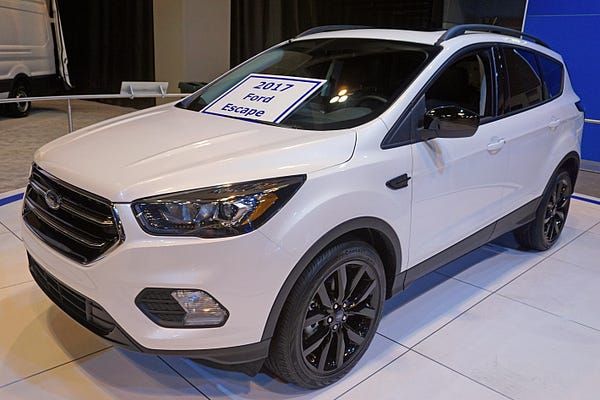
Yesterday I visited my local Ford dealership to check out their self-driving car.
Ford’s most advanced ADAS (autonomous driver assistance system) features are offered on the Ford Escape Titanium, which is Ford’s premier cross-over SUV.
The features include parking assist, blind-spot information system (BLIS), adaptive cruise control, and lane-keeping.
At a feature spec level, those features match up well with Tesla, Volvo, and other car makers. I wasn’t able to test-drive an Escape to see how well the features performed on the road (my local dealer is relatively small and didn’t have the model in-stock), but I’m starting to get a better sense of how ADAS features exist in the world today.
It seems that while Tesla gets a lot of the best press coverage for self-driving technology, the gap between Tesla and other manufacturers is pretty small.
This all sounds very “inside Korea” and I doubt I have the context to understand it, except that the participation of both LG and Samsung in the self-driving car world is interesting.
For a while now, traditional auto manufacturers have been wary of being subjected to a repeat of the mobile phone wars, with the OEMs (Toyota, GM, etc.) playing the part of Samsung, LG, and other handset manufacturers.
The issue is that car makers don’t want to be relegated to producing commodity hardware while Google captures all of the software value, a la Android.
The participation of LG and Samsung in the self-driving car world is a sign that maybe some variation of the mobile phone wars will replay itself, but with LG and Samsung maintaining their existing roles. Which, presumably, they are pretty good at by now.
Yesterday Chris Dixon announced Andreesen Horowitz’s investment in Comma.ai, the self-driving car company founded by hacker protegy George Hotz.
In the brief announcement, Dixon highlighted “The WhatsApp Effect”:
WhatsApp was able to build a global messaging system that served 900M users with just 50 engineers, compared to the thousands of engineers that were needed for prior generations of messaging systems. This “WhatsApp effect” is now happening in AI. Software tools like Theano and TensorFlow, combined with cloud data centers for training, and inexpensive GPUs for deployment, allow small teams of engineers to build state-of-the-art AI systems.
“I expressed some skepticism here, like, look Mobileye has got hundreds of engineers and they’ve been working on this problem for quite awhile and I think they’re pretty smart guys,” Musk says. “He wanted to make a bet, and he said ‘well how much is that worth to you?’ And I said, ‘well I mean if it were true, it would be worth millions of dollars, but I don’t think it’s true.’”
Further on, Musk advises:
The path of success for Hotz — if he wants to create a competing product to Mobileye — is to build a small company, get funding, increase its size so it can conduct verification and validation testing, Musk advises.
“There’s a ton of hard work and bug fixes, and it’s kind of like painful work, and it’s not fun and after doing that for a few years, if George, is prepared to do that, I think he would have a product that would be competitive with Mobileye,” Musk says in a tone you might hear from a parent or older sibling.
Now, to be fair, Comma.ai is on said path to success — creating a small company getting funding, increasing its size.
But I get the sense that Tesla (13,000 employees) and even Mobileye (450 employees) are different from the vision Chris Dixon has for Comma.
When GM recently acquired Cruise for a cool billion, the startup had under 50 employees. So it’s certainly decidedly to build a billion dollar self-driving car company with under 100 employees.
I guess the next question is can 50 employees create a $10 billion self-driving car company.
Last night I rode in a friend’s brand-new Volvo XC90. What a great car!
I didn’t know Volvo did luxury, or that they had advanced ADAS systems in production.
In addition to the plug-in hybrid features, and the leather interior, and the moon roof, the car has some cool self-driving features.
My favorite is the lane-assist, which the car uses to automatically keep itself in a lane. It’s not 100% yet, but it worked probably 80% of the time we tried it on the highway last night.
There is also a cool Blind Spot Information System, a self-parking feature, and a fighter-pilot-esque heads-up display.
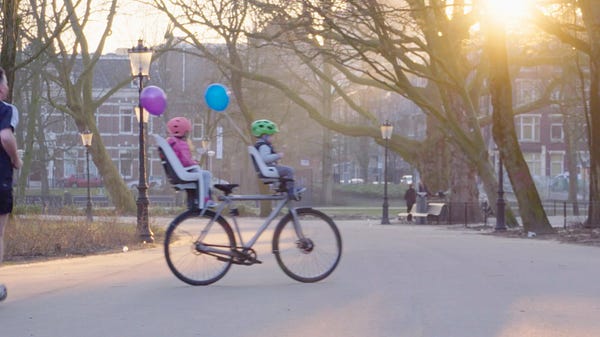
Keeping up its tradition of great April Fool’s Day pranks, Google Netherlands gently spoofs Dutch culture by hyping the Google Self-Driving Bike.
The YouTube video features the Deputy Mayor of Amsterdam boasting, “I think the self-driving bike could really give a boost to the economy because people could even work on their bicycle.”
The director of the Dutch Cyclists’ Union states, “This is the biggest invention since the invention of the bicycle itself.”
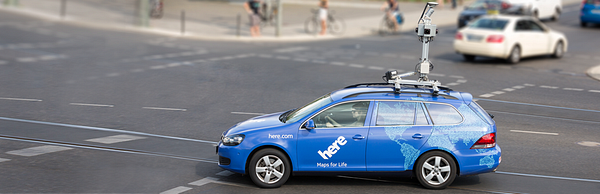
According to Reuters, most players in the self-driving car world are mulling an investment in HERE, a digital mapping company.
HERE has a colorful history, dating back to the 1980s and involving Nokia, Audio, BMW, Mercedes, and other parent companies.
The driving logic appears to be the need for high-quality maps, particularly in adverse weather conditions.
HERE is presently controlled by the big three German auto manufacturers. Reuters reports that Amazon and Microsoft )as well as potentially many other auto manufacturers and suppliers) might pile in, as well.
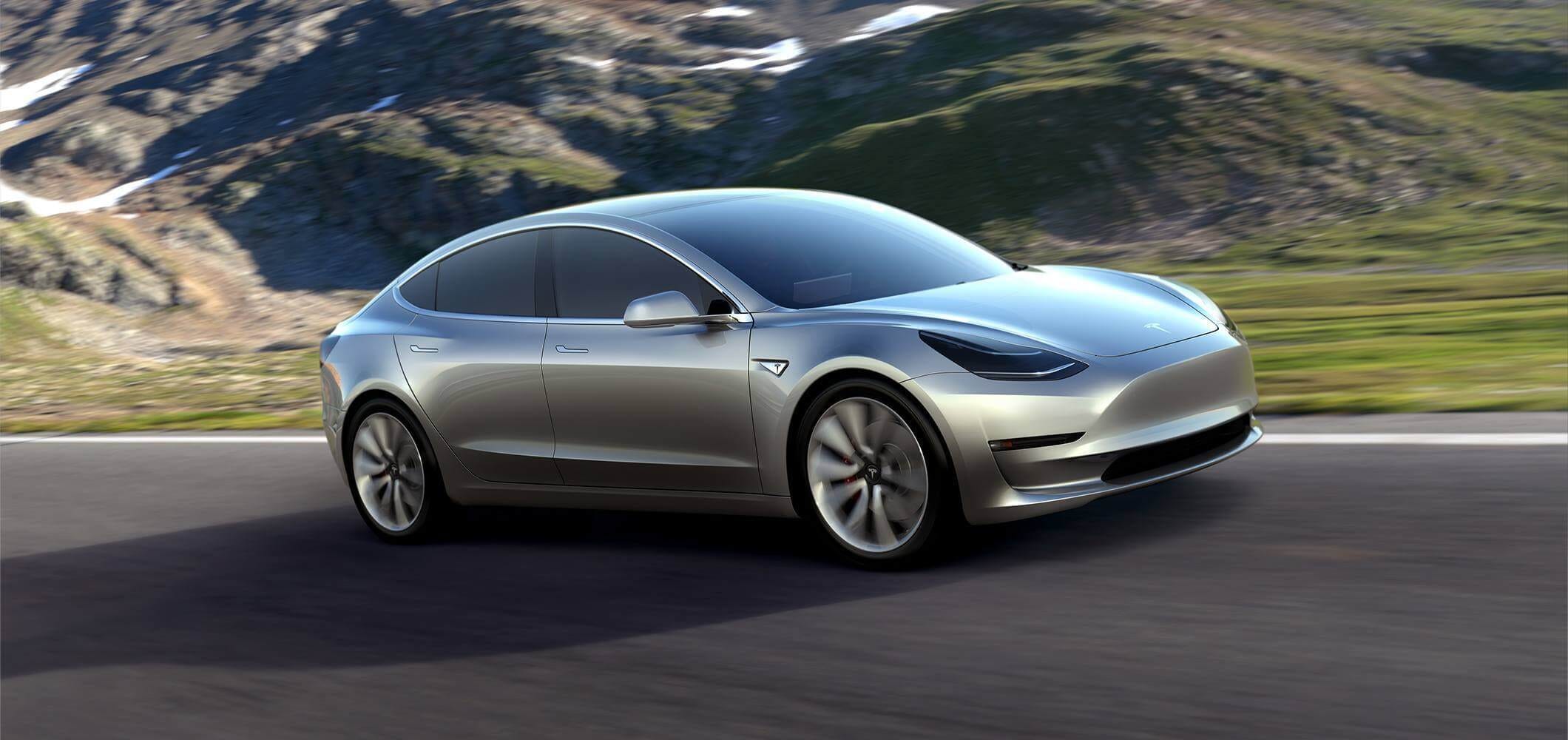
The Model 3, with a base price of $35,000, is Tesla’s first offering at a price point within range of most American cars. Actually, with federal and state-level tax incentives, the out-the-door price for the car might be below the $33,500 average price of a new US car.
115,000 people have already placed $1,000 reservations for the car, securing $115 million dollars in revenue for the company.
Autopilot will come standard on the Model 3, but the big selling points seem to be the electric (gasoline-free) engine and the general appeal of Tesla.
Big questions remain, including:
When will the car will actually launch? The target date is late 2017, but that could slip.
Will Tesla be able to mass-produce mass-market cars? Tesla’s Fremont, California, plant has capacity for 500,000 cars per year. But Tesla only built 50,000 cars last year. Ramping up by an order of magnitude may cause problems.
Will other automakers beat Tesla to market? The Chevy Bolt, with a similar spec sheet, is slated to launch in late 2016.
Will the Model 3 be able to maintain its $35,000 price target? The Model S pricing jumped somewhat from where it was announced initially, and the same could happen for the Model 3.
Nonetheless, yesterday was a pretty great day for Tesla Motors.






 David Silver