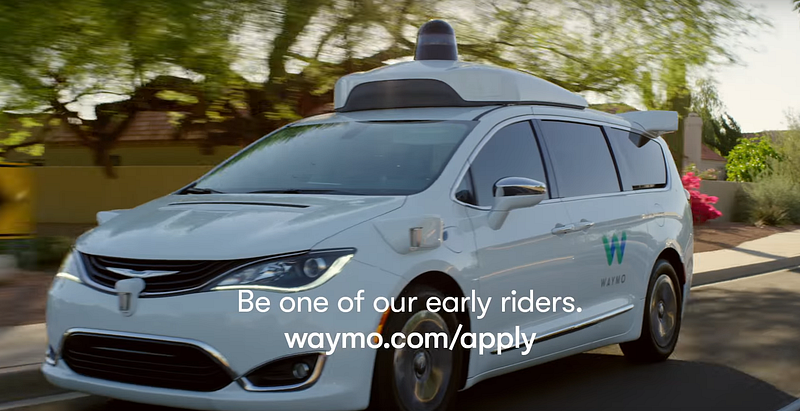
The cars are being tested in the Phoenix suburbs, and Waymo published a cute video with one of the families that has been testing the car.
To watch the video, it appears that the vehicle does not have a safety driver, although perhaps the family members are trained to operate self-driving cars in an emergency.
Now that Waymo is bringing the program out of stealth, it’s recruiting more families to try out the service, so if you live in the Phoenix area, you should apply!
This is a particularly interesting announcement, because speculation has been rampant about what Waymo’s next move is with self-driving cars.
Google (Waymo’s parent company) has had self-driving cars spinning around Mountain View for years, with paid test drivers. The caution about putting real passengers in these cars caused a lot of people to question whether Google was going to give up a big lead to more aggressive companies like Tesla and Uber.
It’s good to see Google getting out there and ramping up it’s customer base. Here’s hoping the vehicles come to northern California soon.
I just got back from a short trip to Detroit. Every time I go there, the city looks better. Downtown Detroit is now in really good shape, with lots of businesses and activity. Some combination of the casinos, the stadiums, and general urban renewal have really brought life back to downtown.
I’m also struck every time I go to Detroit by just how central the automotive industry is to the city. Probably half of the people I met worked in automotive, and it seemed like every business I drove past was automotive-focused. That’s especially true in the suburbs.
When I worked as a software engineer at AOL in the early aughts, I always got this sense that for all our good work, the real beating heart of the industry was in the Bay Area. Now that I work as an autonomous vehicle engineer in the Bay Area, it feels like the real beating heart of the industry is Detroit.
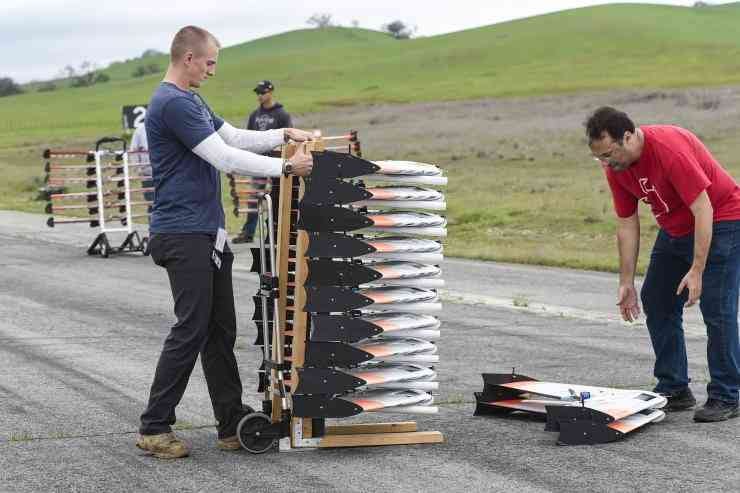
So far, this seems like a “research” project. For example, the drones are not yet equipped to perceive and identify their targets, so each drone just broadcast its GPS coordinates to its opponents, so they would know where to look.
And the drones aren’t shooting real bullets, yet.
But the future of aerial combat is in sight:
Dogfighting tactics have advanced dramatically since the World War I, but the advent of UAV swarms may bring a brand new set of challenges. Unmanned vehicles have freedom to dive, bank, and climb at rates human pilots cannot tolerate. But the real advantage may be in computing power that could track dozens of adversaries — far more than any human pilot could do — and develop new ways to address challenges.
Also, the Navy itself is testing swarms of autonomous vehicles, with governmental acronyms like LOCUST and CICADA. The Navy is primarily building them for purposes of reconnaissance and diversion, or so they say.
I will be in Detroit next Monday and Tuesday, speaking at the CAR HMI USA Conference! If you’ll be at the conference, please stop by at 9:30am on Tuesday to say hello.
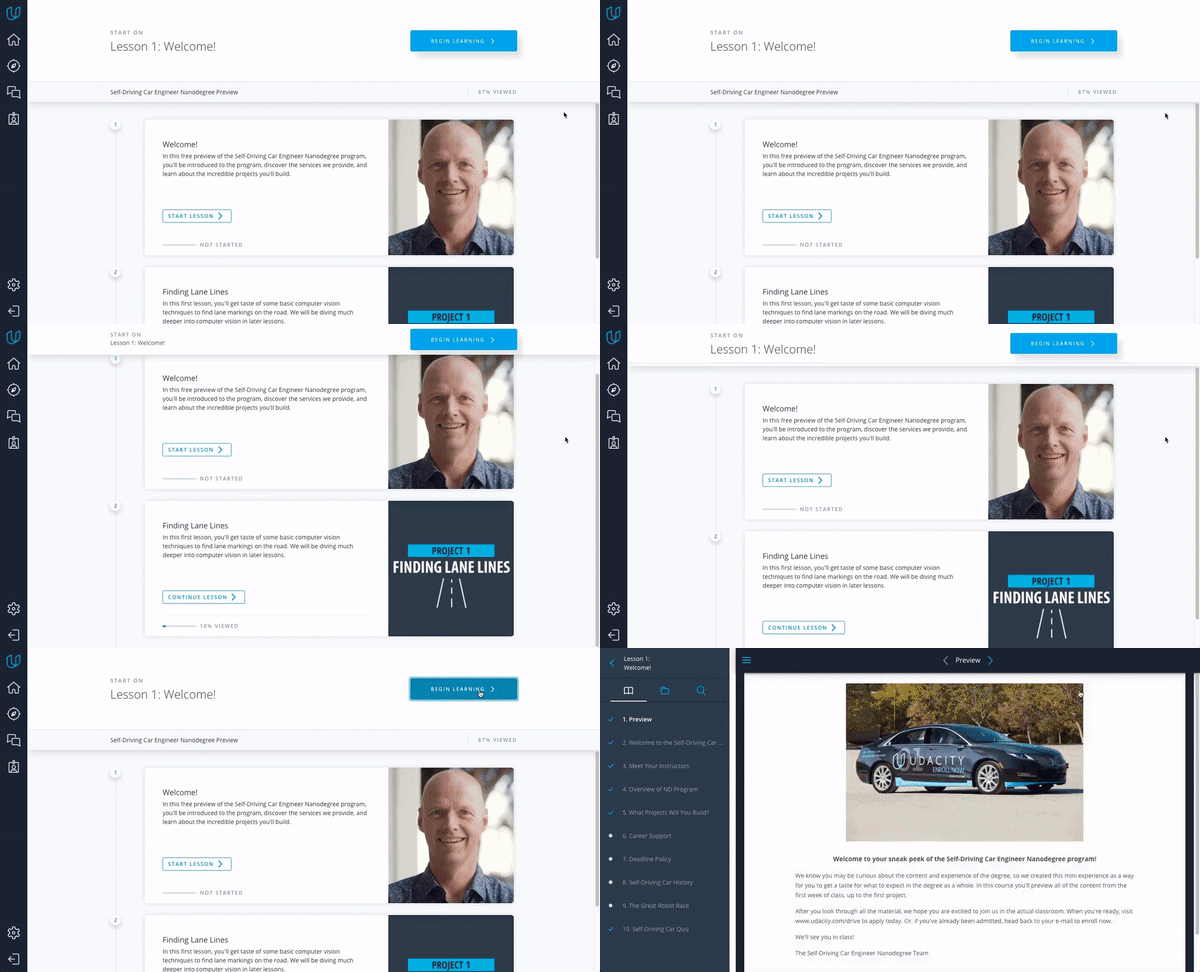
If you won’t be at the conference, but you’re in the Detroit area, send me an email (david.silver@udacity.com). I am looking forward to meeting with people while I’m in the area, especially people who are interested in the Udacity Self-Driving Car Nanodegree Program.
And if you’re a Udacity student, join the #detroit channel in the student Slack community! We’re organizing an event for students.
I jest, of course. Baidu is going to release a “free” operating system for self-driving cars, although the news leaves unclear whether this will be “free, as in lunch” or “free, as in speech”.
But Baidu’s goal quite clearly seems to be commercialization, whereas Udacity’s project is primarily educational.
The article in the MIT Technology Review supposes that Baidu is undertaking this as a catch-up move in a race with the Silicon Valley giants. Perhaps by getting more companies on its operating system, it can get more data.
If so, this really does look like a repeat of the mobile phone wars, and Baidu might need to be prepared to spend a lot of money to support its free operating system.
Here are posts from five Udacity Self-Driving Car students, sharing what they’ve learned about the program, their projects, Docker, and even how to hack your own car!
Andrew provides the most comprehensive review (in Spanish) of the Self-Driving Car Nanodegree Program that I have seen yet. He covers the forums, the mentors, the hiring partners, the classes, and all of the projects. It’s a very positive review, which is flattering:
“Clonacion de Comportamiento es uno de los proyectos con los que más he aprendido nunca y con los que he visto la potencia pero también la dificultad de diseñar y entrenar redes neuronales. Merece la pena hacer el nano-degree sólo por este proyecto.”
Gungor provides a concise tutorial for students looking to spin up Docker for the Self-Driving Car Nanodegree Program:
“I just realized there are still a lot of people having problem with Docker and starter kit for Self Driving Car Nanodegree program. In this post, I will give you a step by step guide.”
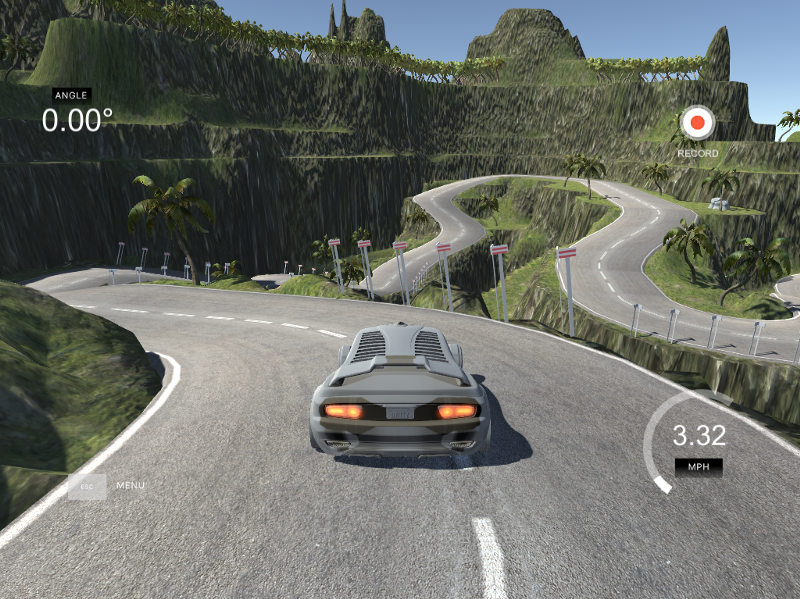
Muddassir covers some really cool data augmentation he performed on his Behavioral Cloning training set. By the end, his network is able to drive multiple laps around the crazy jungle track!
“I used a python generator in order to feed training batches to the network. The generator I designed also augments the data before generating a batch. I apply different types of augmentation to the data such as varying the brightness, color saturation, adding random shadows, translations, and horizontal flips to the images.”
Harish reflects on the challenges of the program, what was awesome about it, and what we need to improve:
“During this period, I have spent many all-nighters chugging down on redbull and coffee in an attempt to consume enough caffeine to stick it out and get through the various hurdles the course throws at you. I have on multiple ocassions spent days working on an idea only to get so frustrated with the results and progress to go ahead and scrap it entirely. Only to later realize that I had been right all along but made a tiny error in executing it!
In hindsight(*spoiler alert), it was worth all the trouble!”
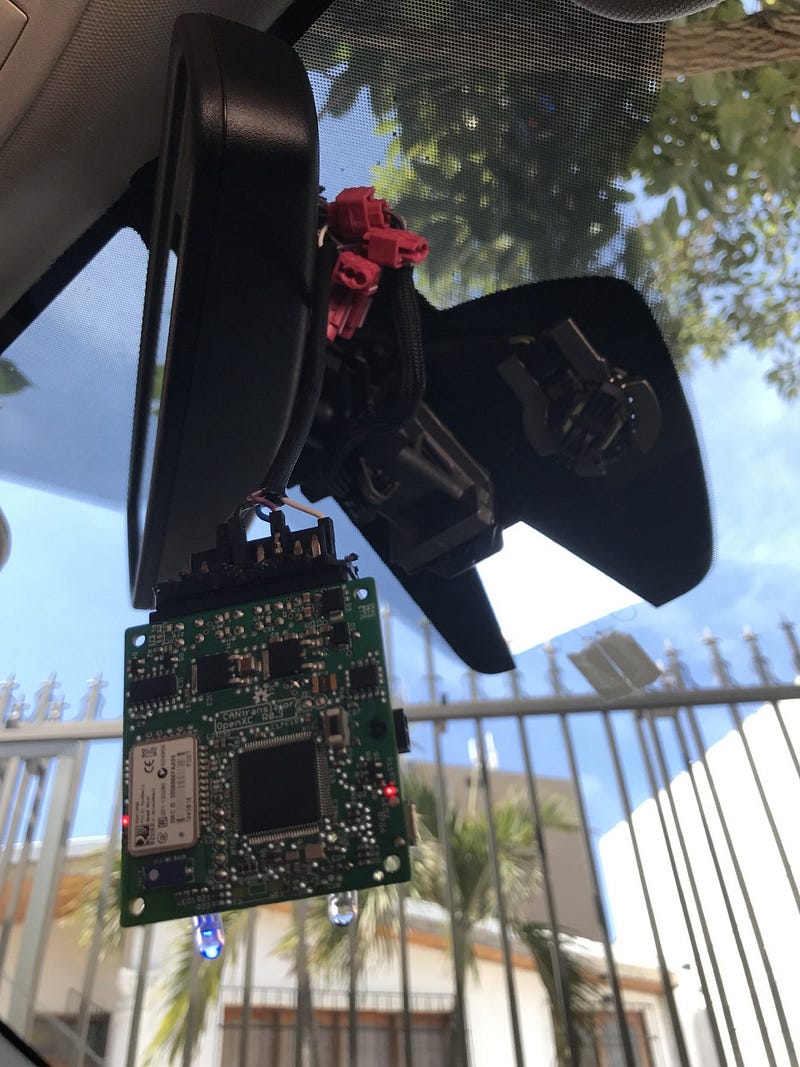
Ariel is building a self-driving car from scratch, and has learned all sorts of practical lessons. This is a great list to read if you want to learn from somebody who is hacking a car:
“Can buses are good, dual can buses are great. They allow you to be able to separate key traffic in order to be able to ‘replace’ a factory module like the LKAS or the ACC. Get an Arduino due with dual can. ($70)”
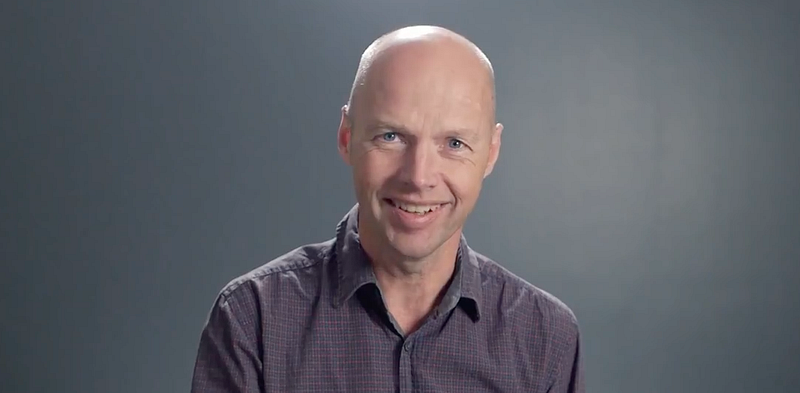
We’ll be filming a Q&A with him this week about self-driving cars and the Udacity Self-Driving Car Nanodegree Program.
This is an awesome opportunity to pick the brain of the winner of the DARPA Grand Challenge, the founder of the Google Self-Driving Car Program, and the driving force between the Udacity Self-Driving Car Nanodegree Program!