Yesterday George Hotz and the Comma.ai team released a dataset of highway driving. 7.5 hours of camera images, steering angles, and other vehicle data.
They also released a research paper that details their efforts to build a simulator that generates future road images from an existing camera shot. Basically, what do you think the road will look like a few milliseconds from now?
Oh, and if you want a job at Comma, they recommend you do something cool with the dataset.
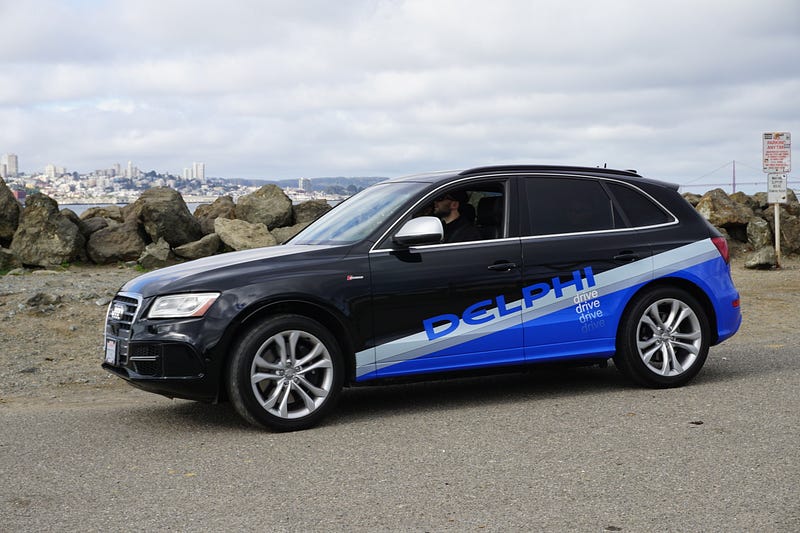
Big news of the day is that supplier Delphi Automotive will be launching a self-driving taxi service in Singapore in 2017. The service will start along fixed routes and evolve into a go-anywhere service by 2019.
This is big news for a couple of reasons.
This is faster than most people expected self-driving cars to launch, even accounting for the fact that Singapore is a pretty small geofenced area.
Delphi is a Tier 1 supplier that derives substantially all of its revenue from sales to OEMs like GM and Ford. By launching a self-driving taxi service, Delphi will be competing head to head with them.
Reports also indicate that the startup nuTonomy will be launching a taxi service simultaneously, although this has been news for several months and isn’t a surprise.
That Delphi is capable of launching this kind of service isn’t hugely surprising, either. Delphi built a self-driving car that traveled across the US autonomously a few years ago. They seem to be the most advanced supplier in terms of autonomous capability.
But from a business perspective this is a risky proposition for Delphi.
By placing autonomous vehicles in the market, they’ll be miles ahead of competitive suppliers in this space.
But it’s not clear if any of the OEMs will want to buy from them, if they view the revenue as financing a competitor.
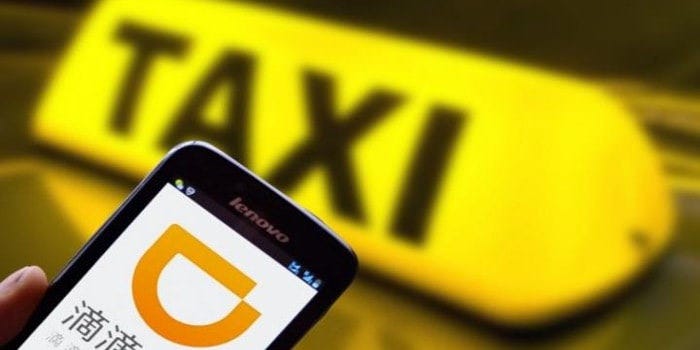
Uber China (not global Uber) is merging with Didi Chuxing. These are the two biggest ride-sharing services in China, and they’re becoming one.
This news is really about the ride-sharing wars, and not so much about autonomous vehicles. But a lot of people believe that autonomous vehicles and ride-sharing services will be integrated in the future, so it seems worth noting.
Didi is by far the larger of the two competitors, and some news articles are calling this a sale by Uber, not a merger. But both Uber and Didi have been burning cash in an effort to subsidize drivers, lure riders, and keep up with each other.
In the US this type of deal might face regulatory scrutiny, but I haven’t seen any commentary on that in the coverage I’ve read.
It is notable that Uber CEO Travis Kalanick, in his email to staff announcing the merger, said the deal would free up cash to invest in “self-driving technology” among other things.
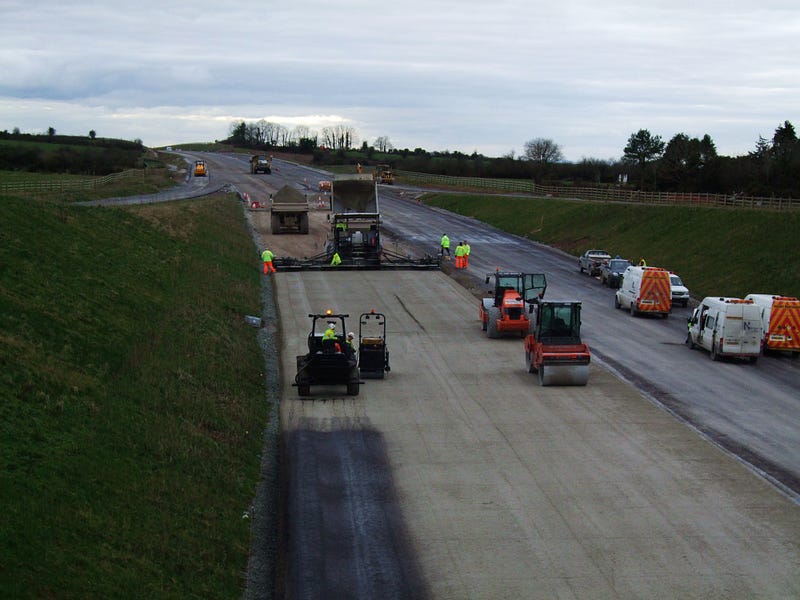
More interesting to me was the venue at which he was speaking — the Australian Asphalt and Pavement Association.
Pavement is one of overlooked elements of the autonomous revolution, and I need to learn more about it. Mostly, we just talk about pavement as a problem because the US doesn’t maintain its roads well.
However, smart pavement seems like a big opportunity. An awful lot of the logic in an autonomous vehicle is dedicated to figuring out what’s going on with the pavement. If the pavement could communicate up to the car, that would obviate the need for a lot of sensors.
Beyond that, smart pavement provides revenue opportunities (per-mile tolls, perhaps), communication (data networks could be built into the pavement), traffic monitoring, and a host of other benefits.
Tim Sylvester, a reader and contributor here, has a company called Integrated Roadways in Kansas City that works on exactly this problem. They’re working with the Missouri Department of Transportation to turn road maintenance into a revenue-generation opportunity for the state.
I kind of suspect that’s the only way we’ll get better roads — if they become revenue centers instead of cost centers.
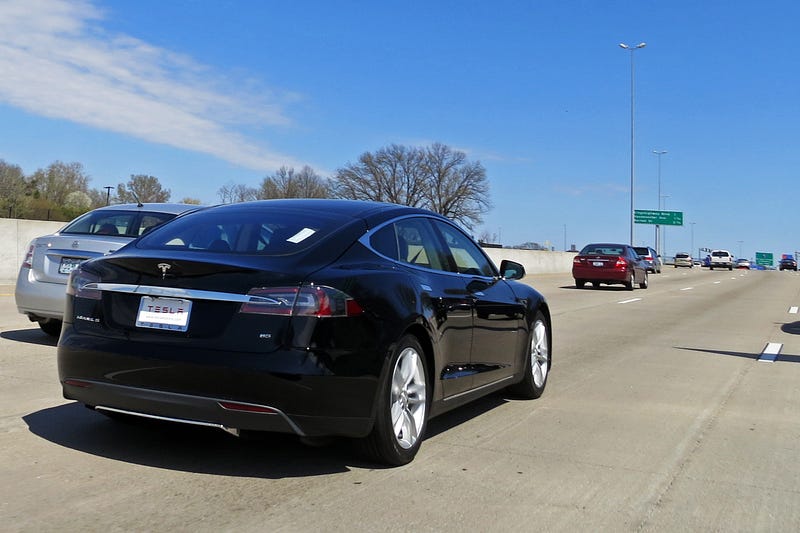
According to several news outlets, Tesla engineers testified in front of Congress that they are still uncertain what caused the fatal crash in Florida in early May.
There are two theories, one involving radar and camera, and one involving the brake system.
I tried to find a story to link to, but they all seem to open noisy videos, sorry.
This is a little bit of a puzzling outcome, and may explain why Tesla waited so long to announce the crash in the first place.
Standard practice would be to recover the sensor data leading up to the crash from the vehicle, feed that data into a simulator, and figure out what happened.
Surely Tesla has a simulator. So I can see at least two possibilities for the confusion:
Tesla was unable to recover all of the sensor data from the crash.
Tesla recovered all the sensor data, feed it into the simulator, and the simulator didn’t crash. That might leave Tesla at a loss to explain the discrepancy between the simulator and the real world.
The immediate news is that Apple has hired Dan Dodge, the founder of QNX, presumably to lead their vehicle software efforts.
The larger story seems to be confusion at Apple, which supposedly has large software, hardware, and sensor divisions, yet is now planning to deliver automotive software.
I’m a little more impressed by what Apple’s done, even if it’s just keeping a huge engineering effort largely under wraps. I think we might see something impressive come out of it.
But mostly I’d like to see a named source willing to go on the record.
I just had lunch yesterday with a young engineer who works for a big SaaS software firm and would love to get a job working on autonomous vehicles. But, he asked, how hard is that to pull off without going to grad school?
Later yesterday I responded to some inquiries from potential Udacity students about jobs in the self-driving car industry. Same question: do I need a PhD to land a job in the industry?
At Udacity we are building a Self-Driving Car Nanodegree and we’re doing it because there’s a huge interest in this area and companies need to hire a lot of engineers! We wouldn’t be doing it if we thought you had to get a PhD to work on self-driving cars.
A lot of that demand for engineers, it turns out, comes from the transition of autonomous vehicles from research to production.
Until recently, autonomous vehicles were largely under the umbrella of the research divisions of large companies. Those research divisions are much smaller than production divisions, and they’re staffed by folks with sterling academic credentials — PhDs in computer vision and deep learning and robotics. They’re great at pushing the cutting edge.
What research divisions are less great at is pushing out products, because they’re not designed for that.
Production divisions tend to be staffed by terrific engineers who are focused on shipping code. These engineers are often not PhDs or cutting-edge researchers. They’re more oriented towards getting a product built, testing it, and scaling it.
There also tend to be a lot more engineers, just in absolute numbers, in production areas than in research.
The migration of autonomous vehicles from research to production is a big reason why this is a terrific time for engineers to move into the field of autonomous vehicles.
As my friend Jinesh from Ford said:
“It’s helpful to know C++ or to have experience with human-machine interaction. But being adaptable and a quick learner is more important since companies that design and build robotic cars may be using a different mix of technologies or applying them in different ways.”
Dice.com has a couple of articles up about the huge demand for self-driving car engineers. And my cricket buddy from Ford, Jinesh Jain, is featured!
So I thought I’d share some of Jinesh’s quotes.
“It’s helpful to know C++ or to have experience with human-machine interaction. But being adaptable and a quick learner is more important since companies that design and build robotic cars may be using a different mix of technologies or applying them in different ways.”
And I like to think that this quote is specifically directed at me 😛
“Successful candidates bring a fresh set of eyes and new ideas. The auto industry is on the cusp of a great transition so, we’re looking for people who can drive innovation.”
Jinesh is great. You should work on self-driving cars so you can meet him!
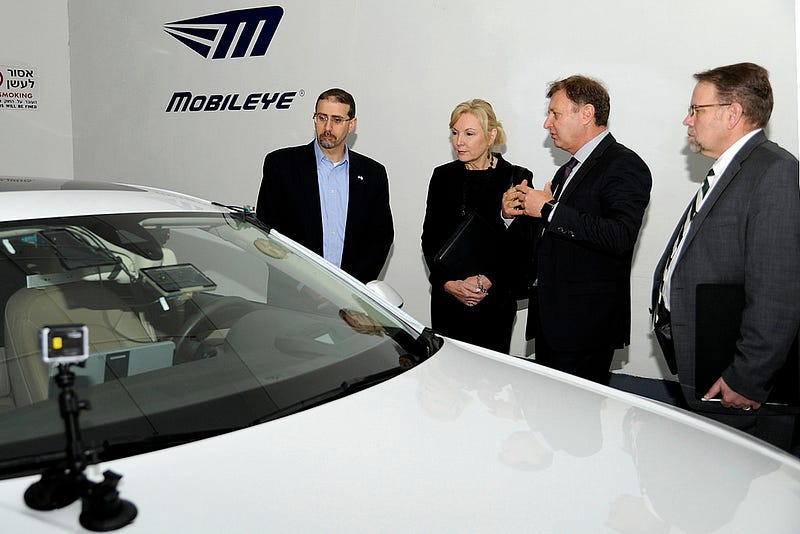
Mobileye announced that it will move from focusing on driver assistance components to a focus on fully autonomous vehicle components. However, Mobileye CTO Amnon Shashua declined to state who broke up with who.
This is a huge surprise to me, although in hindsight there were some signs.
Immediately after the announcement of the first Tesla Autopilot fatality, Mobileye and Tesla issued conflicting statements about whether Tesla could have used Mobileye’s technology to prevent the crash. Mobileye said its products were not yet designed to handle that type of situation, whereas Tesla indicated the sensor data could be used to avoid future such accidents.
That was a surprising amount of daylight between two normally tight partners.
Tesla CEO Elon Musk also tweeted some positive statements about progress being made with Bosch, which is Tesla’s radar vendor. The absence of any such statements with Mobileye was conspicuous.
Finally, there have been on-again-off-again rumors about whether Tesla was looking for a different computer vision vendor for years.
Writing all that down, I’m thinking maybe this wasn’t such a shock after all.



 David Silver