A small team of us from the Udacity self-driving car team will be at the Silicon Valley Artificial Intelligence panel tonight, which focuses on Self-Driving Cars.
Please come out to meet us!
Sorry, I should have posted this information much earlier. The event opens in five minutes and the panel starts in an hour, so unless you happen to live right next to the NVIDIA campus (the host site), it might be impractical to attend.
NHTSA administrator Mark Rosekind recently announced that automakers “can’t wait for perfect” in the release of self-driving technology, according to The Wall Street Journal.
Mr. Rosekind declined to address the May fatality involving Autopilot because NHTSA is investigating the incident. The agency’s main objective, he said, is to reduce traffic fatalities, which rose to 35,000 in 2015, an increase of 8% compared with 2014.
“We should be desperate for anything we can find to save people’s lives,” Mr. Rosekind said.
That strikes me as just right.
Unrelated Fun Fact
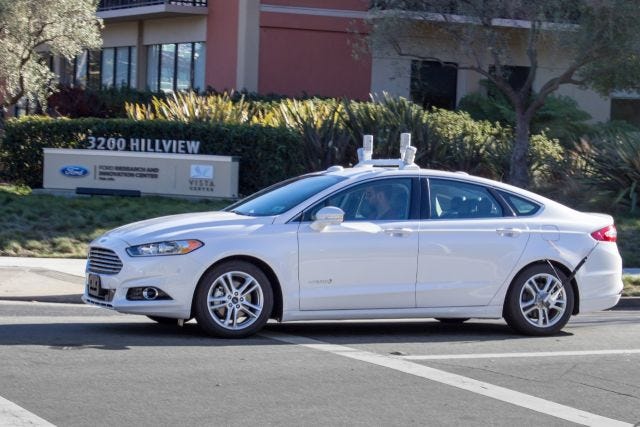
The building in the cover photo here is my old office when I worked for Ford, and the driver in the photo is my old boss Tory Smith.
Today The New York Times banged on one of my favorite drums — the need for test tracks for autonomous vehicles testing.
Some Michigan lawmakers are pushing for a centralized national test track for autonomous vehicles.
“We know we need a national testing and validation site,” Senator [Gary] Peters said at an automotive digital security conference here. “We need one in place where all the auto companies can come together.”
Despite my love for test tracks, I am not crazy about a centralized test track run or funded by the US government. But maybe we take what we can get.
The Times lists several of the leading contenders:
GoMentum Station near Silicon Valley, in California
MCity in Ann Arbor
A site near Blacksburg, Virginia, run by the Virginia Tech Transportation Institute
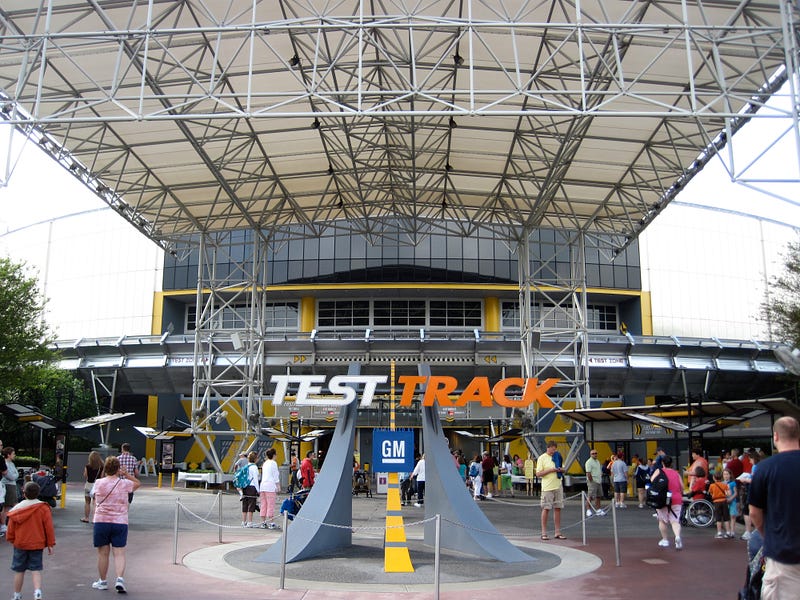
Willow Run, the new General Motors test site in Michigan
There is also Castle Rock (Google) and Pittsburgh (Uber), although those don’t merit a mention in the article.
One of the first questions we got was, “Are there enough jobs to make this worthwhile? It’s just Google and Tesla, right?”
There are so many jobs!
Transportation-as-a-Service
Uber is building out their own autonomous vehicle division in Pittsburgh.
GM just announced that Lyft will be running GM’s first production run of self-driving cars.
Tech Companies
Google is the most famous tech company working on self-driving cars, but Baidu is working on this as well. Lots of rumors indicate Apple might be working on this.
OEMs
Every OEM has a team, or multiple teams, dedicated to self-driving cars. Tesla, Ford, GM, Toyota, Mercedes, BMW, Audi, Toyota, Mazda, Subaru, Kia, Volvo, and the list goes on.
Startups
Startups like Otto, Comma.ai, and Zoox are hiring as fast as they can.
Tier 1 Suppliers
Companies like Delphi, Bosch, and Continental are known as Tier 1 suppliers. They sell automotive-grade hardware in bulk to OEMs, and they badly want to win these contracts.
Tier 2 Suppliers
Tier 2 suppliers span a range of specialties, and typically sell their components to Tier 1 suppliers, who in turn package it up for OEMs.
This is a huge category!
In computer vision there is Mobileye, in mapping there is HERE, in processors there is NVIDIA and Intel, in lidar there is Velodyne. So many suppliers!
This is just a sample list of who is hiring. There are a lot more companies, and right now demand for talent is far outstripping supply. It is a great time to go to work on self-driving cars!
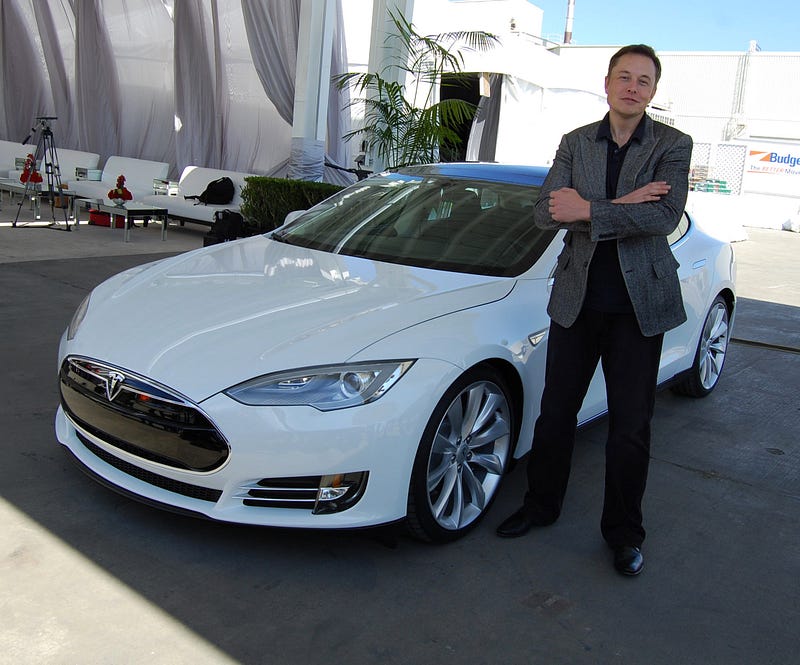
Elon Musk dropped a pretty big blog post on the world yesterday.
I don’t think I could do any better than pull out two quotes, and encourage you to read the whole thing.
The first master plan that I wrote 10 years ago is now in the final stages of completion. It wasn’t all that complicated and basically consisted of:
Create a low volume car, which would necessarily be expensive
Use that money to develop a medium volume car at a lower price
Use that money to create an affordable, high volume car
And…
Provide solar power. No kidding, this has literally been on our website for 10 years.
And:
So, in short, Master Plan, Part Deux is:
Create stunning solar roofs with seamlessly integrated battery storage Expand the electric vehicle product line to address all major segments Develop a self-driving capability that is 10X safer than manual via massive fleet learning Enable your car to make money for you when you aren’t using it
We are building a Self-Driving Car Nanodegree at Udacity!
Please sign up here if you are interested in learning more. Limited enrollment will begin later this summer.
The Self-Driving Car Nanodegree involves courses and projects that will give you hands-on experience with deep learning, robotics, computer vision, sensors, and hardware. It will be a blast.
One of the best parts is that Sebastian Thrun will be leading the nanodegree with me!
Sebastian is the co-founder of Udacity, and also a rockstar in the world of autonomous vehicles. Before Udacity, Sebastian launched Google’s Self-Driving Car program. And even before that, he won the DARPA Grand Challenge self-driving car race as a Stanford professor.
I have had so much fun learning about self-driving cars with Sebastian, and I’m confident you will, too.
My own career in self-driving cars started with Udacity’s Artificial Intelligence for Robotics course, and I followed that with an arduous combination of online courses and projects and networking.
Our goal with the Self-Driving Car Nanodegree is to create a program that is fun and comprehensive and not at all arduous.
Most of all, we want to help you learn the skills and techniques from the most advanced autonomous vehicle companies in the world!
So, please, sign up here to learn more, and join us as part of the first class of self-driving car engineers at Udacity!
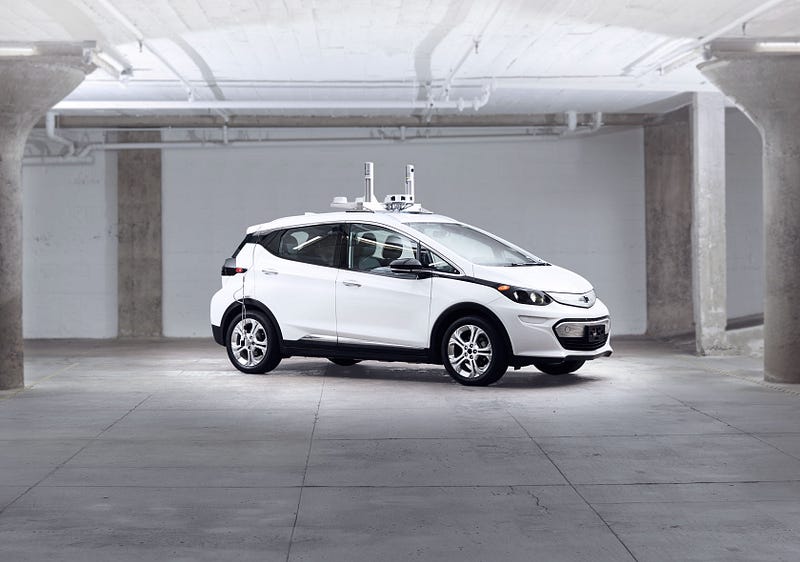
Big news. GM is going to launch its self-driving cars “much faster than people anticipate”, and their going to be on the Lyft network. And by all appearances, the platform will be the Chevy Bolt EV.
We are working on an on-demand ride-sharing network with Lyft, it’s not something we are thinking about, it’s something we are very much readying for consumer use.
That’s about the extent of the news, though. Open questions include what cities this will operate in, what the launch schedule is, how much the cars will cost, what kind of sensors they use, if they will even have a steering wheel, and when they will be available for purchase outside the Lyft network.
Germany is considering requiring automotive manufacturers to include the equivalent of airplane black boxes in new automobiles.
Manufacturers will also be required to install a black box that records when the autopilot system was active, when the driver drove and when the system requested that the driver take over, according to the proposals.
This seems like it could help a lot, and increase accountability and trust in automotive manufacturers. There are privacy considerations, and hopefully this can be done in a way to mitigate those issues.
I’d love to see the industry voluntarily adopt a standard and opt-in, but if it has to be done by law, this seems like one of the higher-value regulations I’ve seen.
Despite my best intentions, I spent almost all of today car shopping.
My wife and I have only one car, a single 2004 Toyota Camry. It’s great, but for years we have been talking about getting a second car, even doing test drives, and never buying anything.
With a seven week-old baby, plus two dogs, however, I think we’re finally going to have to get another car.
So I looked at a lot of different cars today, particularly small crossover SUVs, and with a special focus on driver assistance technology.
In lieu of big writeups, here are a few sentences on each.
Subaru Outback: There’s a lot to love about this car. They offer a terrific Eyesight ADAS package on almost all trim levels. Eyesight includes adaptive cruise control, lane keeping, automatic headlamp adjustment, rear cross-traffic alert, and blind-spot alert. Plus Subarus hold their value incredibly well, although they are a little pricier than comparable vehicles.
Toyota RAV4: Super-smooth ride. Great car at a great price. No ADAS features at any trim level, though.
Mazda CX-5: Terrific car. It felt similar to the Outback, if maybe a little smaller. Mazda’s i-ACTIVESENSE ADAS package is comparable to the Outback’s Eyesight. However, Mazda only offers ADAS on their highest-end, Touring trim level.
Fiat 500e: Changing gears entirely, I checked out Fiat’s cute and awesome 500e all-electric model. It feel about the size of a Mini or a Volkswagen Beetle, which could be awesome for a pure commuting car. Plus the all-electric drivetrain makes it eligible for California HOV stickers. No ADAS features except a backup camera, though.
Honda CR-V: Back to crossovers. The CR-V is an awesome and economical car. And Honda has introduced a suite of ADAS technologies called Honda Sensing. Basically, this includes adaptive cruise control and lane departure warning. Honda Sense is only available on the top trim level, though.
Ford Fusion Energi: Back to small electric vehicles. This is a small car, but bigger than the Fiat 500e, that is all electric and 70 miles to the charge. No ADAS features, but it does come with the all-important HOV stickers.
Ford C-MAX: A little larger than the Fusion, the C-Max is electric with a gas tank, which gives it a range that the Fusion Energi doesn’t have. The HOV stickers are hit-or-miss, depending on whether the dealer applied for stickers before the DMV ran out for electric+gas drivetrains.
I still need to pick a car, though 🙂
Plus I haven’t yet tried out the German models. I worry they might be out of my price range, but I hope to test out the crossover models for BMW, Mercedes, and Audi this week.
The Motley Fool has a short piece out about Warren Buffett and self-driving cars. That piece references back to another article, this one in Fortune, and written by Buffett himself.
The dateline was 1999, and Buffett was taking a lot grief for his refusal to invest in the dot-com market.
Buffett’s view was that very few of these companies would survive over the long haul, and he wasn’t capable of picking the winners.
Well, I thought it would be instructive to go back and look at a couple of industries that transformed this country much earlier in this century: automobiles and aviation. Take automobiles first: I have here one page, out of 70 in total, of car and truck manufacturers that have operated in this country. At one time, there was a Berkshire car and an Omaha car. Naturally I noticed those. But there was also a telephone book of others.
All told, there appear to have been at least 2,000 car makes, in an industry that had an incredible impact on people’s lives. If you had foreseen in the early days of cars how this industry would develop, you would have said, “Here is the road to riches.” So what did we progress to by the 1990s? After corporate carnage that never let up, we came down to three U.S. car companies — themselves no lollapaloozas for investors. So here is an industry that had an enormous impact on America — and also an enormous impact, though not the anticipated one, on investors.
So the funnel went from 2,000 to 3.
And today, almost 20 years later, we still have Ford and GM and we sort of have Chrysler (as part of the Fiat-Chrysler conglomerate).
But we also have Tesla and Uber and Google and maybe Apple and startups like Otto and Comma.ai and McLaren.
Maybe here is the road to riches. But reading Buffett makes me a little less sure.





 David Silver