Open Relationship

Google and FCA might be making minivans together, but they’re still seeing other people.

“This is just FCA and Google building 100 cars together,” Google self-driving car chief executive John Krafcik said in an interview on the sidelines of an energy conference in Washington.

“We’re still talking to a lot of different automakers,” he added. “We’ve been very open about what the technology is and the problem we want to solve together. Solving this problem is going to require a lot of partnership.”

That’s either a pretty good headfake or a remarkably unenthusiastic partnership endorsement.

Recall my earlier post that this partnership seems like a minor win for Google and even less promising for FCA.

Uber’s Self-Driving Car

Uber won the Internet today with news that it is testing its self-driving car in Pittsburgh, the hometown of its Advanced Technology Center.

Kudos to Uber!

Testing a self-driving car is a big step, especially in real-world scenarios.

Photos of the car show an impressive array of sensors, which must make the car insanely expensive. In fairness, Uber ATC head John Bares is completely open that this is “nascent technology”.

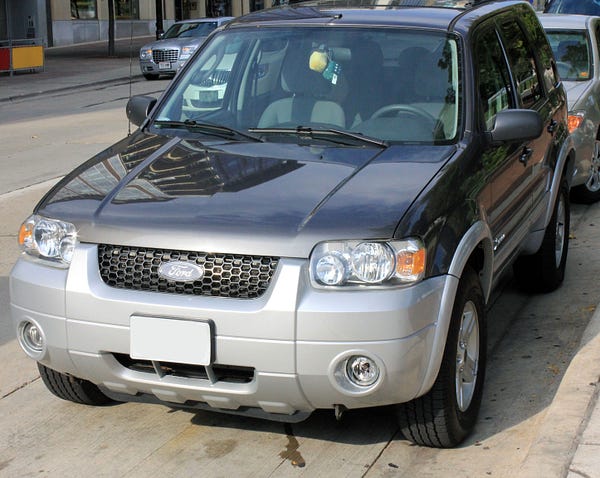
It’s pretty exciting for me that they picked a Ford Fusion as the base for the car!

The Queen’s Speech

Queen Elizabeth II of The United Kingdom of Great Britain and Northern Ireland recently gave her annual address to Parliament, and allegedly it contained a plug for self-driving cars.

I write “allegedly” because I read several headlines about the speech, but none of the articles I read actually quoted the Queen. Maybe there is a prohibition against quoting British royalty?

Here’s an account from Fleet News:

A Modern Transport Bill, which encourages investment in driverless cars and aims to ensure insurance is available to their users, has been announced by the Queen at the state opening of Parliament.

The Government says the Bill will help cut red tape and put the right framework in place to allow innovation, which it claims will put the UK at the forefront of autonomous and driverless vehicle ownership and use.

Good for the UK!

Jaguar, Land Rover, and Volvo are all testing autonomous vehicles in the UK already, so hopefully this clears a path for them to accelerate.

Startup Watch: Otto

Otto is a hot new startup in the autonomous trucking space. They just landed a splashy article on the front page of The New York Times.

Otto, led by 15 former Google engineers, including major figures from the search company’s self-driving car and maps projects, is aiming at the long-haul freeway driving that is the bread and butter of the commercial trucking industry.

Beware any startup that is lead by 15 people, even if they are all former Google engineers.

That said, their approach seems terrific.

Their beachhead appears to be with owner-operators who drive their own trucks, because autonomy can help them stay on the road for more hours every day, which means more money in their pockets.

Also, presumably, those individuals are less risk-averse than big trucking companies that might have legal liability worries.

The article plays up the trucks vs. cars race to autonomy, but that seems like more of a sideshow to me.

Autonomous trucks are related to, but distinct from, self-driving cars and it makes sense that startups would exist to specifically target that market. Ultimately, I doubt Otto cares whether it beats Google cars to market, as long as they can gain a lock on the trucking industry.

Course Report: Control of Mobile Robots

The online course I’ve been working on most rigorously of late [although I’m still one week behind 😦 ], is Control of Mobile Robots.

The course is offered via Coursera, and taught by Magnus Egerstedt and his team at Georgia Tech.

I really like this course!

It offers a great introduction to control theory, and hits the right blend of mathematics and applications for me.

We just finished the distinction and relationship between controllability and observability. These are good introductory concepts and they were conveyed at an introductory level, which I think will provide a solid foundation for more advanced courses.

I’ve written previously of my love for Udacity, which has found a great formula for teaching technical courses on its own platform. Coursera has different strengths and weaknesses, and Control of Mobile Robots is a great example of its strengths.

This course is a relatively obscure topic, so Coursera’s partnerships with major universities enable Coursera to bring this course to the world much faster than Udacity’s in-house production model.

Often the cost for this flexibility is that Coursera courses are of uneven quality. But this course has super-high production values, which I think is a result of Georgia Tech’s focus on online education.

Weekend Roundup

Apple and Didi Chuxing: Apple just invested $1 billion in the Chinese ride-sharing company. It’s not clear to me to what extent this is a bet on ride-sharing, China, or self-driving cars.

“The ride-sharing investment barely dents Apple’s war chest, which stood at $232.9 billion in cash and cash equivalents as of its most recent earnings.”

BMW Self-Driving Car: They plan to launch in 2021. It looks like the Batmobile. “Our goal is already clearly-defined — to be number one in autonomous driving”, said BMW CEO Harald Krueger.

Mobileye Locks In Customers: But they won’t say who they are.

Audi Self-Driving Car Has Manners: Their concept car acts like a human driver — including giving extra space to trucks, and telegraphing (visually) it’s lane changes.

GM Acknowledges Google, Tesla: “GM executive Richard Holman said he and his colleagues once thought self driving cars would become available in 2035 or so. But thanks to the two Silicon Valley companies ‘pushing the envelope,’ he now seems that happening 15 years earlier.”

Ford Smart Mobility LLC

Disclosure: I work in the same building as some of the Ford Smart Mobility LLC staff, but I don’t work in the LLC and I certainly am not speaking for them here. In fact, I’m basically just regurgitating news reported elsewhere.

Design News has a writeup of a panel discussion including a pair of Ford executives, Patrick Ellis and Dave Kaminski.

According to the article, Ford has created Smart Mobility as a means of creating a more nimble organization that functions more like a startup. This is almost straight out of The Innovator’s Dilemma.

Ellis also explained why Ford Smart Mobility LLC is excited to work with startups:

Ellis said that Ford sees working with startups as a mutually beneficial arrangement. Larger companies like Ford get access to new, innovative technologies, while startups benefit from Ford’s infrastructure. “Everyone in Silicon Valley is an entrepreneur, everyone has an idea they think is great and can develop and change the world. Which is great — it’s motivation, it’s passion, which is something that you just can’t buy,” Ellis said. “Most of the startups are removed from the traditional OEMs or the Tier 1 suppliers and that’s really one of the things that gives us a brand new scope of opportunity. Instead of the traditional methods that we use to either learn about a technology or start developing it, we’re actually going Tier 2 or lower right in the beginning.” It’s in this space where Ellis said Ford is really finding opportunties to partner with and potentially invest in startups.

So if you are a startup working in the automotive space, Ford would like to work with you!

On-Demand Mobility Is Still Expensive

I needed to get home from work late last night and I didn’t have a car. Cry me a river.

So I went to the Palo Alto train station, only to discover that I had read the train schedule on my phone wrong. The next train wasn’t passing through for another 45 minutes.

So I looked up the cost of a ride-share home. The distance is a hair under 15 miles.

Lyft wouldn’t even quote me a price — apparently the ride was out of their service area.

Uber quoted me a price of $50.

The train is $5. I got two slices of pizza and waited for the train.

Maybe this isn’t a good use of time, running the cost benefit analysis. But it was just hard for me to pull the trigger on a $50 ride home.

Automotive Grade Linux

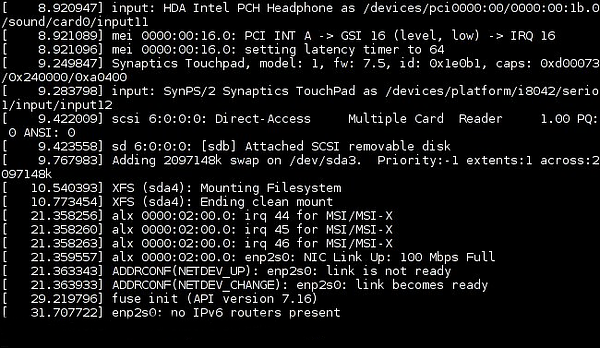
PCWorld has a quick writeup of a project called Automotive Grade Linux, run by the Linux Foundation.

The goal is straightforward enough — to create a Linux flavor that meets the needs of the automotive industry.

They’re starting with a focus on infotainment consoles, which are the big screens in the center of many modern cars that offer navigation, music, Bluetooth integration, and more.

But the eventual goal is to be the operating system for the entire car.

This is an interesting idea, and analogous to the hardware world. Automotive grade hardware is often a modified version of off-the-shelf hardware, with housing designed for the rough conditions and longer lifetimes required by a car.

One concern I have is whether there will be enough of an ecosystem around AGL. Ubuntu isn’t a perfect solution for cars, but one nice thing about it is that so many people use Ubuntu that the bugs are driven out quickly.

Autonomy and the Law

Crain’s Detroit Business published a story about all of the Michican law firms that are forming autonomous vehicle legal teams to handle this new category of business.

And I can imagine there is lots of new business to get. In particular, the attorney’s quoted in the story talk a lot about connectivity issues. Whereas I might have guessed that the legal issues surrounding autonomy are primarily safety-related, these legal teams think there is a lot of legal work related to transmitting data from the car to the cloud or to other cars.

The geographic angle is also interesting. One of the lawyers mentions that her autonomous vehicle group was formed in response to requests for legal help from startups.

Many of those startups are probably California-based, although the article doesn’t specify.

I’ve written before about the Michigan-California competition for OEMs, but it makes sense that this competition travels all the way up the supply chain.