One of the big open secrets in the autonomous vehicle world is Apple’s development of a car. Apple has refused to publicly acknowledge this, however, to the point that engineers widely believed to be working on the Apple car have just removed their LinkedIn profiles.
While maintaining a determined poker face about exactly what they’re building (is it a car? an automotive operating system?), Cook talked about the convergence of autonomy, electrification, and ride-sharing.
In a very short discussion, he seems to emphasize two points. One is the importance of electrification, which perhaps points to Apple building a physical product. The other is the application of autonomy beyond cars. Maybe Apple drones are next.
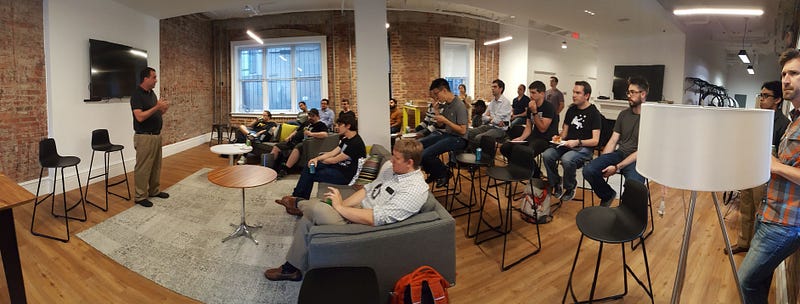
We covered everything from deep learning, to the SAE automation levels, to safety and security, to public policy. There were lots of great questions and it was lots of fun.
Juan and Antonio rigged up a lightweight video recording from a laptop webcam, and I think it came out surprisingly well. Feel free to watch below.
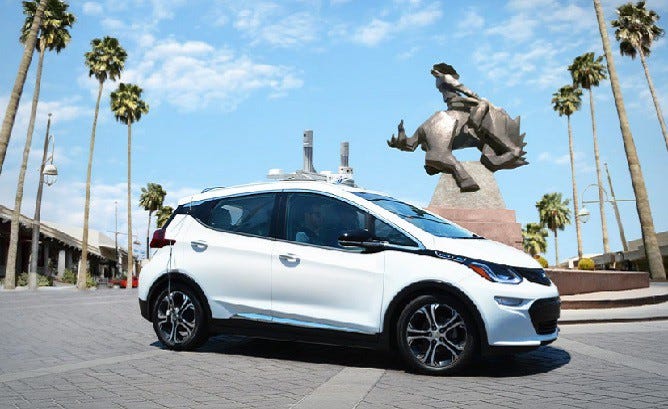
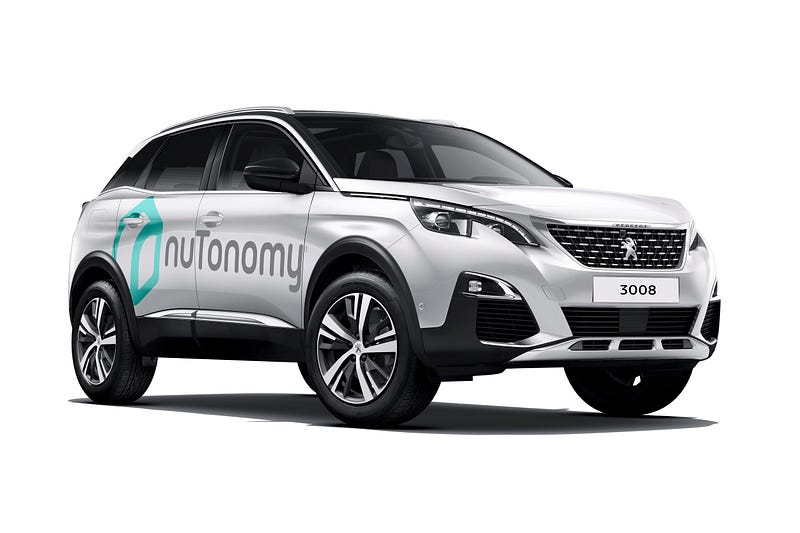
While nuTonomy has been targeting self-driving cars in Boston for a while, this is great news for Lyft. Lyft continues to expand its platform as a provider of ridesharing infrastructure, while letting other companies figure out the actual autonomous technology.
Lyft turned its much-smaller-than-Uber size to its advantage here, by credibly committing not to develop autonomous vehicles. That presumably makes it a more attractive partner than Uber, which is developing its own self-driving technology and thus might have conflicts of interest.
I am on-record as a vocal supporter of Uber ATG, whose staff have been terrific partners for the Udacity Self-Driving Car Nanodegree Program. But it also seems likely that all of the negative news coming out of Uber this year might be causing other companies to second-guess partnerships or vendor-supplier relationships with Uber. Of course, that redounds to Lyft’s benefit.
Lyft, through a combination of using a presumed weakness to their advantage, and through avoiding unforced errors, is having a pretty great 2017.
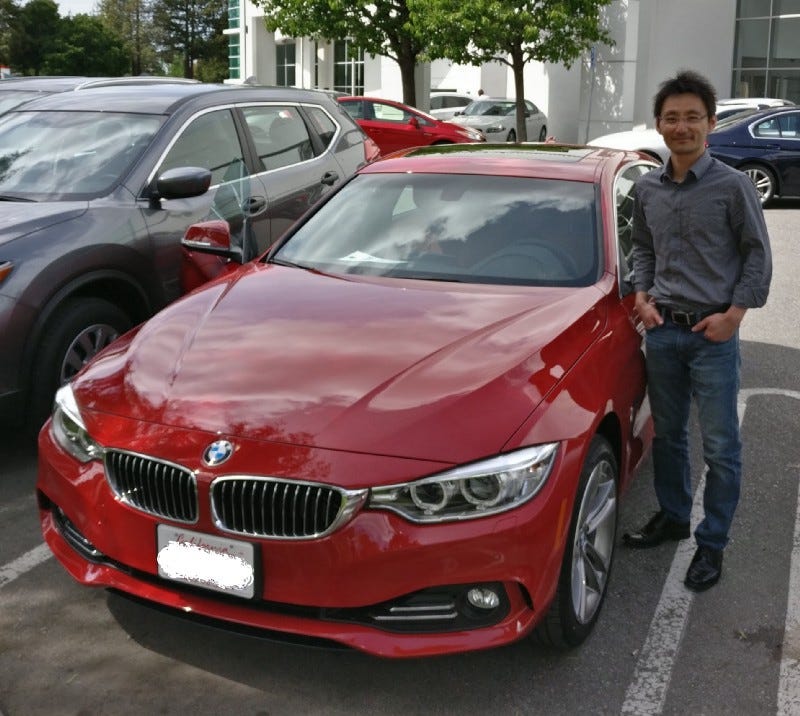
George landed a job working on deep learning with BMW’s autonomous vehicle team in Silicon Valley! His stats on the hiring funnel are instructive for anybody interviewing in software, and especially in this industry.
“I had 9 interviews out of my ~90 job applications, i.e. around 10% of applications lead to interviews. In my mind this was a pretty good conversion rate. Out of those 9 interviews, 4 of them lead to final-round interviews: 2 final-round interviews for full-time jobs, 2 final-round interviews for internships. I did well on those 4 interviews as they all lead to offers.”
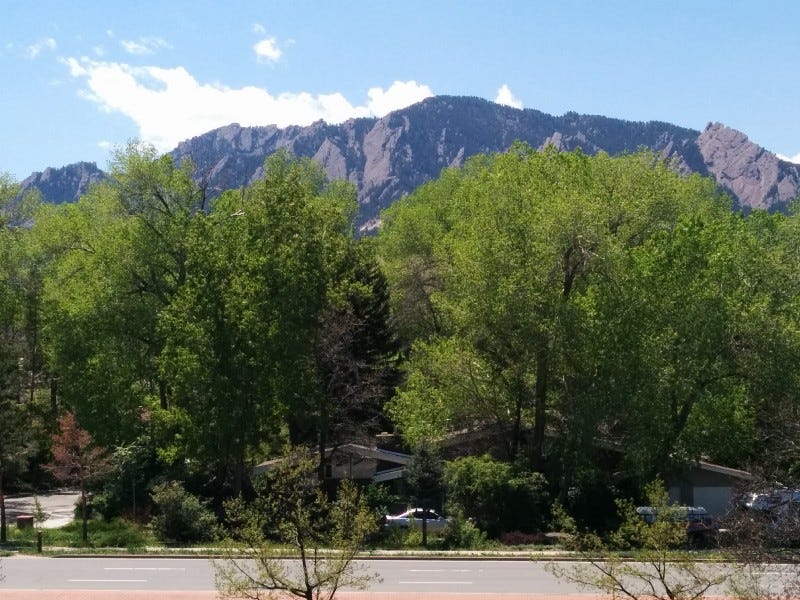
Galen got a job working on autonomous vehicles at HERE’s Boulder, Colorado, office! It’s also a great example of how being flexible about roles (Galen is starting on the DevOps team) can help you get a foot in the door with autonomous vehicle teams.
“Mathematics is a wonderful thing, but it’s not very career specific. Just a few months after graduating, I made two very important decisions: to enroll at Metis and to enroll in the Udacity Self-driving Car Engineer Nanodegree (SDCEND). Both of these were instrumental in my career path, but the Udacity SDCEND was critical.”
Ubuntu + Deep Learning Software Installation Guide
In the Udacity Self-Driving Car Nanodegree Program, we provide an AWS AMI for utilizing NVIDIA GPUs for accelerating deep learning. We don’t, however, explain how to set up this software on your own machine. Probably we should do that. In the meantime, Nick has this terrific guide.
“There are a number of good installation guides out there — particularly this one from floydhub that much of this is based on — but I found myself having to dig through many different resources to get everything installed properly. The goal of this article is to consolidate all the necessary resources into one place.”
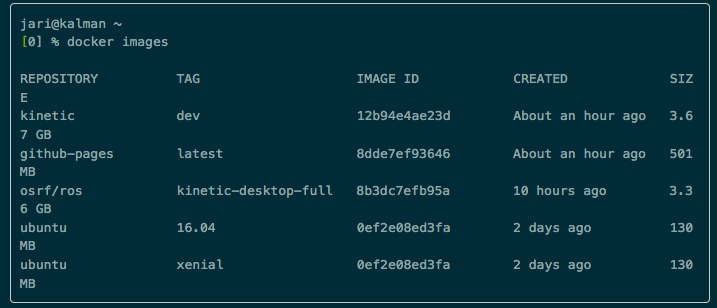
“ros skillz pay Jari’s billz”, and here he walks through how to get ROS set up using the Docker virtual environment.
“Image: This is essentially the “installation” of something that you want to run using Docker. An image contains all the data necessary to run containers. Images are hierarchical and a new image that shares information with an older one will not reproduce this information and instead just re-use it (i.e. if you have two Ubuntu based images with different software installed, they will both refer to the same base Ubuntu image rather than copy its contents). This is what people mean when they say that Docker’s filesystem is layered.”
Last week I was in Japan, meeting with Udacity students and with Japanese automotive companies. It was a lot of fun, and it was exciting to see the work that Japanese automotive companies are putting into autonomous vehicles!
Japan is home to a dozen large automotive manufacturers: Toyota, Honda, Nissan, Subaru, Mazda, and more. Supporting these manufacturers are large and small suppliers, providing Japan the third-largest automotive industry in the world.
Japan’s automotive market is more dispersed than America’s, both organizationally and geographically. Whereas the US automotive industry is centered around Detroit, the Japanese automotive industry is spread all over the country. This gives the Japanese economy a little bit of a Detroit-like feel; not everybody works in the automotive industry, but a lot of people do.
Localization (in the language sense, not in the lidar sense) is a big challenge for bringing the Udacity Self-Driving Car Nanodegree Program to Japan. English is not widely spoken in the country, but it seems to be more prevalent among software engineers, who need to at least read English to participate in cutting-edge projects and research. So in that sense, Self-Driving Car has an easier time than, say, Udacity’s Introduction to Programming Nanodegree Program.
One thing that really struck me in meeting with Udacity students in Japan is how important the Udacity student network can be. We hosted about 30 Self-Driving Car students in Tokyo, some of whom already worked in the automotive industry and some of whom were trying to break into that field. The students in the field were eager to connect with newcomers, particularly in a relatively small community of Udacity students.
That’s been one of our goals for the program since the beginning, that as Udacity students get jobs working on autonomous vehicles, they’ll want to pull in other Udacity students. It was fun to see that in operation in Tokyo.
Ford plays catch up on self-driving car technology. No, wait, another article says Ford is ahead! The truth is Ford itself doesn’t really know for sure, because none of the car companies are releasing metrics in this area. The only group that even has a clue about this, interestingly enough, are the automotive suppliers, since they see what everyone is doing.
I thought I’d try to summarize it, mostly as an exercise in trying to understand the paper myself.
Background
This paper appears to originate out of the lab of Raquel Urtasun, the University of Toronto professor who just joined Uber ATG. Prior to Uber, Urtasun compiled the KITTI benchmark dataset.
Right now, MultiNet sits at 15th place on the leaderboard, but it’s the top entry that’s been formally written up in an academic paper.
Goals
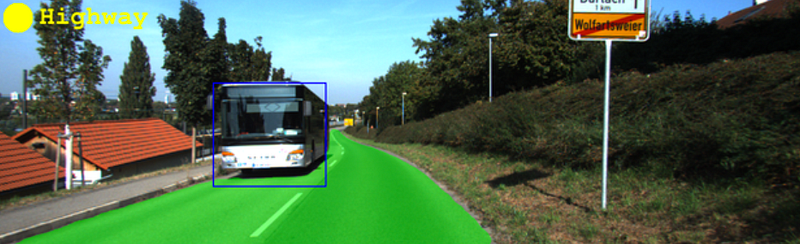
Interestingly, the goal of MultiNet is exactly to win the KITTI Lane Detection competition. Rather, it’s to train a network that can segment the road quickly, in real-time. Adding complexity, the network also detects and classifies vehicles on the road.
¿Por qué no?
Architecture
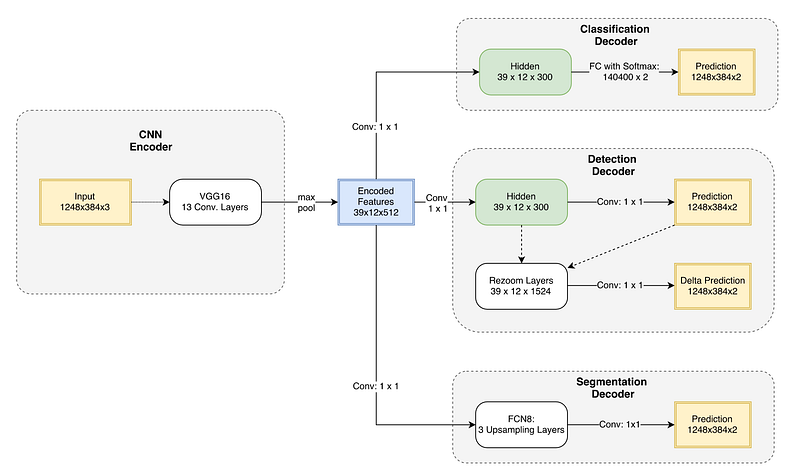
The MultiNet architecture is three-headed. The beginning of the network is just VGG16, without the three fully connected layers at the end. This part of the network is the “encoder” part of the standard encoder-decoder architecture.
Conceptually, the “CNN Encoder” reduces each input image down to a set of features. Specifically, 512 features, since the output tensor (“Encoded Features”) of the encoder is 39x12x512.
For each region of an input image, this Encoded Features tensor captures a measure of how strongly each of 512 features is represented in that region.
Since this is a neural network, we don’t really know what these features are, and they may not even really be things we can explain. It’s just whatever things the network learns to be important.
The three-headed outputs are more complex.
Classification: Actually, I just lied. This output head is pretty straightforward. The network applies a 1×1 convolution to the encoded features (I’m not totally sure why), then adds a fully connected layer and a softmax function. Easy.
(Update: Several commenters have added helpful explanations of 1×1 convolutional layers. My uncertainty was actually more about why MultiNet adds a 1×1 convolutional layer in this precise place. After chewing on it, though, I think I understand. Basically, the precise features encoded by the encoder sub-network may not be the best match for classification. Instead, the classification output perform best if the shared features are used to build a new set of features that is specifically tuned for classification. The 1×1 convolutional layer transforms the common encoded features into that new set of features specific to classification.)
Detection: This output head is complicated. They say it’s inspired by Yolo and Faster-RCNN, and involves a series of 1×1 convolutions that output a tensor that has bounding box coordinates.
Remember, however, the encoded features only have dimensions 39×12, while the original input image is a whopping 1248×384. Apparently 39×12 winds up being too small to produce accurate bounding boxes. So the network has “rezoom layers” that combine the first pass at bounding boxes with some of the less down-sampled VGG convolutional outputs.
The result is more accurate bounding boxes, but I can’t really say I understand how this works, at least on a first readthrough.
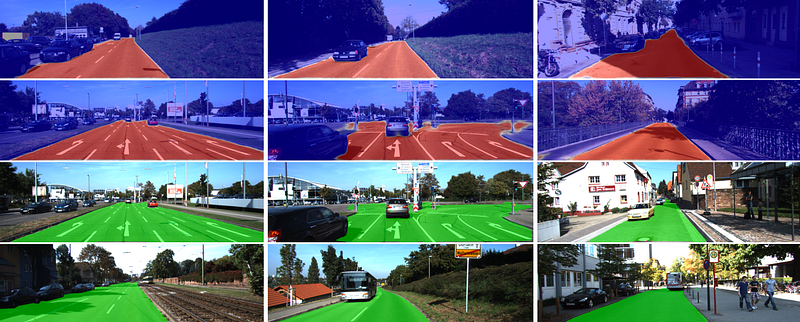
Segmentation: The segmentation output head applies fully-convolutional upsampling layers to blow up the encoded features from 39x12x512 back to the original image size of 1248x312x2.
The “2” at the end is because this head actually outputs a mask, not the original image. The mask is binary and just marks each pixel in the image as “road” or “not road”. This is actually how the network is scored for the KITTI leaderboard.
Training
The paper includes a detailed discussion of loss function and training. The main point that jumped out at me is that there are only 289 training images in the KITTI lane detection training set. So the network is basically relying on transfer learning from VGG.
It’s pretty amazing that any network can score at levels of 90%+ road accuracy, given a training set of only 289 images.
I’m also surprised that the 200,000 training steps don’t result in severe overfitting.
Summary
MultiNet seems like a really neat network, in that it accomplishes several tasks at once, really fast. The writeup is also pretty easy follow, so kudos to them for that.
If you’re so inclined, it might worth downloading the KITTI dataset and trying out some of this on your own.
I’ve got a few trips planned and I hope to meet current and prospective Udacity Self-Driving Car students along the way.
If you’re neither a current nor a prospective student, but would like to meet for another reason, just send me an email (david.silver@udacity.com).
Japan
It looks like a gathering of Udacity Self-Driving Car students in Tokyo will be happening on Wednesday, May 31, at EGG. More details to come in the #japan channel of the student Slack community, or ping me directly for details.
Washington, DC
I’m heading home to Virginia from June 7th through 11th. Still working on organizing a gathering while I’m there. Send me an email if you’re interested in attending.
Denver
I’ll be in Colorado for a week from late June to early July, and Autonomous Denver has graciously offered to help put an event together. More details to come on this, as well. If you’re interested, join the Autonomous Denver Meetup group, or send me an email directly.








 David Silver