Beer Run

Our friends at Otto just announced their first delivery: a 120-mile beer run from Loveland, Colorado, to Fort Collins.

From the details in the Times article, it sounds like the truck drove autonomously on both highway and surface streets, which is a real accomplishment.

Otto’s truck departed Anheuser-Busch’s facility in Loveland, Colo., in the early morning before reaching the interstate in Fort Collins. The truck drove through Denver — alongside regular passenger car traffic — and navigated to its destination in Colorado Springs without incident.

Uber is expanding from the business of moving people and into the business of moving everything.

The delivery was indicative of Uber’s larger ambitions to become an enormous transportation network, one in which the company is responsible for moving anything, like people, hot meals or cases of beer, around the globe, at all hours and as efficiently as possible. Travis Kalanick, Uber’s chief executive, has said he envisions a future in which transportation will occur in different ways, using both manned and unmanned vehicles.

Ford and Jaguar and Vehicle-to-Vehicle Communication

Ford and Jaguar are testing vehicle-to-vehicle communication in the UK:

Cars which are able to warn drivers when another connected vehicle brakes suddenly and those which can monitor traffic signals and regulate their speed to encounter fewer red lights were being showcased at a testing ground in central England.

Vehicle-to-vehicle and vehicle-to-infrastructure communication is probably a little further out than straight self-driving cars. But it has the potential to massively improve traffic flow. Imagine a world with no more stoplights, because vehicles figure out on their own when it’s safe to cross an intersection.

One big hurdle is defining a shared standard that works between manufacturers. This seems like an area in which the winning protocol will be whichever protocol gets built first.

Kudos to Ford and Jaguar for getting out in front of this.

Udacity’s Self-Driving Car Hiring Partners

Big news for our little Nanodegree Program!

As of today, we have 14 awesome hiring partners signed up to review and hire (hopefully a lot) of our students.

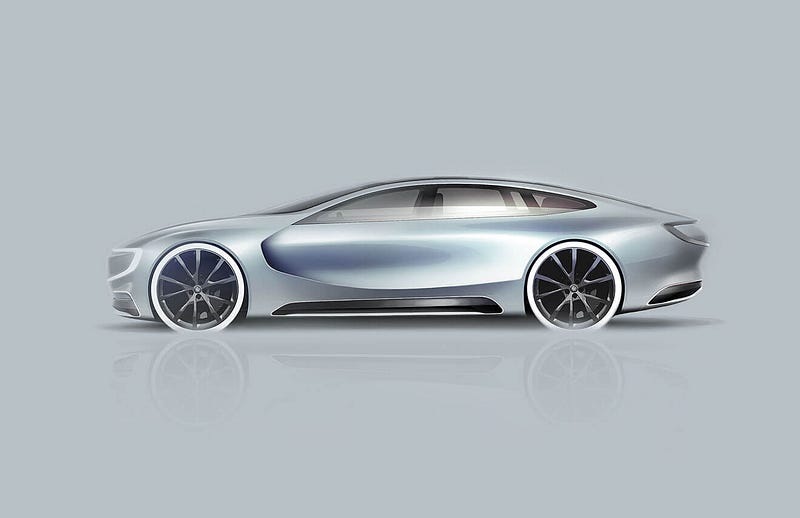
The partners are Mercedes-Benz, NVIDIA, Otto, DiDi, BMW, HCL, AutonomouStuff, McLaren, NextEv, Elektrobit, HERE, Local Motors, PolySync, LeEco.

My favorite part of this announcement is how international these partners are. Many of these companies employ autonomous vehicle engineers worldwide, but even just going by headquarters, here’s the breakdown:

North America: AutonomouStuff, Local Motors, NVIDIA, Otto, PolySync

Europe: BMW, Elektrobit, HERE, McLaren, Mercedes-Benz

Asia: Didi, HCL, NextEv, LeEco

We’re still hard at work partnering with more great employers who are excited about our worldwide student base, but I’m excited. This is a great start.

Teslas Now Have Self-Driving Hardware

According to the Tesla blog:

We are excited to announce that, as of today, all Tesla vehicles produced in our factory — including Model 3 — will have the hardware needed for full self-driving capability at a safety level substantially greater than that of a human driver. Eight surround cameras provide 360 degree visibility around the car at up to 250 meters of range. Twelve updated ultrasonic sensors complement this vision, allowing for detection of both hard and soft objects at nearly twice the distance of the prior system. A forward-facing radar with enhanced processing provides additional data about the world on a redundant wavelength, capable of seeing through heavy rain, fog, dust and even the car ahead.

This is an interesting announcement because it lays so much responsibility on the software. No other company working on fully autonomous vehicles (that I’m aware of) thinks it can be done with just cameras, ultrasonics, one forward-facing radar.

Most competitors are relying on lidar plus 360-degree radar.

If Tesla pulls this off, it will be a game-changer.

Self-Driving Cars: Asia Edition

TomTom in Asia: Tomaso Grossi, the head of automotive marketing at map-maker TomTom, talks with Tech Wire Asia about the potential for self-driving cars in Asia. He says the big drivers will be Asia’s urban cores, aging populations, and reductions in congestion and pollution.

nuTonomy Fender-Bender: The startup nuTonomy, which has been the first to launch self-driving taxis in Singapore, recently got into a fender-bender with a truck. It sounds like the fault may have been with the self-driving taxi, as it was changing lanes when it apparently merged into the truck.

mCity China: A Chinese investment firm just signed a $27MM deal with the University of Michigan to build what sounds like a version of mCity in Shenzen, along with associated research focusing on self-driving cars in Asia.

Autonomous Vehicle Weekend Update

Atieva Atvus: Electric car-maker Atieva has been quietly working on autonomous vehicles for several years. Recode reports that they are on the cusp of manufacturing a sedan similar to the Tesla Model S. It’s called the Atvus.

Trolleyology @ Mercedes: I have become a little bit tired of the trolley problem, because I think it ignores the fundamental safety problem with cars, which is that human drivers kill a lot of people. But the trolley problem won’t die, and Mercedes’ CEO Christoph von Hugo squared up and answered that Mercedes is going to prioritize the saving the lives of its passengers. And kudos to them for that.

Roboracing is Hard: The autonomous vehicle race series, Roborace, just put out a documentary profiling the ups and downs of their first season. I haven’t watched it yet, but The Verge says it’s good and doesn’t sugarcoat the difficulty of pulling this off.

Uber Freight: Contrary to my belief, Uber is not sidelining the freight side of Otto’s business. Instead, they are planning to launch it next year(!).

C++ vs. Python for Automotive Software

This afternoon I posted a long response to a question about how we will use C++ vs. Python in the Udacity Self-Driving Car Nanodegree Program, and how automotive engineers use those languages on the job.

You can read my full response, but here’s the part where I focus on how automotive engineers write software on the job:

Autonomous vehicle engineers on the job tend to use a variety of languages, depending on their team, their facility with different languages, the APIs their tools expose, and performance requirements.

C++ is a compiled, high-performance language, so most code that actually runs on the vehicle tends to be C++.

That said, many engineers spend most of their time prototyping algorithms in Python, Matlab, or even Java or other languages. Other engineers spend pretty much all of their time writing production code in C / C++.

Machine learning engineers often spend a lot of time in Python, because libraries like TensorFlow rely on Python for their primary APIs. TensorFlow does a lot of the heavy lifting in terms of compiling networks for faster performance.

Addendum: Since I have been asked several times recently, my favorite C++ book is Modern C++ Programming with Test-Driven Development, by Jeff Langr. Unfortunately, Udacity does not yet have a C++ course. There appear to be C++ courses on Coursera and edX but I have not reviewed them yet.

Making Motorcycling Safer

From the Department of Progress, Automotive News has a thinkpiece up about how self-driving cars will make motorcycling safer.

The improvement apparently will come largely from left turns:

This year, about 1,000 riders in the U.S. will lose their lives to the left turns of others. Cars traveling in the same direction as the motorcycle often don’t notice the bike overtaking on the left. Cars making a turn while coming from the opposite direction either fail to see the oncoming bike, or misjudge its speed.

And apparently this is a good time to buy Harley-Davidson stock:

Once every aspiring biker realizes that the driver next to him isn’t an existential threat, sales will climb in some places. Xavier Mosquet, a senior partner at Boston Consulting Group, said the bike boost will be most pronounced in markets such as the U.S., where people ride for fun, and in China and India, where many choose motorbikes because they are relatively inexpensive transportation.

Conversely, in such places as Europe. where motorcycles are often the best way to avoid traffic, self-driving cars may actually dent sales, according to Mosquet. If all goes as planned, there will be fewer tie-ups or accidents, less rubbernecking, and thus less to be gained by jumping on a bike and splitting lanes of standstill traffic.

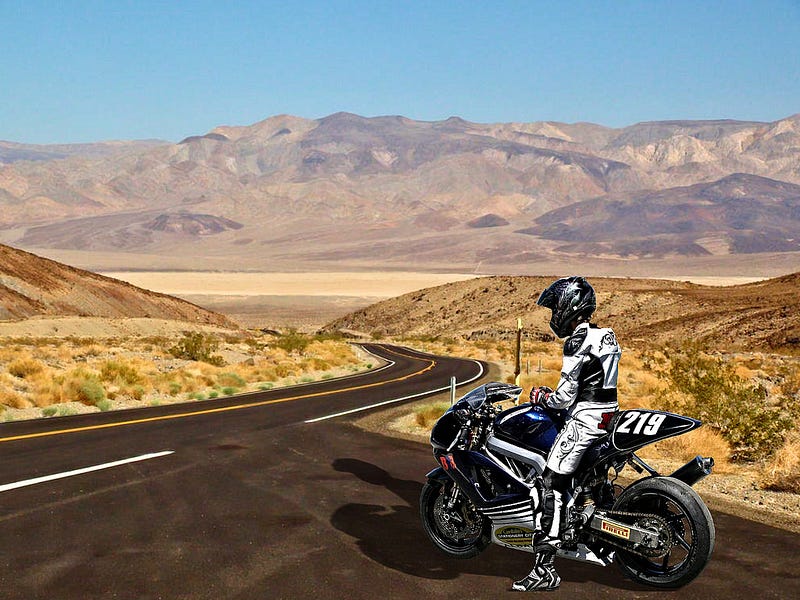
Self-driving motorcycles, however, are still quite a ways off. Here’s a visual explanation of why.

In fairness, if I’ve heard Sebastian Thrun tell the story right, the head of that team was Anthony Levandowski, who went on to found Otto and now runs Uber’s self-driving car program. So he’s done well.