Jupyter Notebooks are terrific and highly interactive tools that are extremely popular for both publishing data science results and for teaching concepts.
Udacity uses Jupyter extensively, particularly for teaching machine learning and data science.
We love Jupyter so much, in fact, that Udacity engineers have developed a set of enhancements for Jupyter called, “Graffiti”. Graffiti allows Udacity instructors to record screencasts, mouseovers, and audio walkthroughs of code. Those features get embedded directly into our Jupyter notebooks.
In Udacity’s C++ Nanodegree Program, we use Graffiti to add terminals to Jupyter notebooks, so that we can compile, run, and debug C++ programs from within Jupyter Notebooks. It’s really pretty neat.
Next Thursday night, April 11th, we’ll be hosting a “Reverse AMA” with Udacity’s new Chief Product Officer, Alper Tekin. Alper is excited to meet students, so please sign up to visit, eat dinner with us, and share your thoughts on what you love and don’t love about Udacity.
I will be there, too!
We’re limiting this event to 20 students. A few enterprising students have already found the Eventbrite page and claimed seats, so grab one before they go!
I am super excited that today Udacity launched the C++ Nanodegree Program! My team and I have been building this for the last several months and we can’t wait to share it with students. 💻
There are so many jobs available for C++ engineers. 😄
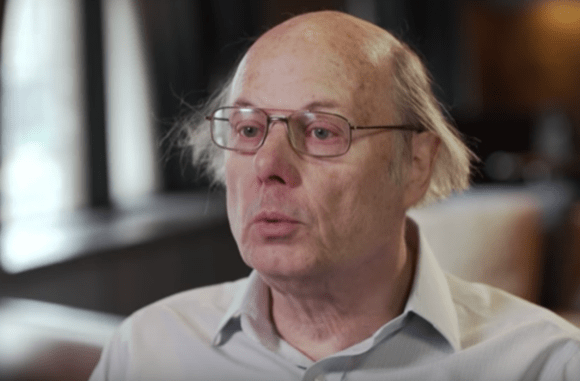
One of my favorite parts of building this program was the opportunity to talk with C++ creator Bjarne Stroustrup. Bjarne cares a lot about teaching C++ well, and he was incredibly generous with his time and advice on the curriculum. He also graciously sat for many videos that appear in the program, in which he explains how different features of the language work, why those features came about, and the right way to use them.
The Nanodegree Program is composed of five courses, each lasting one month:
Foundations: Learn the basics of “modern” C++ (C++17!) syntax and operators. You’ll finish this course by building a real-world route planner using OpenStreetMap data!
Object-Oriented Programming: Design programs using object-oriented C++ features, including classes and templates. The final project for this course is to implement an htop-like process manager for Linux (we provide a full Linux desktop through your browser!).
Memory Management: Grasp the power of C++ by learning how to manage resources on the stack and the free store. In particular, learn how to leverage Resource Acquisition Is Initialization (RAII) principles to scope your resources and handle them automatically!
Concurrency: Parallel processing has been a key driver of the adoption of C++ into real-time and embedded systems, like self-driving cars. In this course, you’ll exploit parallel processing to accelerate your programs, starting with parallel implementations of standard library algorithms and moving all the way to thread synchronization and communication.
C++ is such an important skill, and I think this course teaches “modern” C++ in a really intuitive and hands-on way, just like all Udacity courses.
Check out the Nanodegree Program and enroll today!
This is a free, short synopsis of what robotics is, what jobs are available, what skills are necessary to get those jobs, how much those jobs pay, and what companies are hiring.
Meya used the scholarship to build a portfolio that landed her a software engineering role at Workday. Ana applied her computer vision skills to a project she’s developing for a Fulbright Scholarship. And Hirza used her new skills to transition from a test engineer role to a software development engineer role.
Udacity student stories are great, and these are especially moving. Check it out.
A pioneering training center, developed jointly with Tier IV and PIX, provides an opportunity for students to work in teams on their own self-driving car.
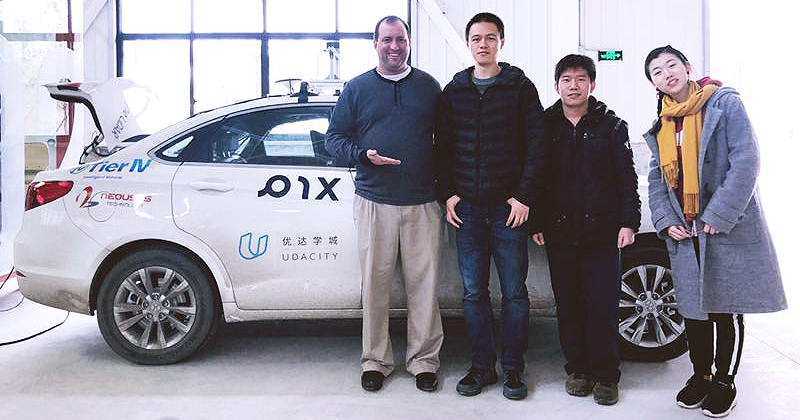
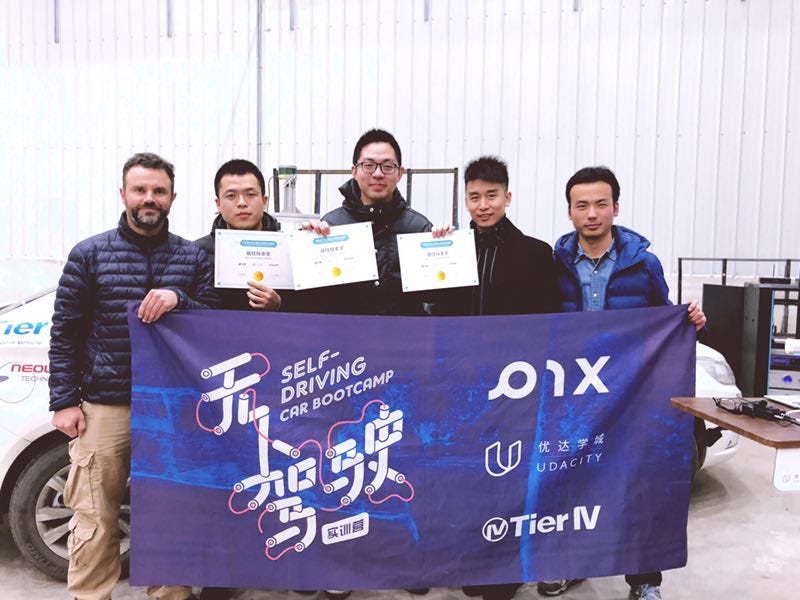
Last week I had the privilege of visiting Udacity’s Self-Driving Car Training Center in Guiyang, China.
This is a facility that our colleagues on Udacity’s China team have developed jointly with Tier IV (the creators of Autoware) and PIX (an autonomous vehicle startup in Guiyang). The center provides an opportunity for students from all over China to come together and work in teams for a week on their own self-driving car. Over the course of the program, they install all of their own software and get the car driving itself around a test track, stopping at traffic lights and stop lines.
This is such an amazing program!
Bringing together teams of students to work in-person on a self-driving car is a tremendous experience that was exceptionally valuable for the students at the Training Center.
Watching and participating with students working on self-driving cars in western China, I was reminded of how huge the talent pool is, all over the world, for people who want to build autonomous vehicles.
Check out this video of one of the team’s getting their car to drive!
As we continue to move forward into the future of autonomous transportation, opportunities to experience firsthand the migration from theory to practice—and from online to on the street—will become ever more valuable to then engineers engaged in making this future a reality. I am excited that Udacity’s China team is helping to make this kind of experience possible for aspiring autonomous engineers, and I am grateful to have had the opportunity to watch it all in action.
Are you interested in joining the next generation of talent building the future of autonomous transportation? Visit our School of Autonomous Systems today!
Aspiring Self-Driving Car Engineers in India, apply today for the opportunity to work on autonomous vehicles, regardless of your financial situation!
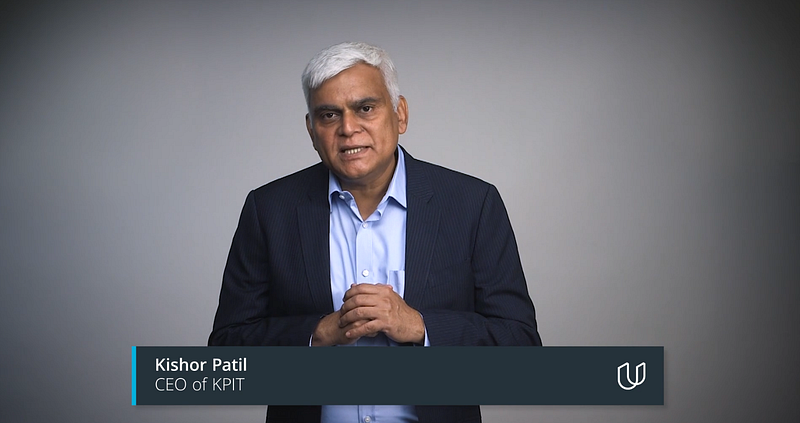
KPIT, one of India’s leading automotive software suppliers, just announced they are sponsoring 500 scholarships for Indian students to take Udacity’s Self-Driving Car Engineer Nanodegree program!
Since we launched the Nanodegree program two years ago, we have seen tremendous interest from students in India who want to learn about autonomous vehicles. Many of the Indian students who have enrolled in the Nanodegree program now work on autonomous vehicles at great Indian companies like KPIT, Ola, and Hi-Tech Robotics.
The KPIT Scholarships will provide the opportunity for any student in India to work on self-driving cars, regardless of their financial situation.
KPIT is making a tremendous investment in Indian software engineers. We are delighted to be able to work with Kishor Patil and the KPIT team to make this possible!
This is an online event for Udacity students and alumni to learn from and connect with each other, as well as to hear from Udacity staff. Since Udacity is an online education institution with students all around the world, this is a virtual event, taking place online throughout the weekend.
The Festival will feature:
“Presentations covering everything from pitching projects and landing new jobs, to career change and entrepreneurial success.
Exclusive digital meetups for each Udacity school — Artificial Intelligence, Autonomous Systems, Business, Data Science, and Programming.
Panel discussions with alumni sharing their career advancement strategies. … and so much more!”
As a teaser, the School of Autonomous Systems event will feature a ride in Carla, Udacity’s self-drivng car!
As if that weren’t enough, I will engage is a special round of Carla Karaoke. You will not believe my closing number. Like, literally, you will not believe it. You will watch me sing it and still will not believe I chose this song.
In these projects, students showcase initiative, creativity, and work ethic, as they build projects focused on topics like perception, deep learning, and computer vision.
Their intense interest in these topics translates directly to the high quality of their work. Today, I’d like to share three especially impressive student projects with you that cover these areas!
I love this project! Mohammad did it on his own, and he went way beyond the requirements of the Nanodegree program to do so. That’s going to serve him well in the long run, because employers love it when talented students get so deep into particular subjects, that they start building their own projects to further flesh out their ideas and test their skills.
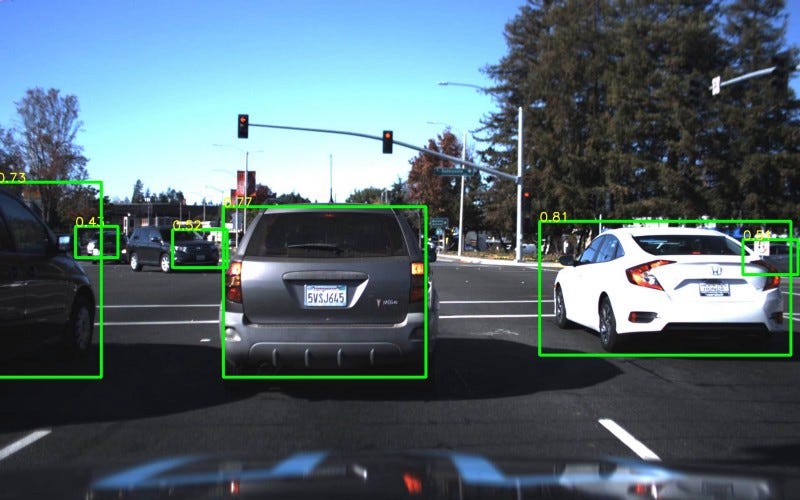
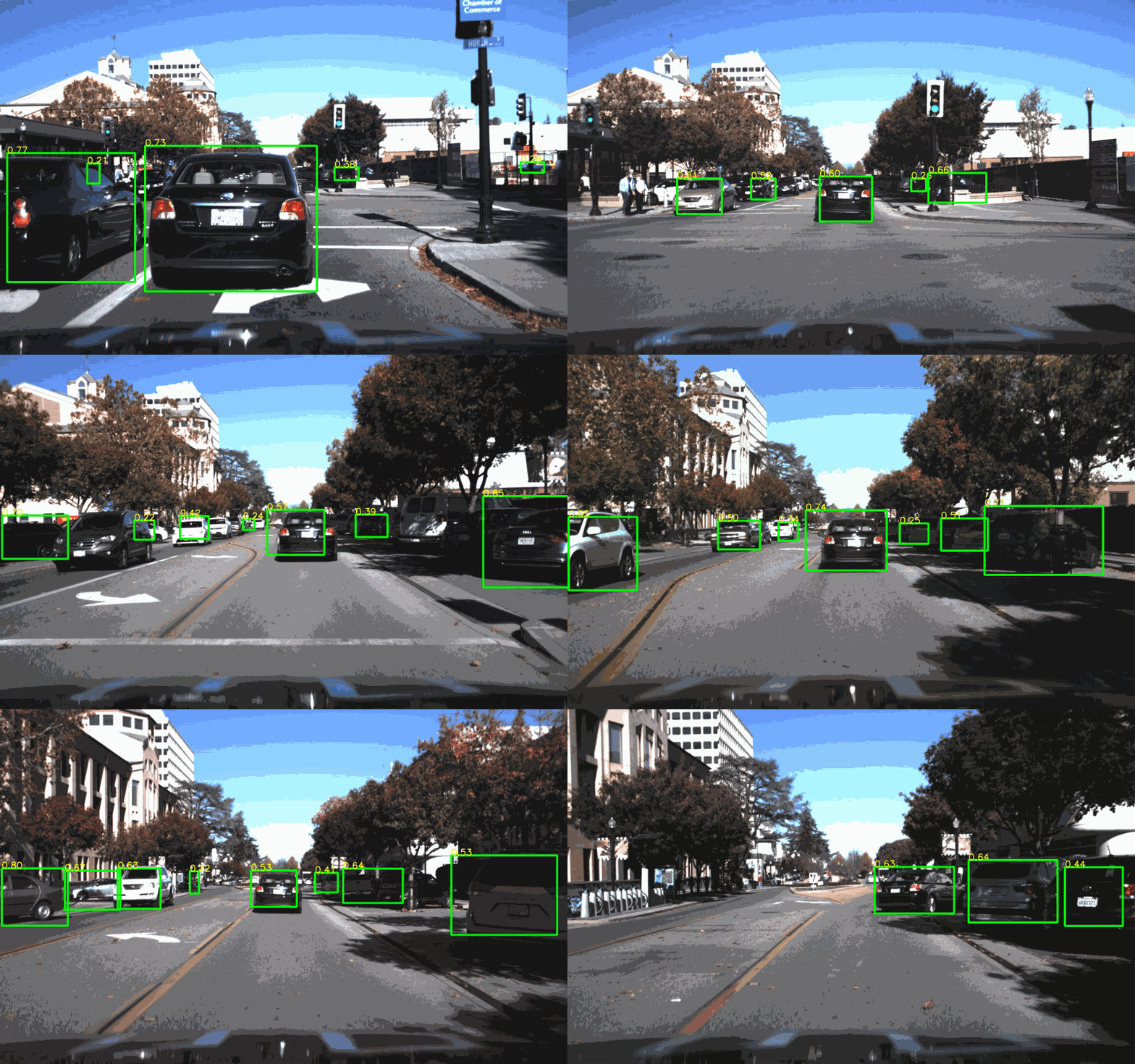
“In this project I have used a pre-trained ResNet50 network, removed its classifier layers so it becomes a feature extractor, and then added the YOLO classifier layer instead (randomly initialized). I then trained the network on Udacity’s CrowdAI dataset to detect cars in video frames.”
Enrique used VGG-16 to create a semantic segmentation network for the Advanced Deep Learning project in the Nanodegree program. He trained that network using the KITTI dataset, and then applied the network to scenes he recorded driving in Mexico. Check out his YouTube videos!
“The original FCN-8s was trained in stages. The authors later uploaded a version that was trained all at once to their GitHub repo. The version in the GitHub repo has one important difference: The outputs of pooling layers 3 and 4 are scaled before they are fed into the 1×1 convolutions. As a result, some students have found that the model learns much better with the scaling layers included. The model may not converge substantially faster, but may reach a higher IoU and accuracy.”
Moataz built a vehicle detection pipeline combining histogram of oriented gradients, support vector machines, and sliding window search. I particularly like the heatmap he employs to reduce false positives in vehicle detection. This is a great example of going beyond the steps outlined in the Nanodegree program, to build a truly standout project.
“Now given the simplicity of the SVM model, we expect some detections to be false positives. In order to filter out these incorrect detections, one approach is to threshold our positive windows such that we only pick areas where more than one window overlap. In essence we are generating a heatmap of the positive windows.”
Udacity practices project-based learning, which means all of our students in all of our Nanodegree programs build projects like these. This approach enables you to learn practical skills, and to build a dynamic portfolio populated with completed projects that clearly showcase your new skills and experience.
Since we launched our Self-Driving Car Engineer Nanodegree program in late 2016, nearly 2,000 students have completed the program, and more new graduates are joining them every month.
Not all students enroll in the program specifically to find a new job, but many do, and it’s exciting to see a new generation of talent entering this field. With that in mind, we’d like to introduce you to some of these alums!
One of our early graduates, Robert Ioffe, transitioned within his company, Intel, to the role of Senior Self-Driving Car Software Engineer shortly after enrolling in our Nanodegree Program. Since then, Intel has announced its plan to begin testing 100 self-driving cars in Jerusalem, and eventually in the U.S.
“The coolest thing is that everything I learn in the class is immediately applicable to my current job, which is building a self-driving Range Rover with Intel technology inside. It is very rare where you can learn things in class one day, and the next day you can apply it in your work!”
Megha Maheshwari, who immigrated to the U.S. from India, began her career as a software engineer, but ultimately landed a position at Volvo Cars as an Autonomous Driving, Deep Learning, and Computer Vision Engineer. Volvo is investing heavily in fully electric and self-driving vehicles, which many industry analysts believe is part of its plan to go public.
“When I was ending Term One, I felt I had enough knowledge about classical computer vision and deep learning. That’s when I started looking for jobs and not long after looking and applying, I got hired.”
Udacity grads are also launching startups to capitalize on the growing opportunities in the autonomous vehicle market. After earning their Nanodegree credentials, alums David Hayes and Duncan Iglesias formed the Autonomous Vehicle Organization, or AVO, to increase safety and security by focusing on the vehicle-to-pedestrian (V2P) segment.
Using skills developed in the course, David and Duncan built a semi-autonomous Honda Civic in just 11 days!
Fellow alum Patrick Kern also co-founded a startup, with a different focus. Brighter AI was launched to develop “Deep Natural Anonymization” to help companies comply with new General Data Protection Regulations (GDPR) in Europe.
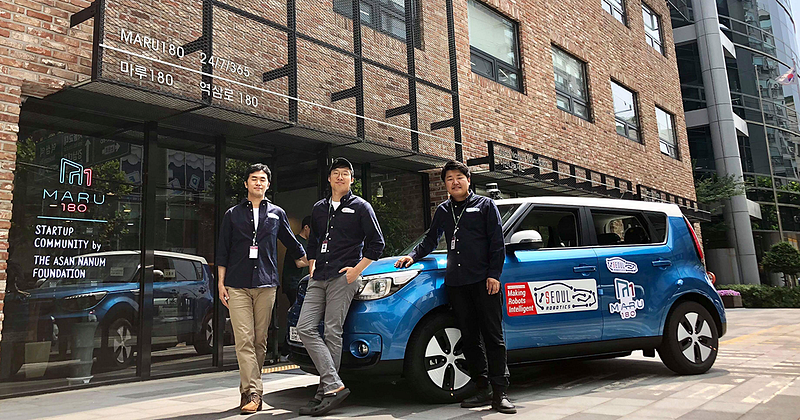
And just last month, we profiled Han Bin Lee, who teamed up with fellow students he met while working on the Udacity-Didi challenge to start Seoul Robotics. Expanding on the Lidar perception software, they began building during the challenge, and today, the company is already looking for a 3D Vision Researcher and a C++ Software Developer to join their crew in South Korea!
“We’re looking for people with the willingness and ability to learn new concepts and algorithms from the latest research. And we’re a startup, so we need team players, who are able to work effectively within a fast-growing, diverse group of people — we have Korean, Vietnamese, American, and Irish people working with us so far. We are really short of people right now, and we would love to work with fellow Udacity alumni to build this company together!”
Because this is still an emerging field, many of our early students didn’t start out wanting to become Self-Driving Car Engineers. That’s changing rapidly as people are realizing how much opportunity there is in this space, but for lifelong learners like Kyle Martin, the decision to enter this field was the culmination of a really interesting journey:
“I started looking for an industry role while I was still in the program. A lead robotics engineer role appeared with a company that was beginning to work on an autonomous shuttle. I jumped at it and got an interview! They were interested in all the areas I’d been working on — things like computer vision and systems architecture. And they were really impressed I’d kept learning and adding to my skills in the program. When they made me an offer, I said “yes” immediately — it sounded like I’d have the opportunity to work on really groundbreaking projects.”
These are just a few examples of how alumni of our autonomous transportation programs are having an impact on this incredible field. As our alumni network continues to grow, we’re excited to help more students find positions in the industry. Stay tuned!










 David Silver