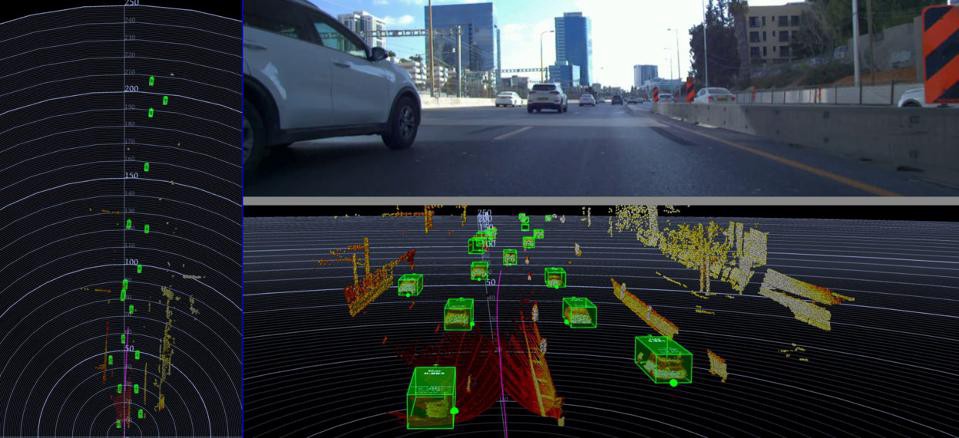
Cruise Infrastructure VP Vinoj Kumar appeared recently on the Software Engineering Daily podcast to talk about the cloud computing that support Cruise’s autonomous vehicles and forthcoming customer-facing products.
“For example, AV’s need to securely connect to backend services, the broker communication to a set of microservices that handle everything from dispatch, remote assistance, mapping, role planning, etc., right? And once the drive is done, there is more data movement. For example, ingesting data into our data lakes for post processing, then you do analysis, continuous improvement.”
Artificial intelligence requires tremendous amounts of data, which necessitates world-class data infrastructure. Self-recommending!
Motional, the autonomous vehicle company formerly named nuTonomy, has traditionally been the most quiet of the major US-based AV startups. Although its size, in terms of headcount, is on par with Waymo, Cruise, Argo, and Aurora, Motional winds up in the news a lot less.
Recent Motional announcements have been pretty low-key, but they are at least a reminder that the company is progressing.
“Motional, the autonomous vehicle company that is a joint venture between Hyundai and Aptiv, is growing its presence in Las Vegas as it gears up to launch a commercial robotaxi service in 2023.”
The firm is making a huge investment in a new testing center in Las Vegas, as well as rolling out the Hyundai Ioniq 5. That vehicle, an SUV, will be the centerpiece of their initial ridesharing effort.
The Motional partnership with Lyft means that Lyft will have at least two self-driving partners – Argo and Motion – plus whatever happens with the former Lyft Level 5, now part of Toyota’s Woven Planet subsidiary.
Tesla repurposed a defunct casino on Nambe Pueblo, an Indian reservation in New Mexico, turning it into a showroom and service center, according to Business Insider. The facility had to be on Indian land, to circumvent New Mexico laws that prohibit automotive companies from selling directly to customers. Those laws exist primarily to protect local car dealers.
Phillip Perez, the governor of Nambé Pueblo, told the publication, “We are proud to be the first tribe to have Tesla on Indian lands.”
I love this move. Indian reservations have long struck me as fertile locations for many new businesses and organizations that are blocked by special interests elsewhere. I’ve hoped Indian reservations would open up medical schools, pharmacies, and hospitals that operate unencumbered by the regulations in place in most states.
“The main goal of the challenge remains the assessment of the driving proficiency of autonomous agents in realistic traffic situation.”
CARLA is a widely-used open-source simulation engine, and the goal is to use machine learning to drive a car through different routes in the simulator.
This is the third iteration of the challenge. More than 45 teams competed in the most recent challenge. You can see the winning talk here:
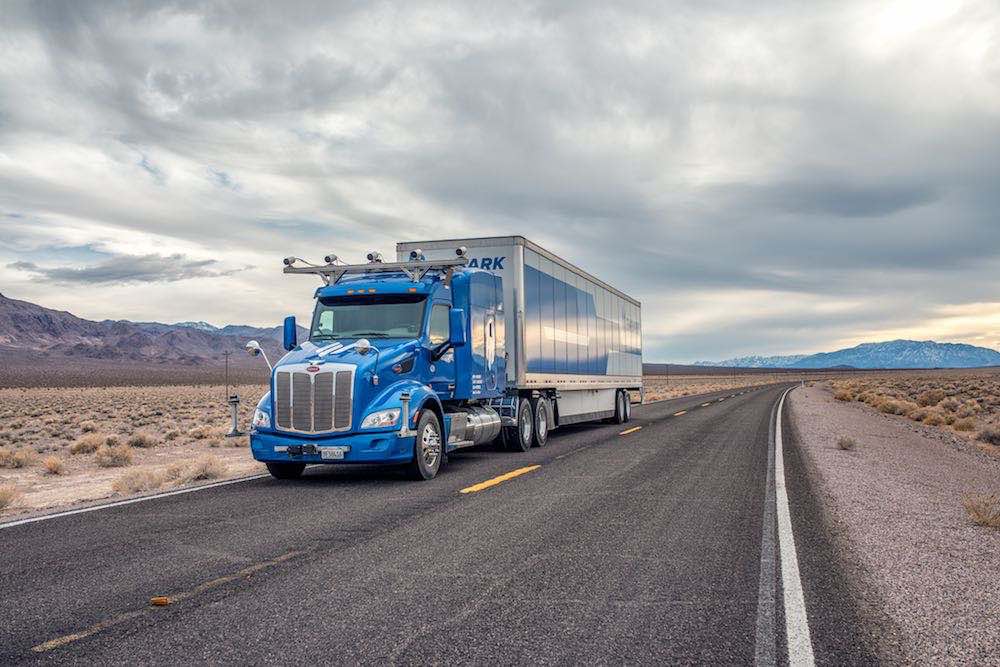
Embark today announced a partnership with Ryder, to use Ryder terminals as part of its freight network. Ryder has also formed partnerships with Waymo and TuSimple.
That got me wondering – who owns the end customer in the trucking business?
In robotaxis, that would be Uber and Lyft, at least right now. That’s why Argo is partnering with Lyft to go to market in different cities. I have some reservations about that strategy, but at least it’s clear who bring what value to the table in that partnership.
In trucking, I actually don’t know the ecosystem well enough to pinpoint who does what. Ryder seems to be a terminal operator. But I need to read up more on who the “end customers” are, and what companies own those end customers.
Particularly on the operations side, Cruise has recently hired several hire profile veterans of the airline industry. Senior Vice President Gil West explains why:
“There’s safety. The aviation model is important here with an approach and processes that were developed over the last 100 years. That overlaps with exactly what we’re doing in the autonomous space. Airlines are operationally intensive, and that’s the goal for Cruise, with high-tech vehicles engineered right for a purpose—airplanes and autonomous vehicles.”
West also provides the most specific public information I’ve yet seen regarding when Cruise will launch a commercial ridesharing service: “It’s months, not years.”
Honda invested heavily in Cruise several years ago, and this article provides an update on that relationship.
The first step in bringing autonomous vehicles to Japan is that Honda and Cruise will work together to create high-definition maps of specific geographic areas. That will then facilitate actual AV testing.
“Although these early tests are being conducted by both Honda and Cruise, the Japanese automaker plans to create its own autonomous vehicle service in Japan. That said, it will still use the Cruise Origin, a vehicle jointly developed by it, Cruise, and GM.”
GM Authority (which, to be clear, is not affiliated with General Motors, it’s an independent publication) adds a little bit of color to this great video Cruise produced. Engineers and other Cruisers who live, work, and bicycle in San Francisco, play an important role in developing the driving stack to interact safely with cyclists.
The video features, among other Cruisers, Jeremy Allen, with whom I work in the Cruise Planning & Controls Directorate.
I’ve long been curious about what life is like as a publicly-traded lidar startup, all of which are doing exciting stuff but none of which yet has meaningful revenue. Innoviz was happy to talk with me about that, their partnership on the BMW iNext series, and their plans for the future.
Lidar startups like Innoviz find themselves in a curious position as publicly-traded companies with little in the way of revenue or other objective metrics, because virtually no production vehicles currently incorporate lidar.
Innoviz Vice President of North America Aditya Srinivasan shares that, for the moment, startups like his differentiate themselves in terms of design wins.
Those design wins have proven scarce. So far, only two have been announced publicly — Innoviz’s partnership with BMW, and competitor Luminar’s inclusion in future Volvo vehicles.
This week is IAA, the world’s premier automotive show, in Frankfurt, Germany.
Four years ago I had the pleasure of speaking at IAA 2017, as part of Udacity’s partnership with Mercedes-Benz on the Self-Driving Car Engineer Nanodegree Program. That was such a fun trip!
We hosted events with students, met our colleagues in Udacity Germany, and saw exciting new car concepts.
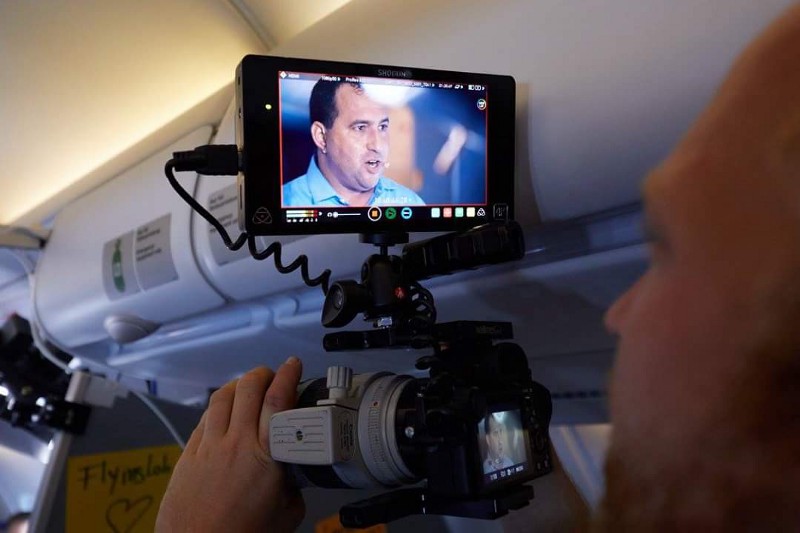
As part of the event, I participated in Lufthansa’s Flying Lab, which was kind of like TED at 35,000 feet.
That was one of the most fun business trips I’ve ever taken. I hope to return to IAA one day, under similarly exciting and joyful circumstances 😀
Alphabet halts sales of Laser Bear Honeycomb lidar sensors. The head of the division just left Waymo for Aeva, and I would guess this is a prelude to winding down the lidar effort. There are enough lidar start-up in the ecosystem now that it seems unlikely even Waymo could outperform all of them as a side project.
Nuro builds a test track at Las Vegas Motor Speedway. Back when I was at Udacity, we did driver safety training at Sonoma Raceway. Those track has a lot of space and are only fully utilized a few days a year. Makes sense that a permanent tenant could be valuable.
A cascade of automotive news sites report that NIO has started requiring drivers to pass a quiz in order to use its advanced driver assistance system, called NIO Pilot. Apparently this comes in the wake of a fatal crash involving the system.
Back when I was teaching at Udacity, we used quizzes all the time. In fact, the courses we built were required to have a certain cadence of quizzes. Quizzes are great, because they force students out of passive listening and into active thinking.
Of course, there are quizzes and better quizzes – not all of them are created equal. Lots of multiple-choice quizzes, especially, are too pro forma and easy. I haven’t seen NIO’s quiz, which is presumably in Chinese, to evaluate it.
According to CnEVPost:
The video introduces the key features and things to know about NIO Pilot and re-emphasizes that NIO Pilot and NOP (Navigation on Pilot) are assisted driving features, not autonomous driving and that the driver must always be in control of the driving during use.


:no_upscale()/cdn.vox-cdn.com/uploads/chorus_asset/file/22815645/01._Hero.png)