Traffic Deaths Way Up In 2020

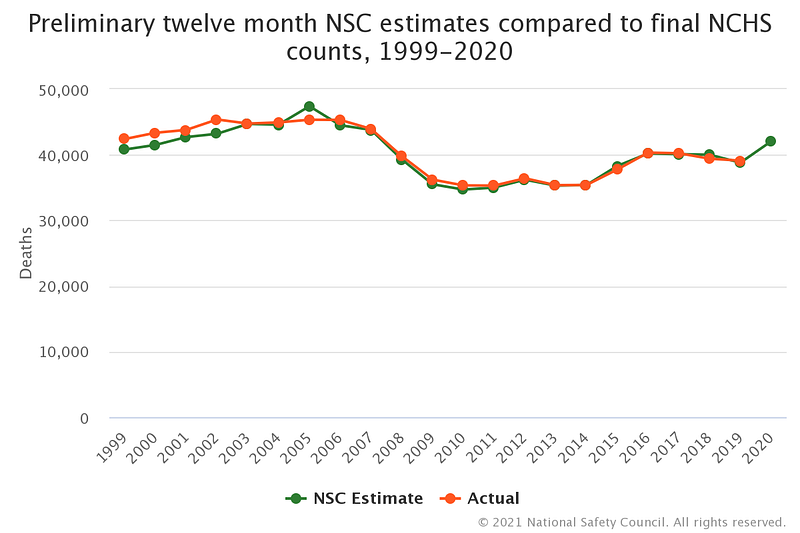
The National Safety Council estimates that US traffic fatalities were way up in 2020, which is even more shocking considering how many fewer miles were driven, due to the pandemic.

Total fatalities increased to ~42,000, and the number of miles per fatality was ~670,000. For years I have quoted 35,000 fatalities per year and one fatality per 100,000 million miles, both in the US. But those numbers are firmly behind us, since both metrics have been deteriorating for the past few years.

This year’s absolute number of fatalities is the highest since 2007.

The current report doesn’t speculate as to the cause of the increase, although previously the NSC has cited distracted driving due to cell phone use as an important and relatively new factor in accident rates.

I would love to see data on whether ADAS systems like Tesla Autopilot and GM SuperCruise improve fatality rates, by compensating for distracted drivers, or worsen them, by lulling drivers into a false sense of security.

I.D. Buzz

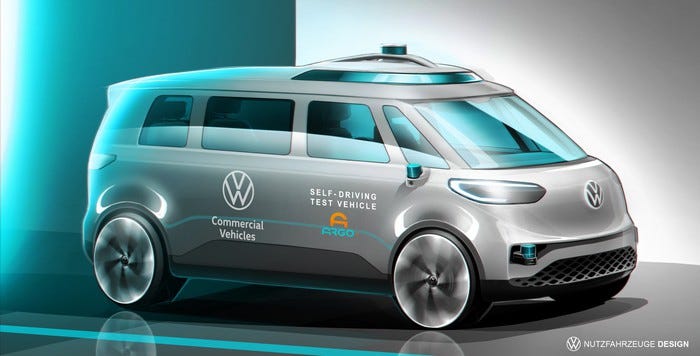
Volkswagen has released a rendering of its 2025 self-driving car, which will be based on the ID. Buzz electric vehicle platform, which itself is a re-imagining of the iconic VW Bus. The autonomy software stack will come from Argo, which Volkswagen partially owns.

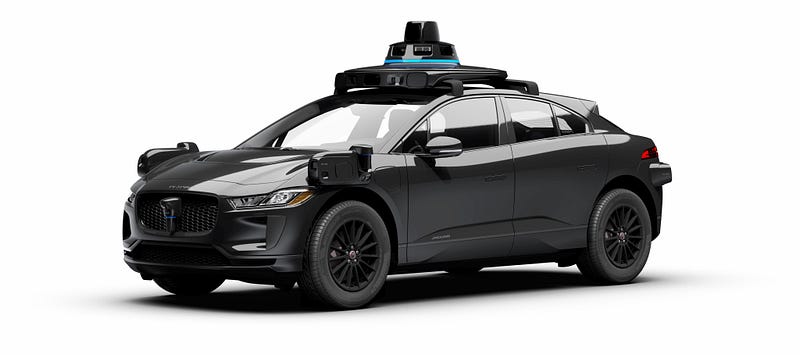
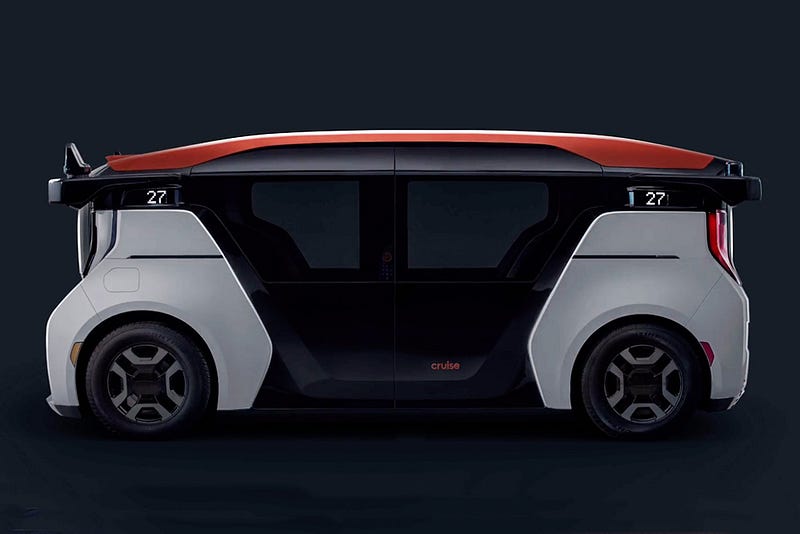
A major notable feature of this vehicle is that it is uni-directional with front-facing seats. In this respect, it resembles Waymo’s active driverless vehicles, which are based on the FCA Pacifica minivan platform, and the Jaguar I-PACE SUV platform. In contrast, both Cruise and Zoox have announced new vehicle platforms, specifically designed for autonomy, that are bi-directional, with no front or rear.

Just as the original automobiles were “horseless carriages”, designed to resemble horse-drawn carriages, it makes sense both that early self-driving vehicles would resemble traditional automobiles, and also that we will soon find form-factors more conducive to a driverless vehicle. What that more conducive form factor is, remains to be decided.

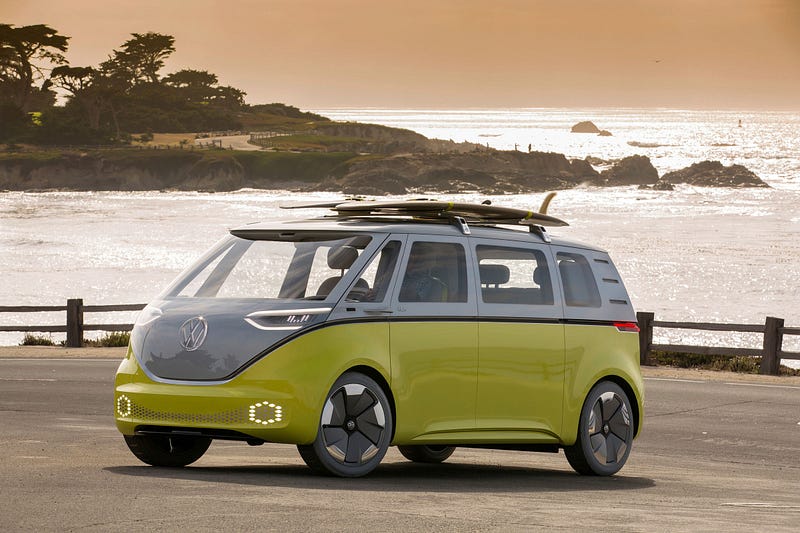
The human-driven Volkswage ID. Buzz
Driverless Waymo FCA Pacifica
Driverless Waymo Jaguar I-PACE (now in black!)
Cruise Origin, designed from the ground up for autonomy

Hot Job: Learn Rust At QBio

My friend and former Udacity boss, Clarissa Shen, leads Q Bio, which built a next-generation medical imaging system that give patients autonomy and visibility into their own health.

Clarissa just alerted me to a hot job Q Bio has posted: Embedded Software Lead. This line from the job description particularly struck me:

Ability to write production level code in C and C++… Once you’re onboard, you’ll be expected you to learn Rust

I have wanted to learn Rust for the last several years, and the idea of getting a job where I would be paid to learn Rust is super-duper appealing. I would apply for the job myself, except I love Voyage so much that I definitely couldn’t leave here.

The Rust programming language emerged from Mozilla, and is supposed to be similar to C++, with many of the same high-performance characteristics, but with superior memory-handling and concurrency support. Supposedly it’s like modern C++, but even easier to pull off would otherwise be super advanced programming techniques.

“Rust has been voted the ‘most loved programming language’ in the Stack Overflow Developer Survey every year since 2016.” — Wikipedia

If you want to improve medical care and health outcomes, and get paid to learn Rust, apply here and also email your CV to me at dsilver829@gmail.com. I’ll put you in touch with Clarissa (who is great, by the way!)

Smart Mailboxes And Drone Delivery

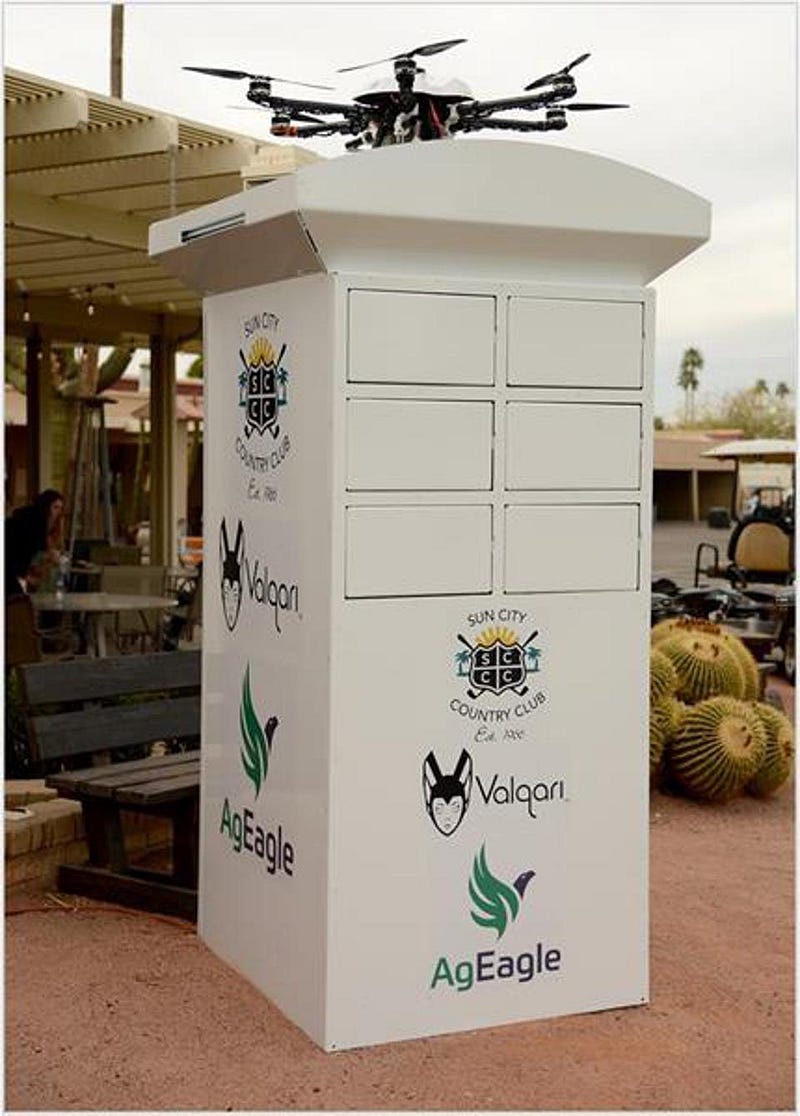
One of the perks of contributing to Forbes.com is getting to talk to under-the-radar startups. This week, I spoke with and wrote about Valqari, a Chicago-based startup working on smart mailboxes for drone delivery.

We should all have smart mailboxes!

“Our next generation will come out in July, we’ll also be launching individual boxes, and adding solar power, wireless drone recharging, and more robust temperature control to our feature set,” Walsh previews. “It’s going to be a busy year for us.”

Read the whole thing!

Electric Vehicle Monday: Joby SPAC Pitch Deck

Reilly Brennan’s Future of Transportation newsletter included links to the pitch decks that Joby and Lucid used in their recent SPACs. In an alternate universe, these would have been the pitch decks presented to growth- and late-stage venture capitalists, and wouldn’t have been available to the public. Because both Joby and Lucid went public via reverse mergers with SPACs, their pitch decks are also public.

The Joby deck has forty beautiful slides and a ton of information. I found it a little hard to parse, though, perhaps because I’m not used to navigating decks of companies at this stage.

I did not a few items:

  • Joby plans to start generating revenue in 2024, and to reach “scale” in 2026.
  • The pro forma financials call for revenue growth from $0 in 2023 to $2BB+ (!!) in 2026.
  • At scale, they anticipate the vehicle to cost $1.3MM.
  • The projected returns for investors seem maybe not that great? Again, I found this hard to parse, but I think they hypothesize that if they hit their 2026 goals, and if the stock market applies a 25–30x P/E multiple (!!), then investors today would see a 20% (annual?) return. Lots of caveats.
  • They forsee a robust market for intra-city transport.
  • They will focus on “meaningfully” penetrating each city before moving on to the next, and thus only anticipate penetrating 20 cities in the next ten years.
  • They project an average trip length of 24 miles, with an average “passenger load” of 2.3, and a price point of $3 per “seat mile.” Each vehicle will have 4 passenger seats, so the price point per “vehicle mile” is presumably $12. For a hypothetical 24 mile trip, the price would then be $288 total, but potentially as low as $72 per passenger, split four ways. They present this as “cheaper than Uber black for an individual.”

Self-Driving Cars In Space

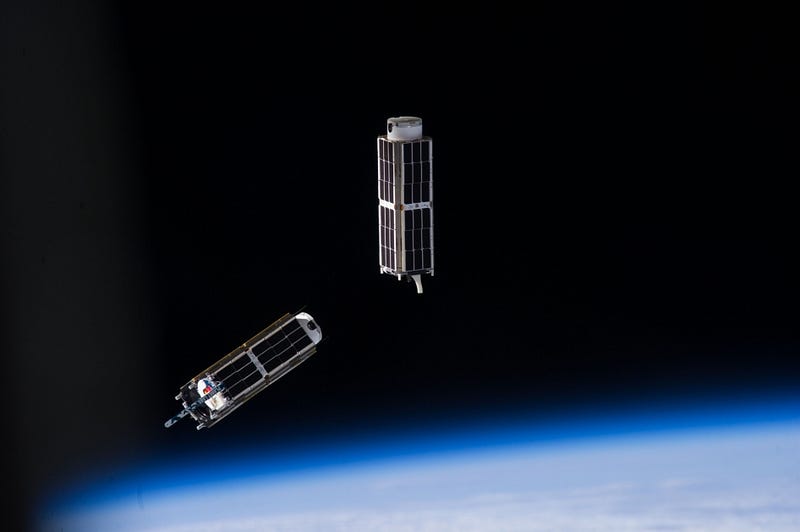
Geely, a Chinese automotive manufacturer that also owns Volvo, announced will launch hundreds, and perhaps thousands, of satellites, in order to support V2X and V2V communication.

The launches are a little ways down the road — the current press release touts breaking ground on the facility that will manufacture the satellites.

“Geely Technology Group knows how to start the Lunar New Year right — with important news regarding its future low-orbit exploits. On February 18th 2021, its Taizhou Facility was given its license to begin the commercial manufacturing of its satellites, which will be ultimately used for realizing Vehicle-to-vehicle (V2V) and Vehicle-to X-(V2X) communications to realize full autonomous self-driving.

The license, awarded by China’s National Development and Reform Commission, essentially means that the factory, located in Geely Group’s original hometown of Taizhou in Zhejiang Province, can begin production. When production begins, at present planned for October of this year, the facility will have an estimated production output of over 500 satellites per year.”

In an interesting twist that I hadn’t thought about until now, Geely categorizes these satellites as “new infrastructure.” There’s been a lot of talk in the automotive world about China’s ability to build infrastructure much faster than the US’s, and the advantages that may or may not bring. But I had always assumed this meant infrastructure on the ground. I hadn’t really thought about satellites as “infrastructure.”

The Geely press release is pretty sparse and focuses on V2X communication as the goal, but an article in SpaceNews suggests that the satellites may also foster an alternative and more accureate form of GPS / GNSS. That would make sense, as I typically think of satellites as being useful for receiving data on the ground, but not so much for sending data to the satellite. V2X would require two-way transmission, but navigation systems typically only require one-way reception of data.

GPS has been run more-or-less as an international public service by the US government for decades. Attempts to augment it have typically relied on ground-base supplementary broadcast stations, but those are hard to scale and are easily blocked by hilly terrain. If a private Chinese automotive company controls the next generation of navigation satellites, that would be a big change with potentially big implications.

Working In The Field

One of Voyage’s operators (not me) preparing one of our vehicles for testing.

I am spending most of today “in the field,” at The Villages, San Jose, where Voyage is preparing to launch a driverless robotaxi service for senior citizens.

This is my first trip to The Villages, and my first time riding in a Voyage vehicle. I love it!

I’ve been fine-tuning the brake control parameters for our 3rd-generation vehicles, largely from home (everyone works from home right now), using data collected in the field by our operations team. Today was an opportunity to ride along in the vehicle itself and see how well the brakes perform.

Riding in the vehicle is such a different and more visceral experience than sitting at a desk, working with data files on a computer. I could really feel what was comfortable and what wasn’t, in a way that normally gets relayed second-hand from our operations team.

And, since this was my first trip to The Villages, I got a much better understanding of the streets and the environment where we operate. Reviewing top-down maps or even vehicle sensor feeds just doesn’t provide the same level of context and being in the operational design domain (ODD).

This is a big part of what makes working on self-driving cars so much fun!

pyplot 3D

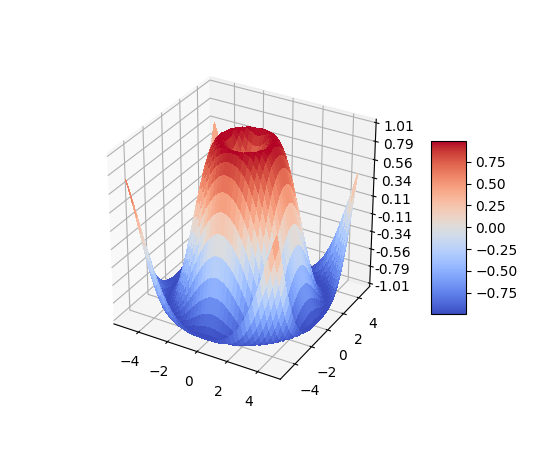
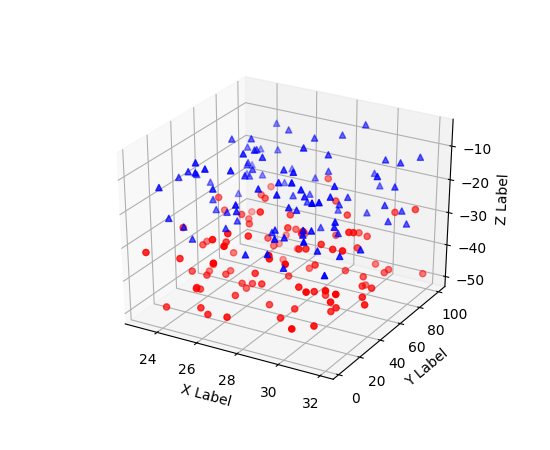
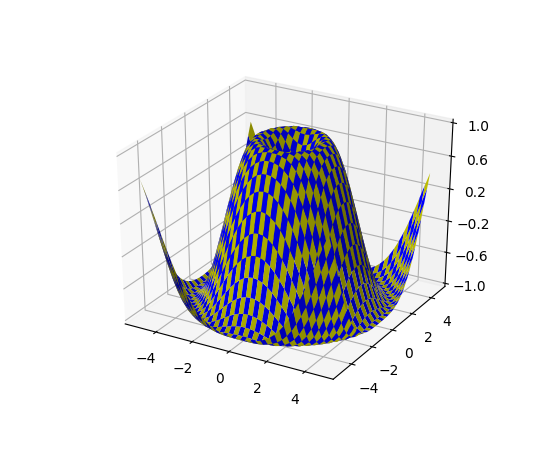
My work with pyplot continues. I spent some time today working with 3D plots. matplotlib (the parent library of pyplot) does a great job making 3D plots with very little code, but it doesn’t quite go far enough to make it trivial.

In my particular case, I had a big collection of 3 dimensional data points. These were actually motion control points related to acceleration, velocity, and brake, but you could just as easily imagine these as lidar points with x, y, and z coordinates.

In a perfect world, I’d pass these points to pyplot and get a 3D plot.

In an even more perfect world, I’d pass these points to pyplot and get a 3D contour.

Unfortunately, the world is not perfect. Although it is still pretty awesome that pyplot can create these types of plots in a Jupyter notebook. I just have to configure the data properly.

I took a while to wrap my head around this, but specifically what it turns out I need to do is find a discrete set of x values, and a discrete set of y values, such that I have the z value for every combination of x and y.

It would have been great if pyplot could have interpolated (“filled in the blanks”) from the values I had at hand. But as far as I can tell, pyplot doesn’t do that.

At first I thought that might sink me, but then I realized that if I chose my z-coordinate properly, and scaled back the range of my y-coordinates, I could achieve this.

The plot wound up looking kind of boring, but boring in this case was good! If it were interesting, I might have been obliged to discard my linear model and start looking for something polynomial. A boring plot means I get to keep my boring (and manageable!) linear model 🙂

PIX Moving

I was excited to read that PIX has just raised a “pre-Series A” round of funding.

PIX is an under-the-radar electric, autonomous vehicle manufacturer in the “small” city of Guiyang, China. I put “small” in quotes because Guiyang, while small relative to other Chinese metropolises, has a population of 4,000,000 people, which would make it the second-largest city in the United States!

Several years ago, I had the opportunity to travel to Guiyang and work with PIX on a self-driving car bootcamp that they jointly hosted with Udacity. Students from all over China flew in and spent a week building and programming a self-driving car. It was pretty awesome!

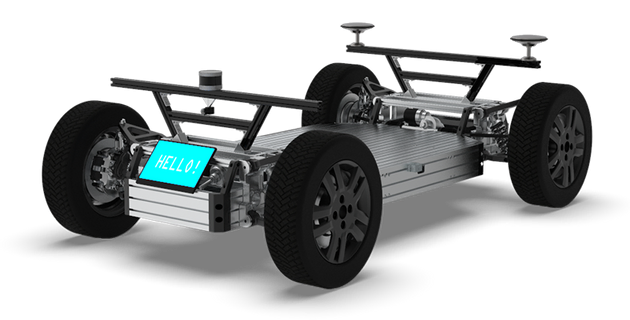
PIX has pioneered a process for large-scale 3D metal printing that allows them to build a wide variety of vehicle form factors on top of their foundational electric and autonomous “skateboard” platform.

It’s fun and exciting to watch little startups, especially in out-of-the-way places, grow and compete with industry leaders. I hope to see more great things from the team in Guiyang!

Instant Gratification

My latest Forbes.com article features a discussion with Yariv Bash, CEO of the Israeli drone delivery company Flytrex, about aerial technology, drone regulation, business models, and a “future of instant gratification.”

“Flytrex’s model is to utilize existing in-store fulfillment processes and then complete delivery with a drone. Store associates can prepare a drone delivery order for pick-up, just like any other type of pick-up order. Then a Flytrex team member will take the order from the store to a drone outside the store. 
The drone will fly the order to the customer’s house, hover, and lower the package to the customer on a wire.”