The story mainly hooks on Avis and the special cleaning techniques they have contracted to perform for Waymo’s self-driving cars. They have to be really careful!
“For example, soap residue or water spots could effectively “blind” an autonomous car. A traditionalcar wash’s heavy brushes could jar the vehicle’s sensors, disrupting their calibration and accuracy. Even worse, sensors, which can cost over $100,000, could be broken.
A self-driving vehicle’s exterior needs to be cleaned even more frequently than a typical car because the sensors must remain free of obstructions. Dirt, dead bugs, bird droppings or water spots can impact the vehicle’s ability to drive safely.”
Washing Carla, Udacity’s self-driving car, is less of a challenge, because we can pretty easily dismount the roof-based lidar and store it in the trunk. And our cameras are inside the vehicle.
Still, we take Carla to our local brushless carwash every month, and each time I get a little terrified.
Intermediate programming ability in C++ or Python (the languages of the autonomous vehicle industry)
Basic linear algebra
Basic calculus
Basic statistics
Basic physics
As a student in the Intro to Self-Driving Cars Nanodegree program, you’ll build your skills up over the course of a four-month curriculum path that tackles each of these areas at a pace that is both manageable and rewarding. Best of all, you’ll practice putting these skills to work on the types of projects that real self-driving car engineers work on every day.
If you love self-driving cars, but thought you’d never get the chance to work on them, then this is the program for you.
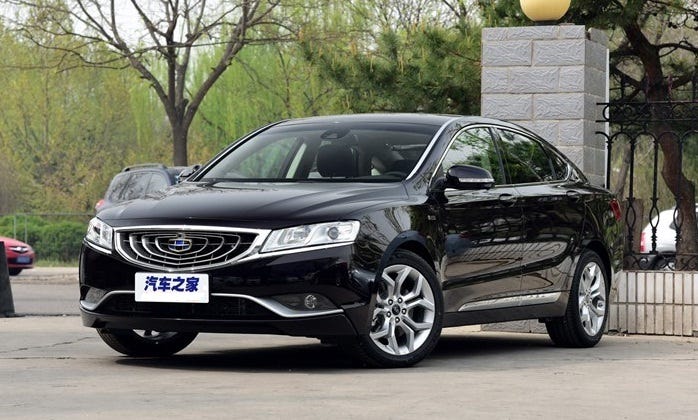
How many people in the West even know what Geely is?
Perhaps in Europe, where the Chinese auto manufacturer also owns Volvo, a majority share of Lotus, and now a 10% share of Daimler (itself the parent of Mercedes-Benz).
“‘No current car industry player is likely to win this battle against the invaders from outside without friends. To achieve and assert technological leadership, one has to adapt a new way of thinking in terms of sharing and combining strength. My investment in Daimler reflects this vision,’ Li said.”
In case you’re not clear what that means:
“Only two or three manufactures will likely survive in the auto industry going forward, a source familiar with Li’s thinking told Reuters, prompting Geely to seek access to carmakers with a technological edge.”
The line between Li Shufu and Geely is a little fuzzy here, as CNBC reports that Li made the share purchases, but Geely now has access to Daimler’s technology.
It looks like there are a few things happening:
Geely wants access to Daimler’s battery technology, in advance of upcoming Chinese quotas for electric vehicles.
Geely’s ownership of Volvo has seemed to work out well, so it makes sense that they might continue their European expansion.
Perhaps Geely is hedging its bets by owning several different automotive manufacturers, on the theory that at least one will survive the transition to autonomous vehicles.
One of the big worries about self-driving cars is the extent to which they will cause unemployment. Approximately 5 million Americans drive for a living, mainly as long-haul truckers, although also as taxi drivers, local delivery drivers, and other driving occupations.
Will self-driving cars drive unemployment for these workers?
One thing to notice is that “unemployment” is subtly different than “job loss”. If somebody loses a job (say, as a long-haul trucker) but gets a new job (say, as a local delivery driver), then that person has lost a job but is not unemployed. They might be worse off in their new job (or maybe better off!), which is also important track, but they won’t show up in the unemployment statistics.
This is all a long lead in to Scott Alexander’s very, very long blog post: “Technological Unemployment: Much More Than You Wanted To Know”. This isn’t a post on self-driving cars specifically, and it’s not even a post about the future. It’s more about technological unemployment in the present and recent past. But the present and recent past are probably our best guides to the future, so it’s relevant.
The whole post is definitely worth reading. It’s almost unfair to excerpt it, because you can’t appreciate the full power of the meta-research without the run-up, but this the summary:
“Here are some tentative conclusions:
1. Technological unemployment is not happening right now, at least not more so than previous eras. The official statistics are confusing, but they show no signs of increases in this phenomenon. (70% confidence)
2. On the other hand, there are signs of technological underemployment — robots taking middle-skill jobs and then pushing people into other jobs. Although some people will be “pushed” into higher-skill jobs, many will be pushed into lower-skill jobs. This seems to be what happened to the manufacturing industry recently. (70% confidence)
3. This sort of thing has been happening for centuries and in theory everyone should eventually adjust, but there are some signs that they aren’t. This may have as much to do with changes to the educational, political, and economic system as with the nature of robots per se. (60% confidence)
4. Economists are genuinely divided on how this is going to end up, and whether this will just be a temporary blip while people develop new skills, or the new normal. (~100% confidence)
5. Technology seems poised to disrupt lots of new industries very soon, and could replace humans entirely sometime within the next hundred years. (???)
This is a very depressing conclusion. If technology didn’t cause problems, that would be great. If technology made lots of people unemployed, that would be hard to miss, and the government might eventually be willing to subsidize something like a universal basic income. But we won’t get that. We’ll just get people being pushed into worse and worse jobs, in a way that does not inspire widespread sympathy or collective action. The prospect of educational, social, or political intervention remains murky.”
I’m more optimistic about the future than Scott Alexander seems to be, although I am humbled by the research he has done. I am a little tentative disagreeing with him based on what mostly amounts to my own intuition.
It seems to me that technological progress over the long-term has made jobs much better. And these “better” jobs have funded a safety net for people who cannot work, although we can debate the appropriate strength of that safety net.
My hope is that autonomous vehicles provide whole new classes of better jobs for future workers, and progress marches forward.
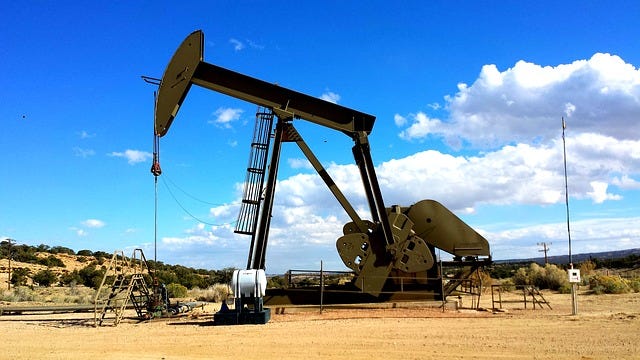
“Peak oil” was a popular theory about a decade ago, based on the idea that the usage of oil would fall as the world ran out of supply. The theory ran out of gas (sorry), due to a combination of fracking (increased supply) and the Great Recession (reduced demand).
Interestingly, however, BP now predicts the world will hit peak oil (they don’t actually use that term, I don’t think) around 2040, this time due to demand-side pressures.
Their projection is that a combination of solar energy, wind energy, and electric vehicles will put global demand for oil on a downward trajectory, starting in 20 years or so.
Big change from ten years ago, when some experts thought the world might run out of oil. Now at least some experts think we won’t need it (or at least as much of it) anymore.
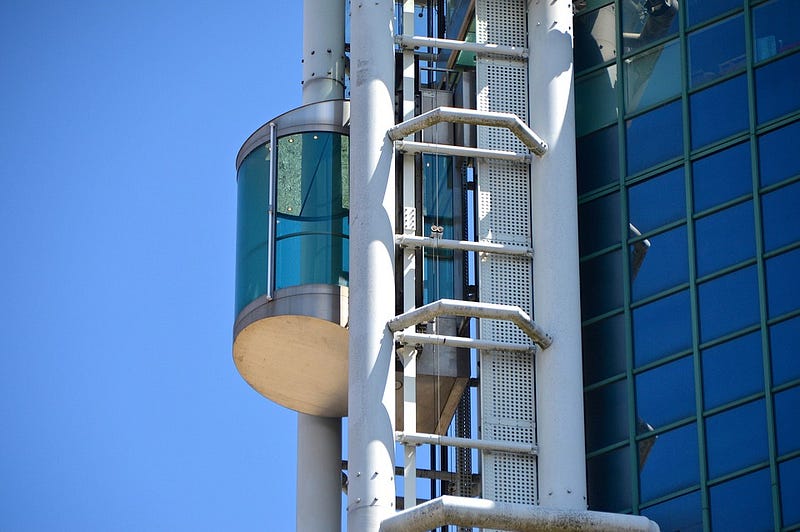
Listening to Tim Harford on a back episode of EconTalk, I was struck by their extended discussion of the elevator as one of the original autonomous vehicles.
The discussion seems both distant from self-driving cars, but also strangely relevant. Harford and EconTalk host Russ Roberts touch on safety, technological unemployment, and traffic optimization.
Udacity Self-Driving Car Engineer Nanodegree program students are taking their newly-mastered skills into the broader world, and their projects are incredible!
The talent and passion of students in Udacity’s Self-Driving Car Engineer Nanodeegree Program regularly astounds me. Here are five independent projects that students did outside of the program to build their skills as autonomous vehicle engineers.
Check out the autonomous hardware package strapped to the top of this tiny red range rover! And the various test track configurations it navigates. Super cool.
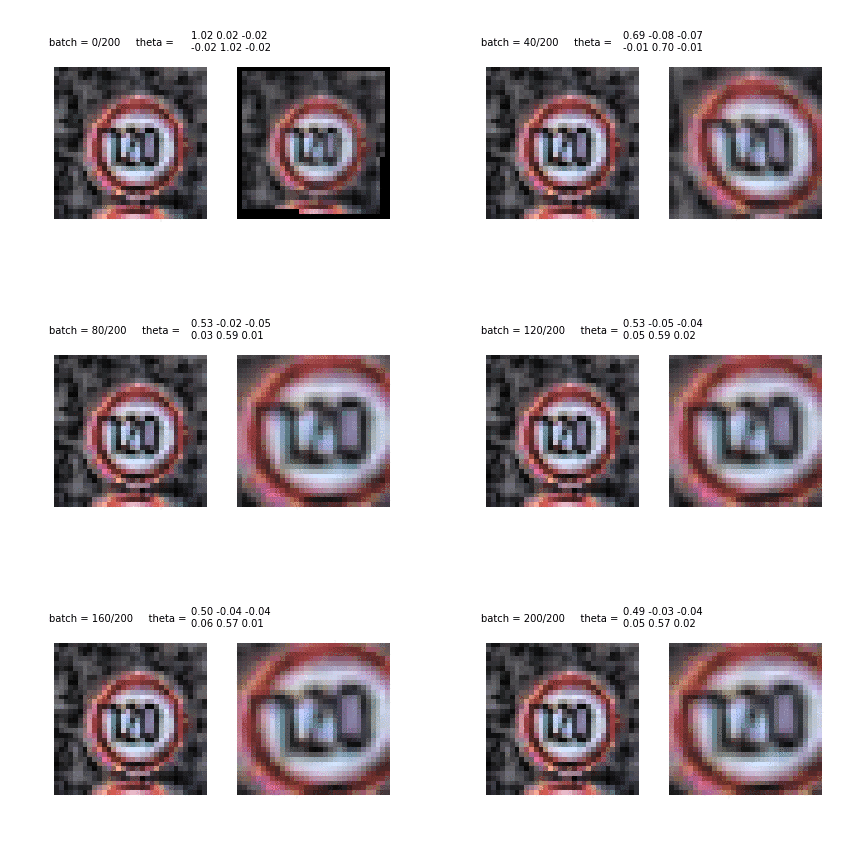
Spatial Transformers are modules that can be inserted into convolutional neural network architectures to focus the network on the most important object in the image. This is helpful because scale and rotation make object localization (finding an object within an image) a complex problem.
“The STN is a differentiable module which can be injected in a convolutional neural network. The default choice is to place it right “after” the input layer to make it learn the best transformation matrix theta which minimizes the loss function of the main classifier (in our case, this is IDSIA).”
This is an awesome four-part series on building a miniature self-driving car from scratch, with a big emphasis on hardware and electrical engineering. Part 1 is ROS setup, Part 2 is the sensor suite, Part 3 is the microcontroller, and Part 4 is working with the NVIDIA Jetson TX1. This is quite the hacker project.
“The goal of this project is to build an autonomous base that can navigate the sidewalks of my subdivision. It will use GPS, LIDAR, and other sensors to navigate to GPS way points, avoid obstacles, and return to the start position.”
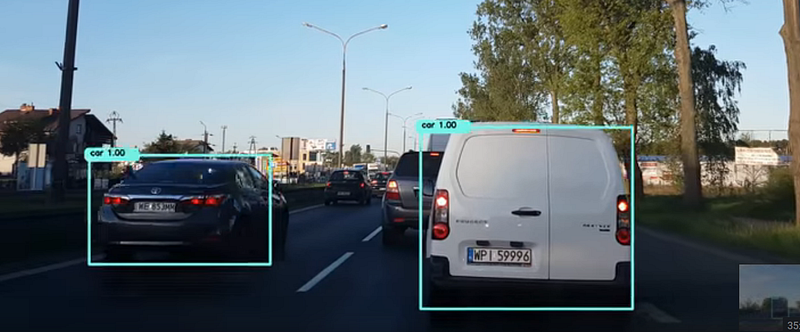
I love watching videos that students shoot themselves. Here Karol is applying a Single-Shot Detector (SSD) network to identify other vehicles on the road.
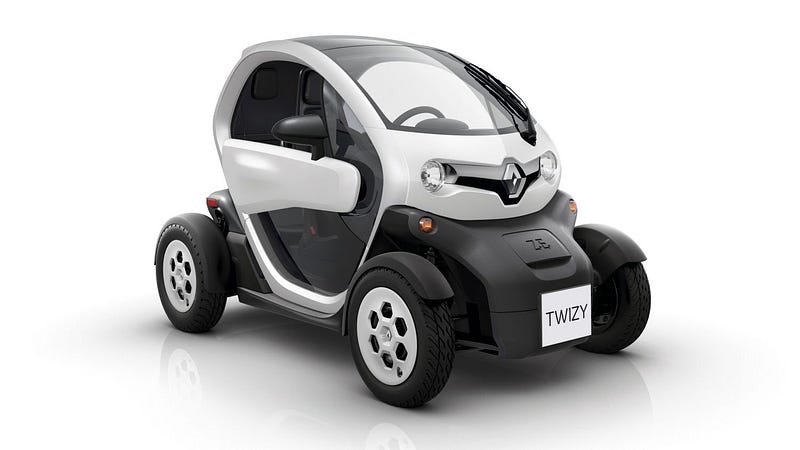
Scaling up from miniature self-driving cars to human-sized self-driving cars, Bogdan outlines a self-driving car development platform accessible for under US$10,000. This does not include the sensor suite — just the drive-by-wire platform. He settled on the Renault Twizy and is looking for partners to work on this with him 🙂
“One of the main challenges in the self-driving car industry (among other things like technology itself, policy updates, ethical issues, etc.) is the barrier of entry. If you are a small start up building a local autonomous delivery service or a single engineer trying out latest deep learning approaches for car/traffic sign detection, it is incredible hard (sometimes even impossible) to get things off the ground and test your solution in the real world setting.”
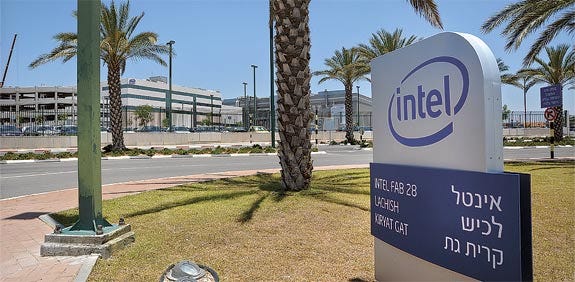
This actually appears to have nothing to do (at least directly) with self-driving cars. Rather, Intel is ramping up chip production, which is a capital-intensive process.
However, this line from the article caught my eye: “Israel traditionally competes with Ireland in benefits offered to Intel in exchange for investment.”
I had never really thought of that, but I’m sure it’s a fact of life for technology executives in both countries. Two small, somewhat isolated, highly-educated, technology-focused countries on opposite edges of Europe, with strong ethnic and expatriate connections to the United States. Of course Israel traditionally competes with Ireland. Now that I think about it, they seem like practically the same country.
And this is interesting because Israel has such a dynamic autonomous vehicle industry. Mobileye, of course, but also research centers for many automotive manufacturers and suppliers, and a cluster of autonomous vehicle startups.
Ireland has been less active in the autonomous vehicle market, but if you believe the theory that Ireland and Israel are practically the same country, then presumably the autonomous vehicle industry is coming to Ireland.
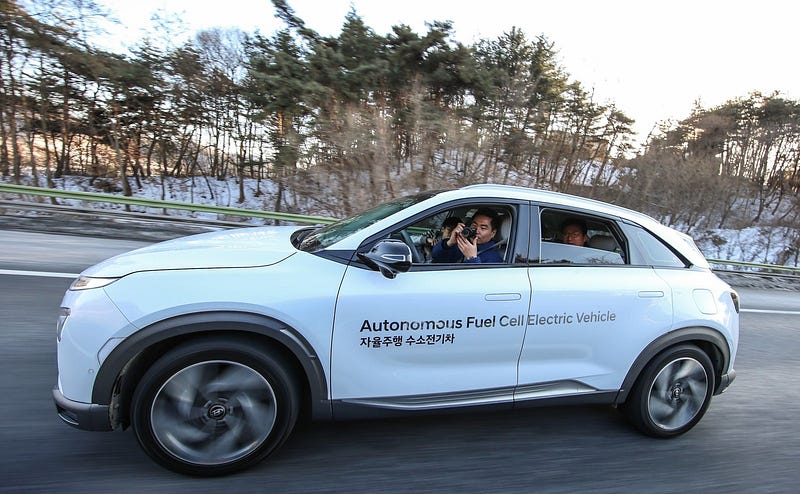
“A fleet of Hyundai Motor Company’s next generation fuel cell electric cars have succeeded in completing a self-driven 190 kilometers journey from Seoul to Pyeongchang. This is the first time in the world that level 4 autonomous driving has been achieved with fuel cell electric cars, the ultimate eco-friendly vehicles.”
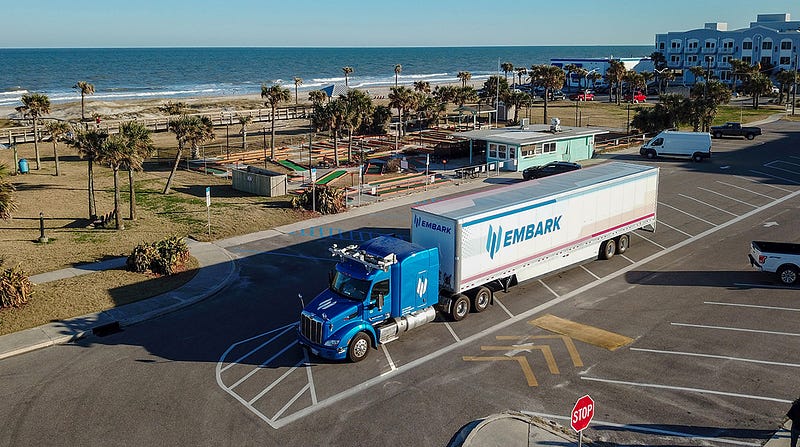
The idea that self-driving trucks will actually boost the number of driver jobs is not new to me. However, the recent cross-country trip by self-driving truck startup Embark got me thinking about it.
The Embark drive was only a Level 2 endeavor, and it seems like there were multiple disengagements, but the days of Level 4 trucking on the highway seem near.
Embark’s model is to have autonomous vehicles drive from hub-to-hub on the highways, and human drivers handle the last mile deliveries.
“The autonomous trucks would haul trailers from hub to hub on the freeway, but local drivers would continue to handle the more complex driving tasks associated with the beginning and end of each trip — from origin to highway and from highway to final destination.”
It’s at least plausible that this would result in a net increase in driving jobs, if long-haul costs dropped so dramatically that interstate commerce surges.






 David Silver