SberAutoTech, the automotive arm of a Russia’s state-owned Sberbank, is building a self-driving vehicle. I’m tempted to overlook this as yet another concept car. But Yandex has quietly accumulated (or at least announced) more autonomous miles than any other autonomous vehicle company save Waymo. In my mind, that gives Russian companies more credibility, at least by osmosis.
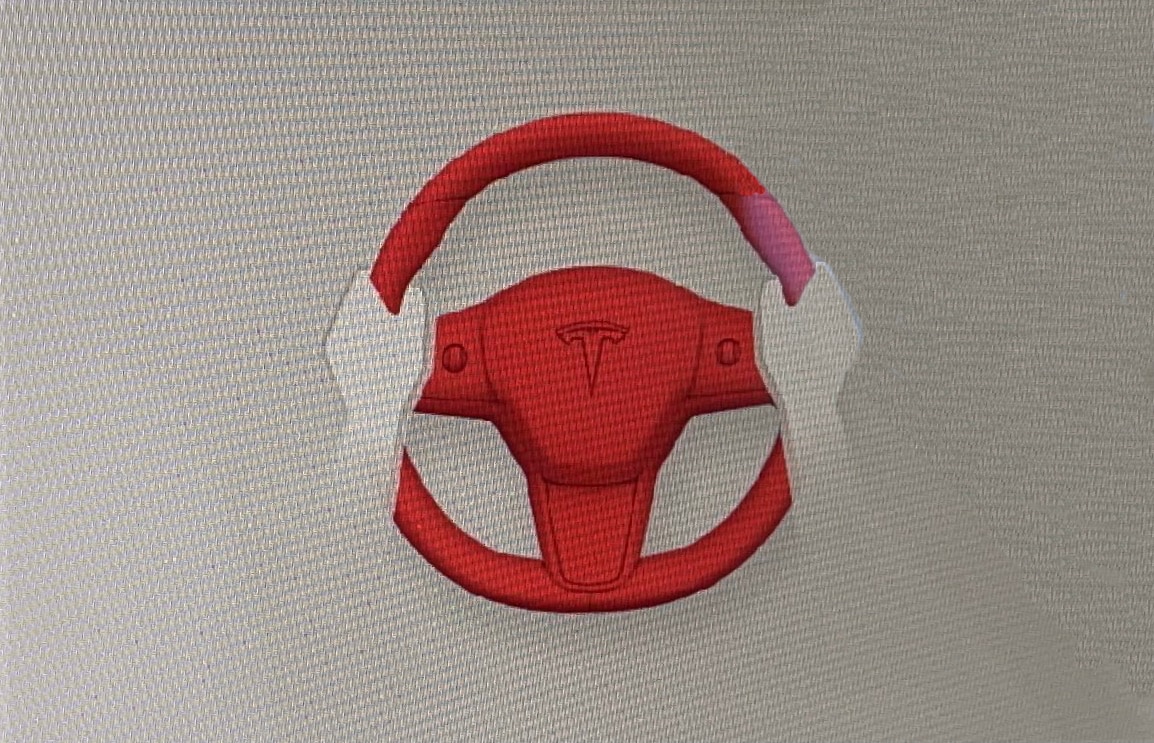
The cabin camera above your rearview mirror can now detect and alert driver inattentiveness while Autopilot is engaged. Camera data does not leave the car itself, which means the system cannot save or transmit information unless data sharing is enabled. To change your data settings, tap Controls > Safety & Security > Data Sharing on your car’s touchscreen.
This is an important change for Autopilot. As Kirsten Korosec reports on TechCrunch:
“Until now, Tesla has not used the camera installed in its vehicles and instead relied on sensors in the steering wheel that measured torque — a method that is supposed to require the driver to keep their hands on the wheel. Drivers have documented and shared on social media how to trick the sensors into thinking a human is holding the wheel.”
This is a move in the right direction that will reduce the misuse of Autopilot and risk to other drivers on the road. Although I’d love to learn more detail about the functionality of the Tesla DMS.
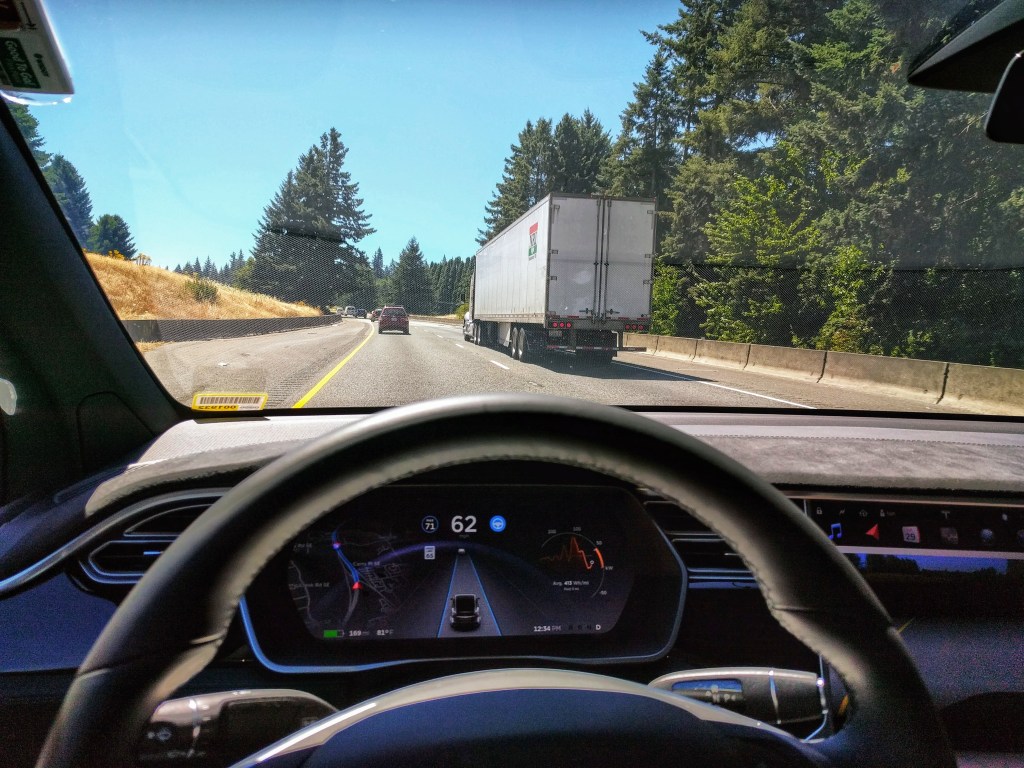
“Beginning with deliveries in May 2021, Model 3 and Model Y vehicles built for the North American market will no longer be equipped with radar. Instead, these will be the first Tesla vehicles to rely on camera vision and neural net processing to deliver Autopilot, Full-Self Driving and certain active safety features.”
Credit to Tesla for demonstrating the courage of their convictions. Like many outsiders, I doubt that this is the best step forward, but it’s a step consistent with Elon Musk’s long track record of public statements that sensors beyond cameras are unnecessary.
The logic has always been straightforward – humans can drive with just vision (perhaps lightly augmented by the senses of hearing and feel), and cars should be able to do that as well.
The countervailing perspective is that a vision-only approach is theoretically, and probably eventually, possible, but additional sensors will achieve self-driving capability much faster, and more safely. By way of analogy, humans can move across the ground with nothing but our own two feet, but we discovered that we can move much faster with the aid of tools like bicycles, cars, and roads.
Tesla is encountering a lot of resistance from industry experts who are unhappy, I think justifiably so, about Tesla’s lack of a driver monitoring system. Combined with the hype around Tesla’s misleadingly named, “Full Self-Driving” feature set, some Tesla drivers are abdicating their driving responsibility and endangering other cars on the road.
I distinguish the lack of a driver monitoring system, which is problematic for the public writ large, from this move toward a vision-only approach, which is a particular technology approach that Tesla is taking. I’m excited to see how it works out for them.
This is a very narrow announcement, but my wife forwarded me an email from an entity I’d never heard of called Peninsula Clean Energy. They will reimburse $200 toward electric car rentals for residents of San Mateo County, California, which we are. That’s enough for a 2-3 day rental.
They recommend Turo, although they’ll reimburse from any rental agency. Turo is a good place to start, because they have a healthy collection of EVs (at least in our area). Unlike traditional rental agencies, Turo specifies exactly which car you’re renting. So there’s no risk of renting an electric car, only to show up at the rental counter (Turo doesn’t even have rental counters, it’s more like Airbnb for cars) and learn you’ve been “upgraded” to tank.
The main caveat here is that I’m unfamiliar with Peninsula Clean Energy. They seem reputable, though. Apparently they’re “San Mateo County’s official electricity provider.” I would’ve guessed that was PG&E, but perhaps PG&E only wholesales the electricity and PCE delivers the electricity. I’m unsure.
And of course this isn’t relevant to you if you happen to live outside the very narrow boundaries of San Mateo County. But maybe there is a similar program where you live? Worth looking.
It’s small – currently there are only two of us. So you’d get to join and build your dream team, almost from the ground up. My colleague, Sean, is a much better engineer than me, but I’m better at using emojis than he is. Between the two of us you’d start with a rock solid foundation.
Ravichandiran’s book cleverly utilizes tools provided by Open AI Gym, along with TensorFlow, to provide lots of short hands-on exercises. The code is provided in Jupyter notebooks, and also explained line-by-line in the text of the book. (Hint: it’s cheating to just hit “Run All Cells” in the notebook! You don’t learn unless you type the code in – and inevitably debug it – yourself.)
I found the book’s mathematical explanations a bit dense, and the typesetting of the mathematical formulas seems off.
But that’s all forgiveable because the book got me clear and effective hands-on experience. Within an hour of opening the book (I did skip around), I trained a deep Q network to play Pacman!
A Waymo went a little rogue in Phoenix recently, with JJRicks in the vehicle, video recording. The vehicle stopped, blocked traffic, and then occasionally took off for a burst while the human support team tried to arrive and wrangle it. It was a bit like watching a rancher try to herd uncooperative livestock.
Everything turned out okay in the end. I’m especially struck by how well the Waymo team, who are kind of a supporting cast in the video, handle the whole incident. The Waymo remote assistance representative stays with Ricks the whole time, and doesn’t appear flustered or panicked. Same thing with the support driver who eventually arrives to take over.
The vehicle never hits anything, or even appears at risk of a collision. It’s a pretty calm scenario, all things considered.
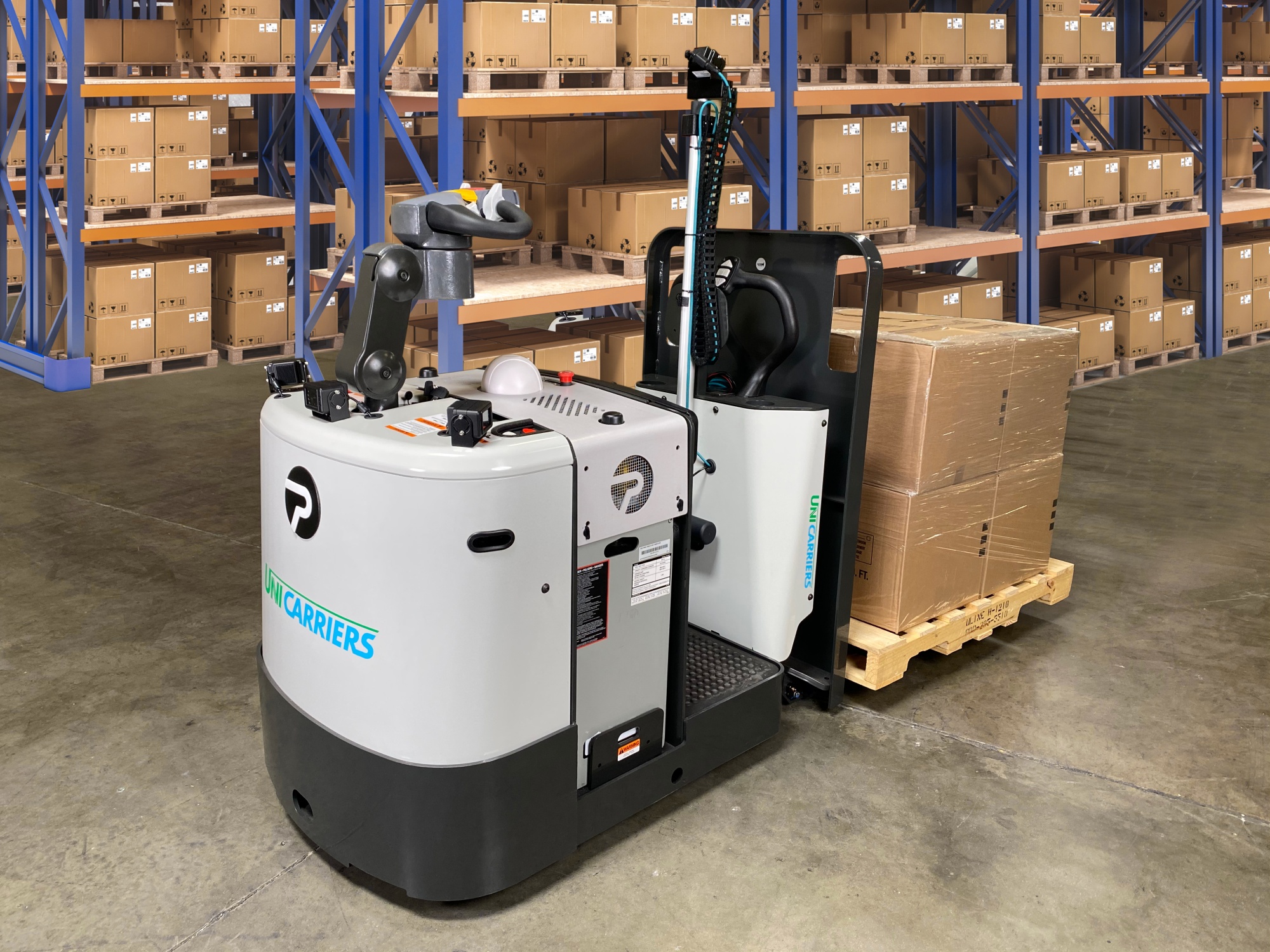
Bloomberg has a short update on Phantom Auto, a teleoperations startup that has recently partnered with Mitsubishi Logisnext to remotely operate warehouse forklifts.
Co-founder Elliot Katz tells Bloomberg that remote operation has “the potential to knock 30% or more off forklift operation costs.” The driver of cost-savings seems to the ability to move jobs to lower-cost areas, since the remote operator doesn’t have to be physically co-located with the equipment.
I imagine that what I’ve heard in agriculture also applies somewhat to logistics, which is that the big advantage of automation (to the extent remote operation counts as automation) is actually increased performance, rather than labor costs. In a field, an automated machine can plant seeds more accurately and squeeze more yield out of the same amount of land, compared to a farm hand. In a warehouse, you could imagine that removing humans from the floor could allow for reconfigurations that would save space, accelerate movement, or otherwise improve efficiency.
I’m also curious how far we can push the migration of in-person jobs into remote operation, and possibly eventual autonomy. Covid-19 has pushed diagnostic telemedicine pretty far in the US, but procedures still require the provider to be physically present. Perhaps in the future, my surgeon or dentist will be operating on me remotely, from another timezone.
Both The Verge and CNBC report that Volkswagen & Argo will begin testing self-driving cars in Europe this summer. That news comes courtesy of a press conference with Brian Salesky, Argo’s CEO, and Christian Senger, a Volkswagen executive.
Announcements about self-driving testing (as opposed to commercial services) have become a little ho-hum in the US, but this seems like a big deal for Europe. So far, Europe has had very little autonomous vehicle testing on public roads, and even less news about such efforts.
Volkwagen is a major investor in Argo, which is headquartered in Pittsburgh, with offices in California and Munich, Germany. Although much of the self-driving software that Volkswagen will test this summer was presumably written in the US, just getting it on the road in Germany will be a meaningful step forward for the European automotive industry.