Why We Can’t Have Nice Things

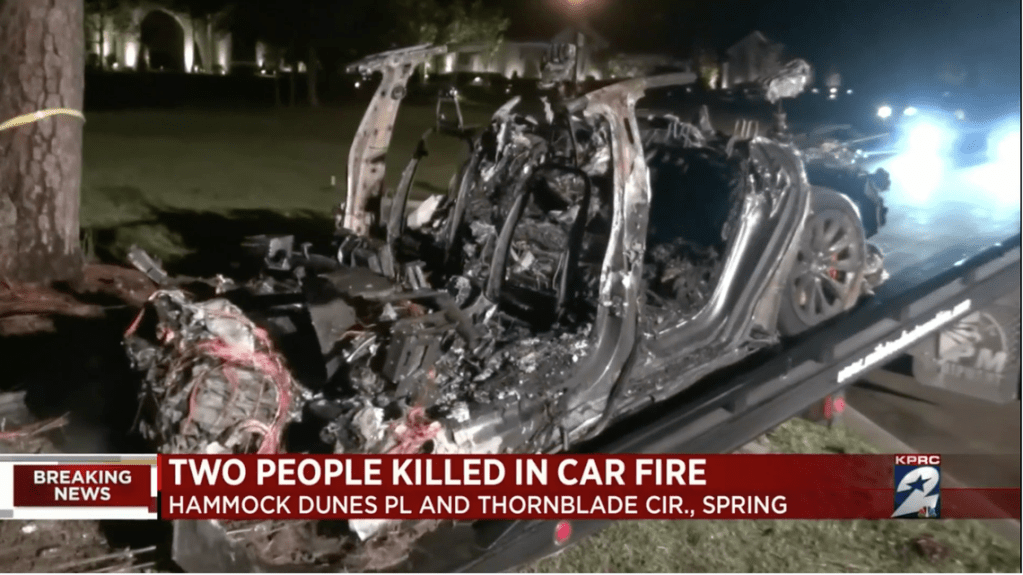
Two people died in a horrific Tesla inferno in Houston today, according to the city’s NBC affiliate, KPRC. Officials responding to the scene are quite confident nobody was driving – one of the deceased was in the passenger seat and the other in the back.

The car was on a quiet neighborhood cul-de-sac, and the vehicle occupants were 59 and 69 years-old, so this wasn’t a case of 20 year-olds screaming down the highway at 90 miles per hour.

Nonetheless, the most likely scenario is that the occupants were trying out Tesla AutoPilot (very much against the system’s guidelines and requirements, which specify that a driver must be in command of the vehicle at all times). The vehicle probably got confused and accelerated into a tree, although we won’t know the details for sure until a full investigation concludes.

The other issue here is that the car burst into flames so intense the fire department called Tesla, in hopes of figuring out how to douse the fire. The scale of the fire was driven by the ignition of the vehicle’s batteries, which has been a problem in previous collisions.

I am really disappointed in folks who abuse AutoPilot. While it’s tragic that vehicle occupants die, I suppose people should be able to make their own risk assessments. What’s really problematic is that pretty soon this won’t be a tree the vehicle crashes into, it will be a minivan full of kids.

I want so much for people would be responsible and not risk the lives of their neighbors and fellow citizens with these types of stunts.

The case for requiring a driver monitoring system in Teslas just gets stronger.

Ford’s Mother Of All Road Trips

2021 Mustang Mach-E Electric Vehicle

My friends and former colleagues at Ford have been running behind Tesla and GM on advanced-driver assistance systems. While Tesla AutoPilot and GM Super Cruise have been in market for years (albeit on a limited number of vehicles, in GM’s case) Ford’s ADAS offering, Co-Pilot 360, only made it to market in the last year and is so far much more limited than the competition.

Ford aims to change that, especially on its new flagship platform, the Mustang Mach-E.

To that end, Ford just completed and publicized MOART: The Mother Of All Roadtrips.

MOART completed 110,000 miles of nationwide (and Canada!) driving on BlueCruise, its upcoming ADAS offering. BlueCruise offers hands-free driving on “pre-qualified sections of divided highway”, much like GM Super Cruise. The functionality will be installed via over-the-air updates on both Mustang Mach-E vehicles and Ford F-150s, provided they have the right driver assistance packages pre-installed.

To top it off, Ford published this nifty video, commemorating the experience.

A 500,000 Mile Tesla Journey

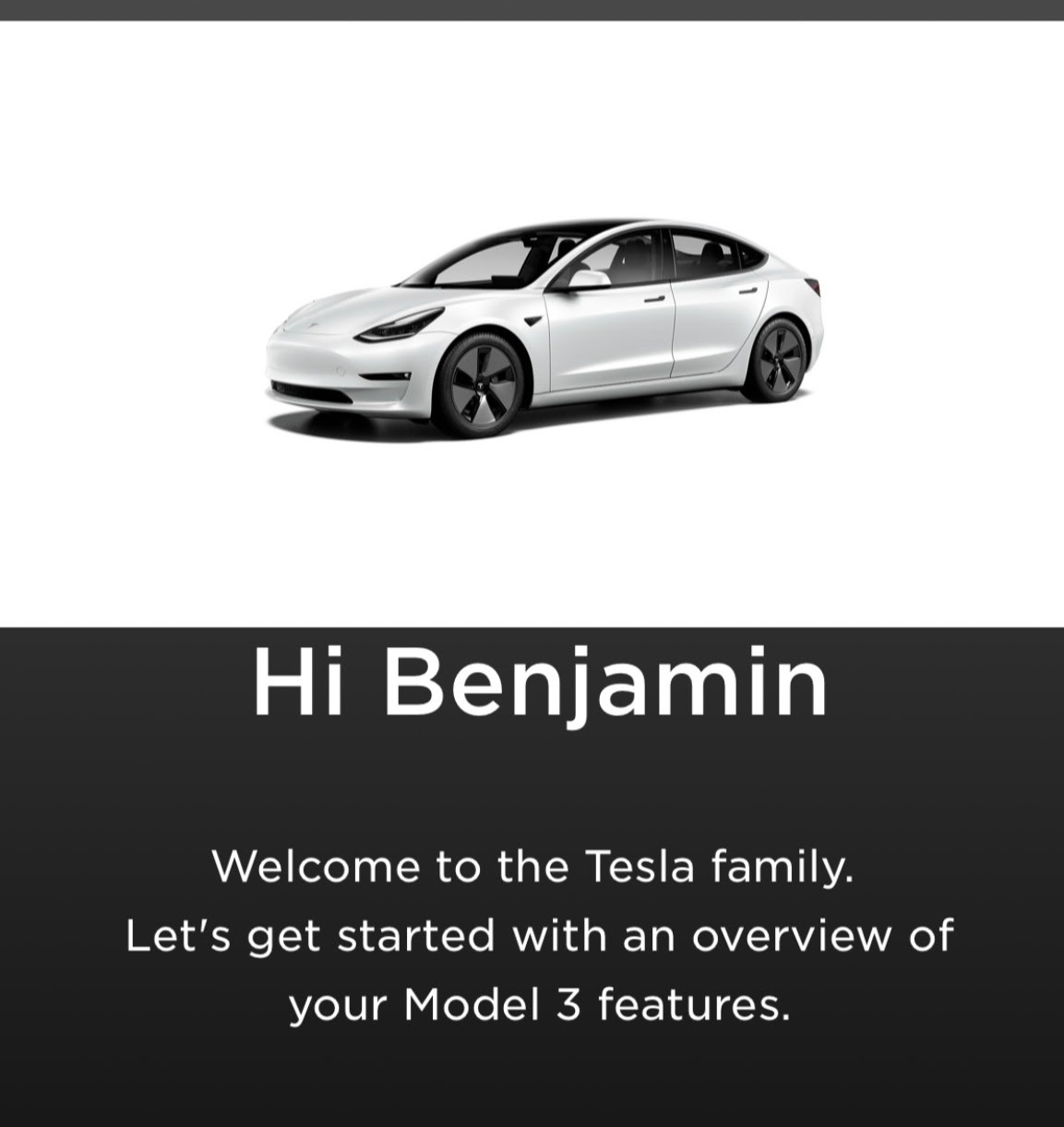
My former Udacity colleague, Ben Hommerding, is writing a running series on Medium about his new Tesla Model 3 and the 500,000 miles he intends to drive it.

Ben has lots of good tips for scouting and purchasing a Tesla, especially related to trading in your old vehicle, which is one of the few parts of the process that he found negotiable.

“After adding my trade-in and images, it took almost 3 days before receiving my confirmation back about the final value. Someone reviews the photos you took to verify the final value, and when that is done, you get the final value. “

I enjoy that Ben writes about the Tesla experience through a product lens, and has lots of little suggestions for how Tesla could make an already great purchase experience even better.

  1. 500,000 Mile Electric Car Journey: The Starting Line
  2. Road to 500,000 Electric Miles: Tesla Test Drive Experience
  3. 5 Things to Know When Buying Your Tesla

Follow Ben on Medium so you can read his upcoming posts!

Autonomous Link Roundup

File:HerdQuit.jpg
The Herd Quitter, by C.M. Russell

I haven’t done one of these in a while!

What Is VinFast?

Vietnamese Carmaker VinFast Is Thinking About A U.S. IPO | Carscoops

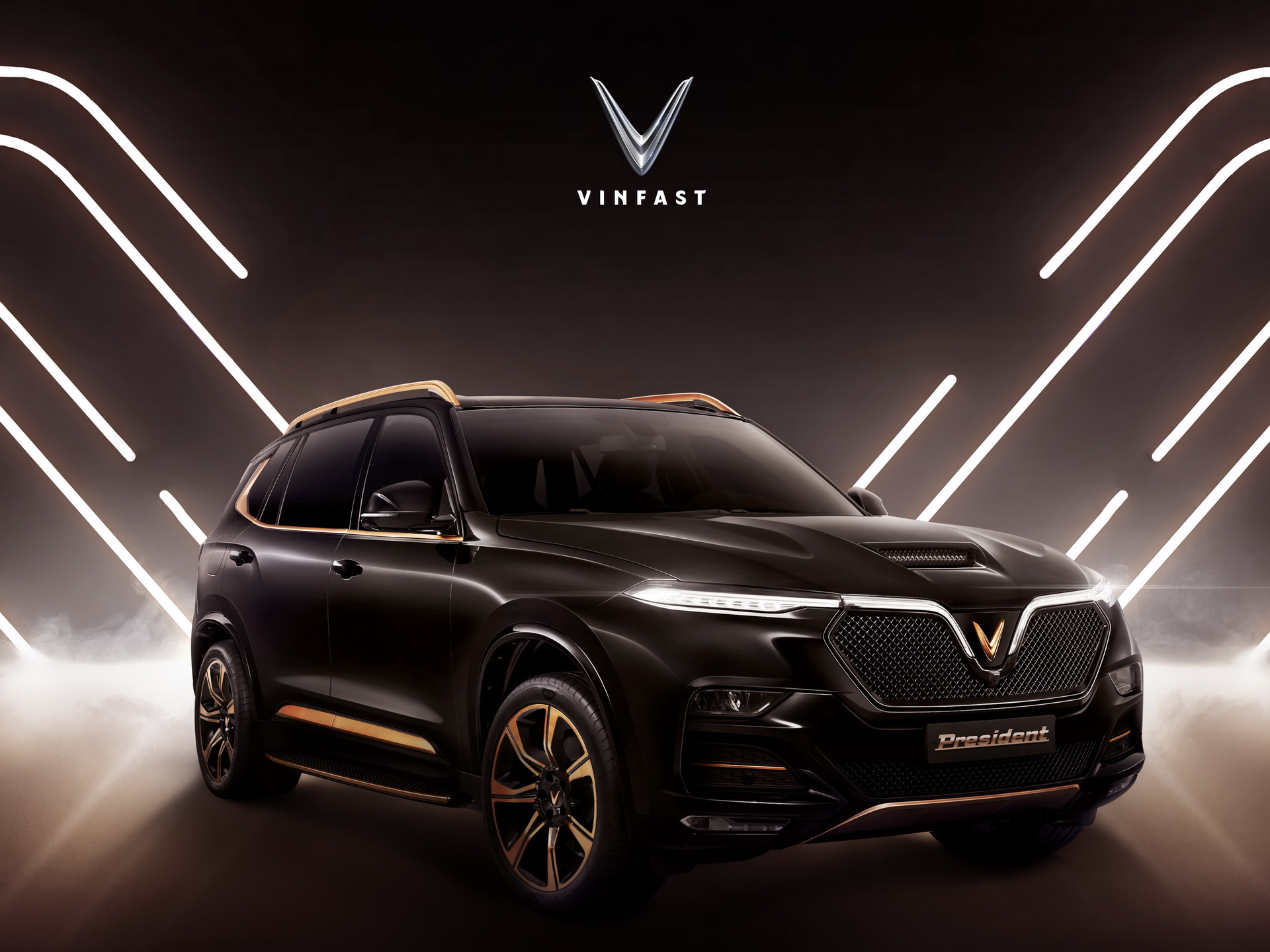
VinFast, a new and relatively unknown electric vehicle startup from Vietnam, is exploring an IPO at a $60 billion valuation, according to Reuters.

I wrote in Forbes.com about the origins of VinFast, and its parent company, the Vingroup conglomerate.

“The startup is a subsidiary of Vingroup, a giant Vietnamese conglomerate that was founded in 1993 in Ukraine by Vietnamese expatriate Phạm Nhật Vượng. Vượng arrived in Ukraine after attending college in the Soviet Union. He first opened a restaurant in Ukraine, and then an instant noodles business. From those humble beginnings, Vingroup has grown into a massive conglomerate that builds and operates everything from real estate to smartphones to hospitals to convience stores to software.

The VinFast automotive subsidiary of Vingroup is relatively new. The unit was founded in 2017 and launched its first car in 2019. In January, 2021, VinFast unveiled SUV models intended for the US and European market.”

Read the whole thing.

Cruise In Dubai!

Picture of the Cruise Origin driverless ca

Big news from Cruise yesterday!

An interesting aspect of the press release is the importance of Cruise’s electric fleet, which the Dubai Road and Transport Authority predicts will help the region meet its goal of 12% pollution reduction.

My colleague Oliver Cameron (who is hiring, by the way) took to Twitter to expand on the partnership:

Our CEO, Dan Ammann, appeared on Bloomberg News to discuss the partnership. The anchors asked him about a driverless launch in the US and he said:

“Well, it’s 2021. We’ve begun driverless testing, we’re making rapid progress with the Cruise Origin, we’ve talked about beginning operations in Dubai in 2023. So you can infer that a US launch will happen sometime in the middle there.”

Dan Ammann, CEO Cruise

Unrelated to Dubai, Dan (I think I can call him Dan) praised Voyage in the Bloomberg interview:

“The Voyage team is a super-talented and experienced team and we’re really pleased and thrilled to have had them join us in the Cruise mission.”

That makes me happy 🙂

I was also amused that Dan’s setting and wardrobe for the interview matched what we see every company meeting. Authenticity!

Two Bolts With Super Cruise

I’m really excited about this summer’s upcoming lineup of 2022 Chevy Bolts. There will actually be two models: the EV and the EUV. Both will feature GM Super Cruise, an advanced driver assistance system that reviewers claim is on par with Tesla AutoPilot.

The 2022 EUV will launch first, starting at $34,000, although the price goes up for Super Cruise. TechCrunch just reviewed the Bolt EUV and concluded:

“This compact SUV has the space, power and high-tech capability that will allow it to go head-to-head with the likes of the Tesla Model Y, Volvo’s XC40 Recharge, Ford’s Mach-E and Volkswagen’s ID.4.”

The “redesigned” Bolt EV will launch at the end of the summer, starting at $32,000.

Both vehicles boast 250 miles of electric range. Interestingly, Chevrolet has announced they will cover the installation of home charging stations as part of buying a Bolt.

“Chevrolet plans to cover standard installation of Level 2 charging capability for eligible customers who purchase or lease a 2022 Bolt EUV or Bolt EV, helping even more people experience how easy it is to live electric.”

Americans seem to be feeling flush, with record prices in both the stock and housing markets, plus trillions of dollars in government stimulus. That should help GM sell a lot of Bolts. I could see buying one myself.

Gatik Punches Above Its Weight

North America Corp partnership with Gatik - TechStory

Gatik, a middle-mile self-driving truck company, last week announced a partnership with Isuzu to build self-driving medium-duty trucks. The press release states that the trucks will be deployed this year, which would be no small feat, given the lead times required for automotive production.

What impresses me most about this deal is simply Gatik’s ability to stay alive and relevant in a sea of much larger competitors.

According to LinkedIn, Gatik has between 35 and 200 employees. I guess the precise number is under 100. A lot of other leading autonomous vehicle companies have over 1,000 employees. Gatik has raised $37 million dollars in funding. Aurora (to pick one example) has raised $1.1 billion.

And yet Gatik seems to be pushing the envelope and signing customers. Their Walmart pilot is expanding and going fully driverless. Now they’re supplying an autonomous driver to Isuzu.

Staying independent and financially solvent has become tough for small autonomous vehicle companies. Alex Roy, on The Autonocast, has been predicting large amounts of industry consolidation for over a year, and he’s largely been proven correct.

Gatik is making an impressive go of it alone.

Ask Waymo Anything!

Waymo raises $2.25 billion to scale up autonomous vehicles operations |  VentureBeat

Waymo’s Twitter account posted a message today soliciting questions from the public.

This is such a great thing to do. Publicly-traded companies typically hold quarterly earnings calls with Wall Street analysts. Those analysts get to ask any questions they want, and the answers are shared with the world in real time. But the general public rarely gets an opportunity to ask questions themselves.

Waymo isn’t even a public company yet (although it is under the Alphabet umbrella), so there’s certainly no expectation that Waymo would field questions from investors or anybody else. But it’s a great PR move.

I got very excited and ask several questions in succession. Then I realized it might be rude to ask more than one at a time, so I just left one up.

A company’s unit economics are pretty fundamental and sensitive data, so I’d be surprised if Waymo answered this directly, or at all. But I’d be fascinated if they were to answer, and regardless, I think it’s generous of them to provide the opportunity to ask.

You should ask Waymo a question, too!

XPeng Navigation Guided Pilot

Pandaily reports that Chinese electric carmaker XPeng just completed an 8-day, 2200-mile (3600-kilometer) test of its advanced driver assistance system, called Navigation Guided Pilot (NGP).

The route began at XPeng’s headquarters in Guangzhou and proceeded along the coast, through Shanghai, to Beijing.

According to the report, driver intervention was required approximately once every 85 miles (140 kilometers), which seems pretty good but quite a ways from driver-out-of-the-loop levels.

XPeng’s CEO, He Xiaopeng, seemed to acknowledge as much, stating the company is working hard at becoming a world leader:

“However, we still have a long way to go to become the world’s No. 1. We, as a team, need to persevere and prove ourselves through actual data. The increasingly fierce competition for autonomous driving technology is driving the era of smart car revolution.”

Pandaily compares NDP explicitly to Tesla AutoPilot. Neither systems utilizes lidar, and XPeng’s system runs on NVIDIA hardware, as opposed to Tesla’s custom compute platform.

To the extent that Americans follow electric and autonomous vehicles in China, NIO tends to have more mindshare than XPeng. However, XPeng is only somewhat smaller than NIO, in terms of vehicle deliveries, and I wonder if we’ll hear more about them in the US over the next year.