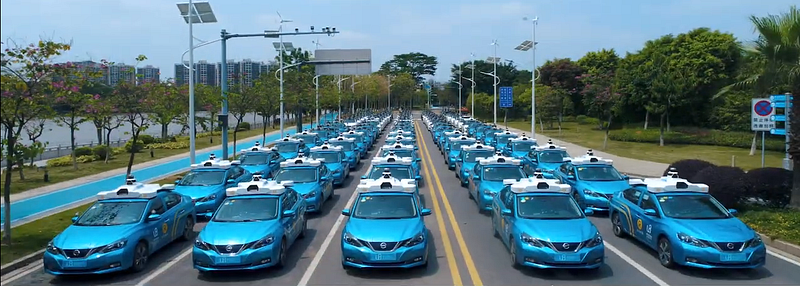
Chinese startup WeRide recently shared that, by its measurements, testing in Guangzhou, China, is thirty times more efficient than testing in Silicon Valley.
“The comparison between Guangzhou and Silicon Valley is pertinent to other self-driving operations, which have to consider where to test. Many self-driving car companies, including Waymo, have focused their operations on relatively favorable geofenced locations, such as Phoenix, Las Vegas, and Silicon Valley. In these areas, a combination of sunny weather, wide streets, and good infrastructure helps the programs progress.”
Years ago, when I was studying computer science in Brazil, Embraer was the place for aspiring Brazilian engineers to work. Petrobras had the money, but Embraer had the cache of being Brazil’s technology company that was on-par with the rest of the world.
Embraer is the world’s third-largest aircraft manufacturer, after Boeing and Airbus. Think about that. The world’s largest aircraft manufacturer is in Europe, the second-largest manufacturer is in the United States, and the third largest is in…Brazil.
Not China, not Taiwan, not Japan, not India, not back in the US. It’s in San Jose dos Campos.
I’m always a little thrilled to step onto an Embraer regional jet. A little bit of Brazil in the sky.
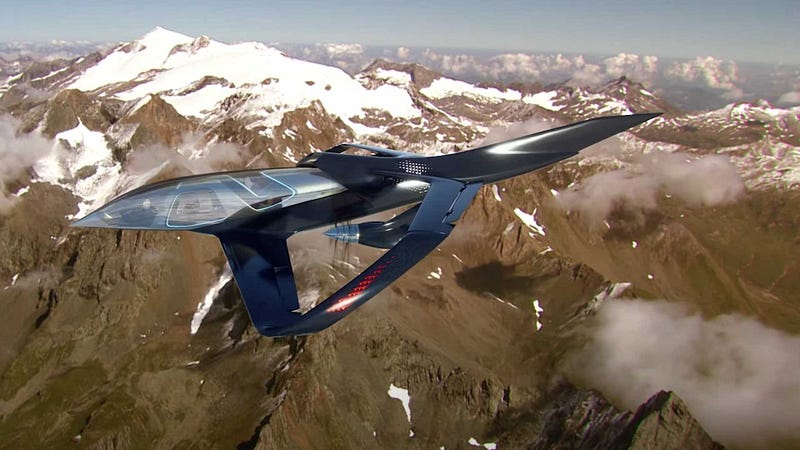
Embraer continues to dream big. At South by Southwest last year, Embraer had a huge presence, touting their eVOTL vision.
I recently re-watched Embraer’s Pulse concept video from last fall. It feels pretty sci-fi, like a lot of concept videos, but it’s exciting to see a Brazilian company envision the future.
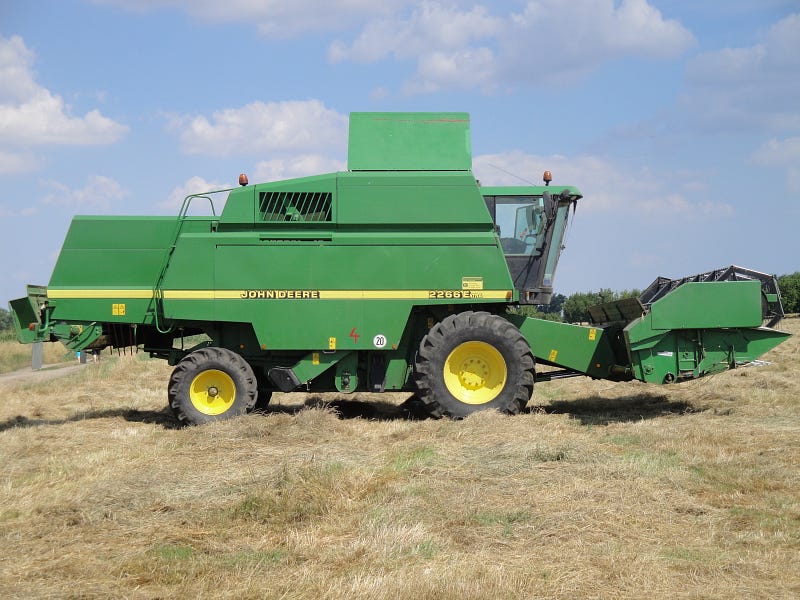
After listening to Nancy Post, Director of Deere’s Intelligent Systems Group, on The Autonocast, I pored over yesterday’s discussion of connectivity and precision agriculture on Deere’s Q2 2020 earnings call.
“Whereas Deere’s Q1 2020 earnings call highlighted the value of precision agriculture, this quarter the emphasis shifted subtly to connectivity. Precision agriculture improves crop yields, but connectivity allows both farmers and Deere to manage operations remotely, without having to travel or risk COVID-19 exposure.”
In 2016, when I was starting to build Udacity’s Self-Driving Car Engineer Nanodegree Program, it was so hard to find a good vehicle simulator to use. And the simulators that did exist had really bad graphics. They were like 1980s video games.
We wound up programming our own simulators with the Unity gaming engine, just because we didn’t have any other options.
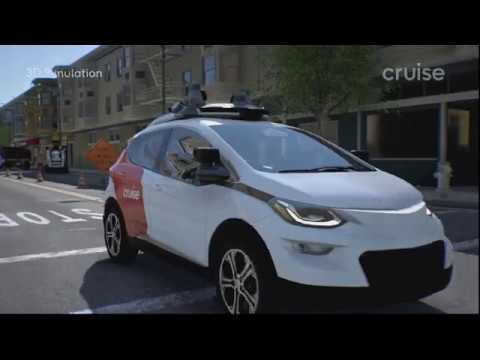
Fast-forward to 2020 and there are so many amazing, photo-realistic simulators on the market.
This Cruise video shows their simulator. I first started watching while only half paying attention. It wasn’t until halfway through the video that I realized I was watching a simulator.
It can be hard keeping up with all the different companies working on autonomous vehicles!
I recently came across two lists of autonomous vehicle companies that I found helpful: “The State of the Self-Driving Car Race 2020” (Bloomberg) and “Factbox: Investors Pour Billions Into Automated Delivery Startups” (New York Times).
The Bloomberg article summarizes the larger, better-funded efforts, whereas the Times covers fundraising by smaller startups.
Between the two of them, how many of these companies are you keeping up with?
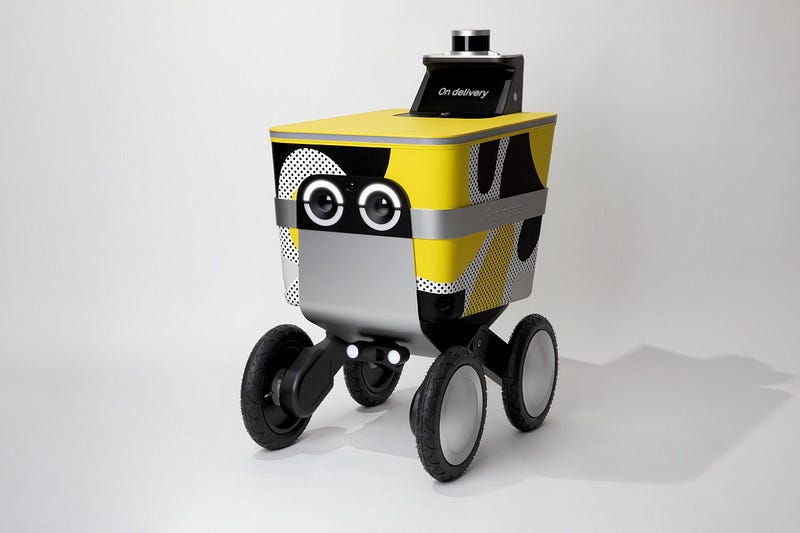
Postmates teleoperations staff is now working from home, as are so many office workers during the COVID-19 pandemic. Postmates has provisioned its teleoperations staff with the necessary equipment to remotely operate vehicles from home.
Postmates says that by moving this job to a work-from-home setup, it’s opened the role to many more possible operators.
The interesting question, for me, is whether Postmates and Phantom Auto can make this setup economical enough for massive scale.
Teleoperators can be free data labelers, as well. If Postmates and Phantom can make the teleoperators economical at scale, that would be a huge data advantage.
The blog post describes how Waymo uses deep learning to tackle the challenging problem of predicting the future. Specifically, Waymo vehicles need to predict what everyone else on the road is going to do.
A model-based approach relies on our knowledge (“model”) of how actors behave. A car turning left through an intersection is likely to continue turning left, rather than come to a complete stop, or reverse, or switch to a right-turn.
A data-driven approach uses machine learning to process data from real world-observations and apply the resulting model to new scenarios.
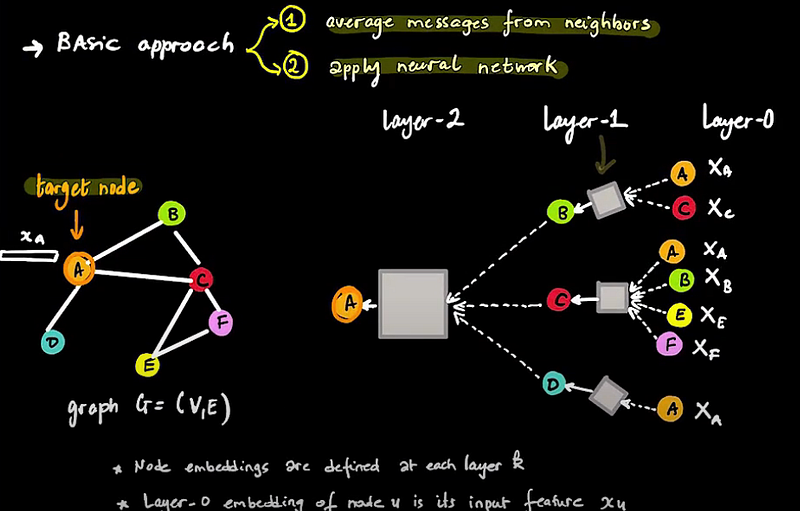
VectorNet is a data-driven approach takes relies heavily on the semantic information from its high-definition maps. Waymo converts semantic information — turn lanes, stop lines, intersections — into vectors, and then feeds those vectors into a hierarchical graph neural network.
I’m a bit out of touch with the state-of-the-art in deep learning, so I followed a link from Waymo down a rabbit hole. First I read “An Illustrated Guide to Graph Neural Networks,” by a Singaporean undergrad named Rishabh Anand.
It was a longer rabbit hole than I anticipated, but this talk was just right for me. It has a quick fifteen minute review of CNNs, followed by a quick fifteen minute review of graph theory. About thirty-minutes in she does a really nice job covering the fundamentals of graph neural networks and how they allow us to feed structured data from a graph into a neural network.
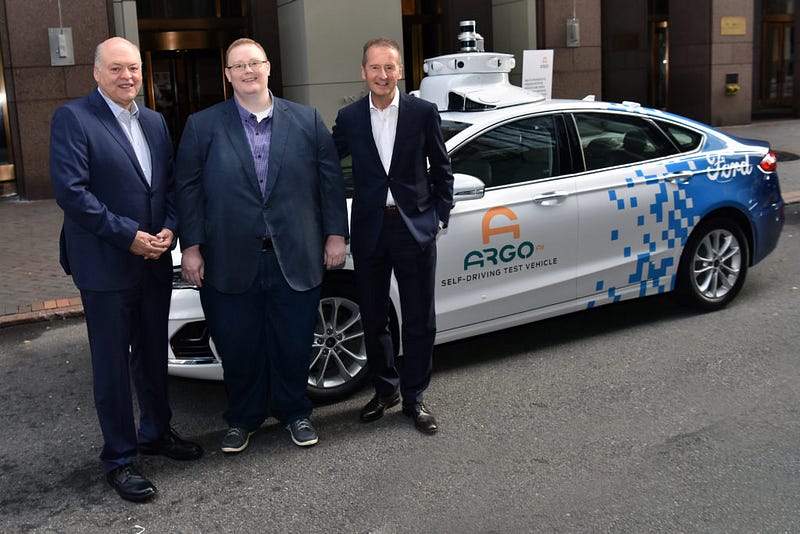
Wired has a recent and very flattering profile of Brian Salesky, founder and CEO of Argo, Ford’s self-driving car venture.
The piece has more information than I’ve read elsewhere about the early history of the Google Self-Driving Car Project, now known as Waymo. There’s also a good description about the friendship and rivalry between Salesky and Aurora CEO Chris Urmson.
Paul Leinert reports an amazing read in Reuters. Tesla is planning to launch breakthrough electric batteries that will make the cost of electric powertrains as economical or even better than gasoline.
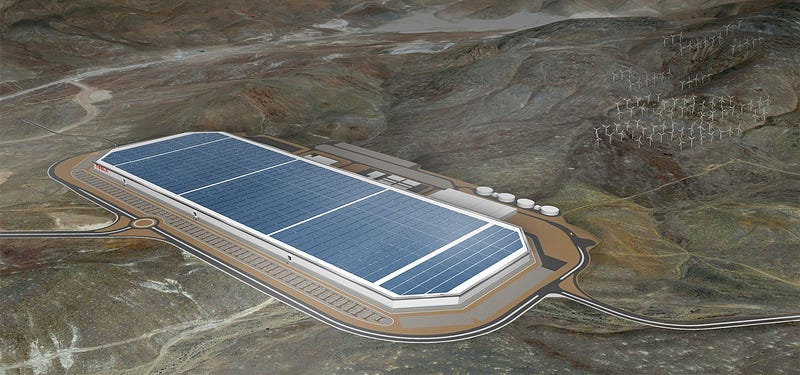
As if that’s not enough, Tesla is going to build “Terafactories” in China to produce these batteries. Terafactories will be at least an order of magnitude bigger than Tesla’s Nevada “gigafactory”.
There’s also some battery chemistry in the piece, as well as an academic laboratory from Nova Scotia, of all places.
It’s almost too out there to believe, but it seems just plausible and Paul is one of the automotive industries best reporters on future technology.


 David Silver