Airbus is Developing Flying Taxis

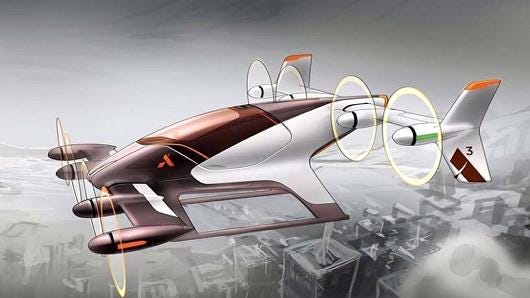
Airbus is developing flying cars out of their Silicon Valley office:

Airbus believes the global demand for the “flying cars” will run in to millions of vehicles and that demand will help reduce development costs.

“In as little as 10 years, we could have products on the market that revolutionize urban travel for millions of people,” said Lyasoff.

I know very little about aeronautical engineering and the challenges that front presents.

But I have heard speculation that in some ways autonomous flying taxis could be easier to implement than self-driving cars.

Airspace is less constrained than roadspace (at least for now), and fewer crazy things happen in the air. Cats don’t run across the road, for instance. Although I guess birds might.

Blackberry Becomes an Automotive Brand

Blackberry, the company behind the iconic mobile handsets with keyboards, has struggled mightily to survive the transition from old-style mobile phones to iPhones and Android devices.

Now comes news that Blackberry is partnering with Ford to get into the world of automotive software.

This seems like a smart move. Even the best handset manufacturers — think Samsung and HTC — are having trouble making money in that industry.

The automotive industry looks poised for huge, transformative growth, centered on software.

So Blackberry is moving into a new field, rather than trying to fight the last war smarter.

Startup Watch: Otonomo

Vehicle-to-vehicle and vehicle-to-infrastructure communication has long been a little bit more nebulous than autonomy.

Whereas a single self-driving car can operate by itself, V2X (to borrow a term) communication requires, by definition, two endpoints. That’s been a blocker.

Startups are sprouting in this field, though, which may be a harbinger of progress to come.

The latest startup is Otonomo, which just raised $12MM to build software for connected cars.

Autonomous cars use otonomo to connect to digital infrastructures and exchange data in real time with other connected and autonomous cars.
 The otonomo open cloud service seamlessly and reliably connects millions of cars to hundreds of services and apps, enabling a new marketplace of car data and enriched and safer services.

That clip, from Otonomo’s website, seems to use the present tense, where I suspect the future tense might be more appropriate.

But it’s exciting to see startups planting seeds in this field. Let’s hope some of them sprout.

Solve for the Equilibrium: Self-Driving Car Edition

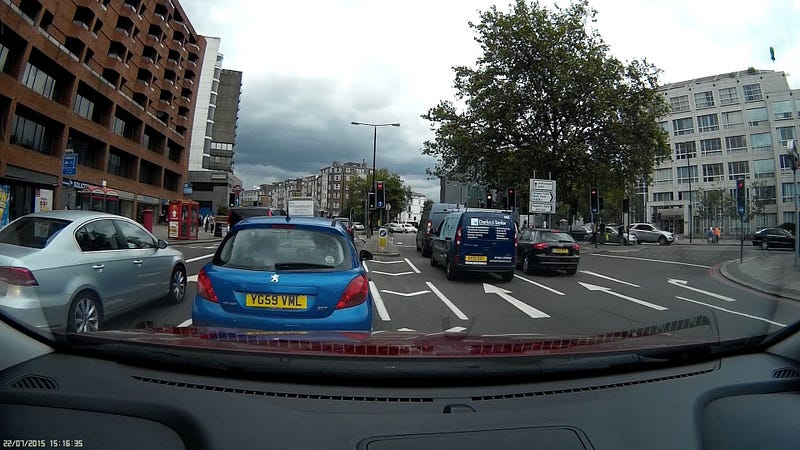
Self-driving cars in the UK will be unmarked, so that drivers won’t bully them:

Volvo is bringing its self-driving car pilot project to the UK in 2018. The automaker believes that other road users would bully the vehicles if they were labeled as autonomous, safe in the knowledge that the cars are programmed to obey road rules and won’t retaliate.

And this:

One of the survey’s participants said: “I’ll be overtaking all the time because they’ll be sticking to the rules.”

I guess this is better than the reverse situation.

Comma One Canceled

RIP Comma One.

I know George Hotz, although not well, and he’s always come across one-on-one as a nice person. His public performances can be a little more confrontational.

One thing that has always been clear about George is he places a lot of weight on shipping a product, so I can imagine how frustrating it is that the NHTSA situation looks like it will cause him to miss his 2016 launch deadline.

But it’s also the case that shipping an automotive product in the US involves working with the National Highway Transportation Safety Administration, and that’s not going to change any time soon.

George’s next product will have to deal with that, and I hope it comes soon.

Self-Driving Cars and Diversity

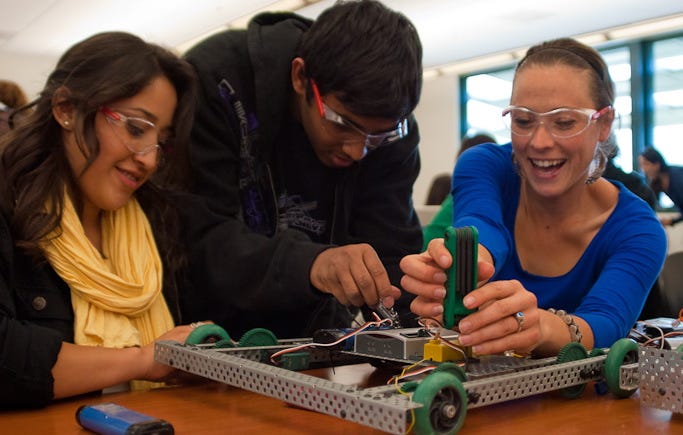
We had a running conversation at Udacity today about how we can improve diversity among the Self-Driving Car student base, and Udacity’s other programs, as well.

We have a number of action items to pursue — ranging from being smarter about seeking out a diverse group of instructors, to engaging diversity-focused online groups.

I’d love to hear from the readers of this blog. How can the Self-Driving Car Engineer Nanodegree Program create a more inclusive community?

And, if you’re somebody who doesn’t fit the stereotypical mold of an autonomous vehicle engineer, for whatever reason, please apply!

Bold and italics. I think that’s the first time I’ve ever done that on this blog.

Nanodegree Launch!

At 9am Pacific Time this morning, we opened up the Self-Driving Car Nanodegree Program to the first cohort of students!

The team at Udacity — the whole company, really — has been hard at work on preparing the modules on Introduction, Deep Learning, and Computer Vision. We are eager to hear what students think!

If you are both a reader of this blog and a student in the course, leave a comment and let me know!

We are excited about what we have built, but we also know it needs improvement to get it to where we would like it to be. So we’ll stay on it, and look out for improvements.

A huge focus for our program is helping students secure jobs working on autonomous vehicles. In addition to the instructional content and projects, we are spending a lot of time building up the part of the program.

And if you haven’t applied to join the program yet, please do!

Beer Run

Our friends at Otto just announced their first delivery: a 120-mile beer run from Loveland, Colorado, to Fort Collins.

From the details in the Times article, it sounds like the truck drove autonomously on both highway and surface streets, which is a real accomplishment.

Otto’s truck departed Anheuser-Busch’s facility in Loveland, Colo., in the early morning before reaching the interstate in Fort Collins. The truck drove through Denver — alongside regular passenger car traffic — and navigated to its destination in Colorado Springs without incident.

Uber is expanding from the business of moving people and into the business of moving everything.

The delivery was indicative of Uber’s larger ambitions to become an enormous transportation network, one in which the company is responsible for moving anything, like people, hot meals or cases of beer, around the globe, at all hours and as efficiently as possible. Travis Kalanick, Uber’s chief executive, has said he envisions a future in which transportation will occur in different ways, using both manned and unmanned vehicles.

Ford and Jaguar and Vehicle-to-Vehicle Communication

Ford and Jaguar are testing vehicle-to-vehicle communication in the UK:

Cars which are able to warn drivers when another connected vehicle brakes suddenly and those which can monitor traffic signals and regulate their speed to encounter fewer red lights were being showcased at a testing ground in central England.

Vehicle-to-vehicle and vehicle-to-infrastructure communication is probably a little further out than straight self-driving cars. But it has the potential to massively improve traffic flow. Imagine a world with no more stoplights, because vehicles figure out on their own when it’s safe to cross an intersection.

One big hurdle is defining a shared standard that works between manufacturers. This seems like an area in which the winning protocol will be whichever protocol gets built first.

Kudos to Ford and Jaguar for getting out in front of this.