Pay attention to the part where he talks about compute platforms and power consumption. That was my team!
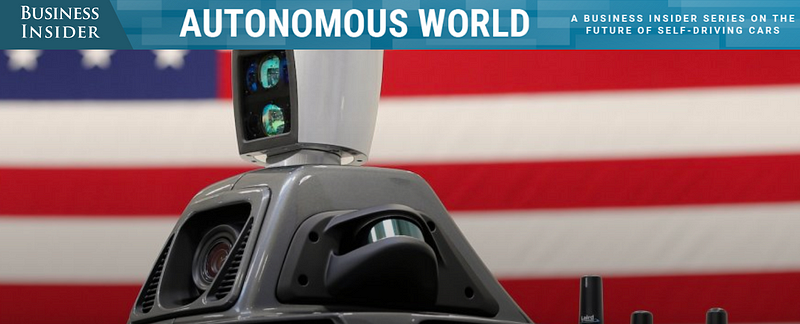
Well, to make fully autonomous SAE-defined level 4-capable vehicles, which do not need a driver to take control, the car must be able to perform what a human can perform behind the wheel. Our virtual driver system is designed to do just that. It is made up of:
Sensors — LiDAR, cameras and radar
Algorithms for localization and path planning
Computer vision and machine learning
Highly detailed 3D maps
Computational and electronics horsepower to make it all work
Gizmodo has a short writeup of a crash in which Tesla Autopilot hit the brakes before the human driver realized what was going on, thereby avoiding a pileup.
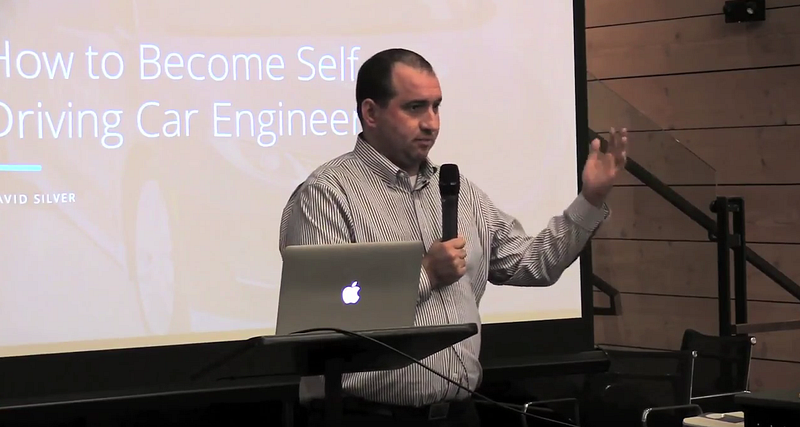
In November I gave a talk the Bay Area AI Meetup entitled, “How to Become a Self-Driving Car Engineer”. A fair bit of the talk was an overview of the Udacity Self-Driving Car Engineer Nanodegree Program. But we also touched on a variety of other topics related to autonomous vehicles, particularly during the question and answer session.
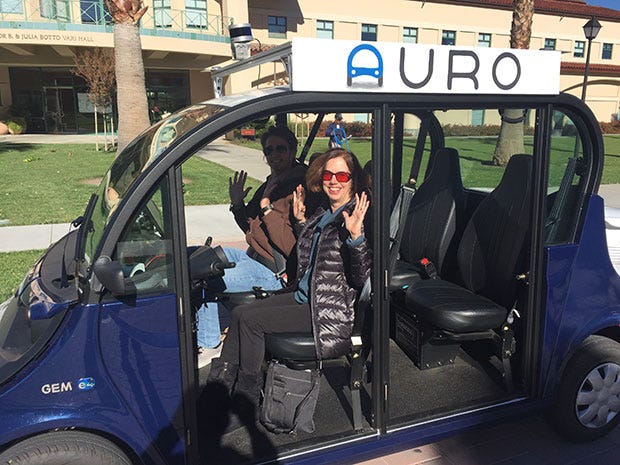
Udacity’s partner, Auro Robotics, has been testing it’s self-driving shuttle on the campus of Santa Clara University for a year. In November they turned it loose on the public for the first time.
During my rides, it was clear that the students are used to the Aero — so used to it that they don’t even think about getting out of its way. That can lead to a somewhat frustrating ride as the vehicle patiently trails a slow-walking student; it has a horn, but is too polite to beep. Visitors to campus, however, are at first puzzled, then thrilled, to learn that they are being chauffeured in a car that is driving itself. (See video, above.) And if you’re in the area, and have never had a ride in an autonomous vehicle, just stand in front of the parking garage for a while — the shuttle won’t ask to see your ID.
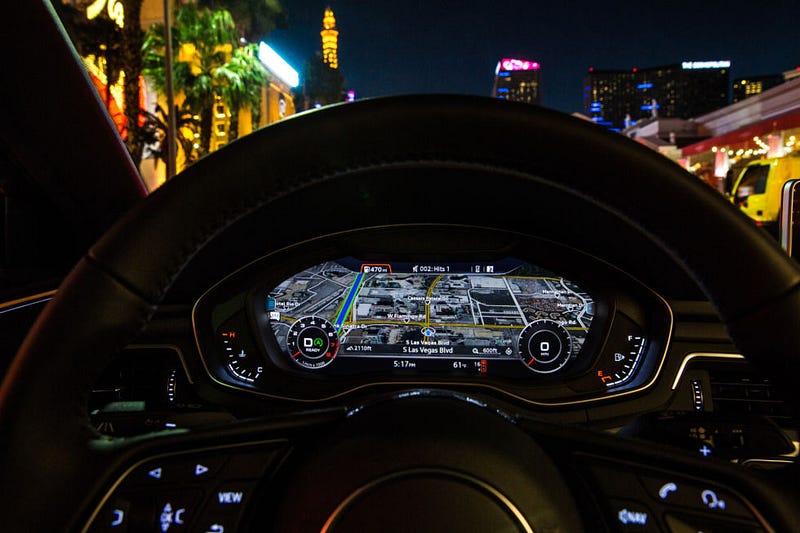
Audi’s new Traffic Light Information feature can be found on 2017 A4s, Q7s, and allroad vehicles that have Audi’s Connect Prime package — which puts customers out $10 to $30 monthly, depending on the length of the subscription.
As an Audi driver, you experience this feature as a small icon that tells you how much time is left until the next green light as you come to a stop. If you come to a protected left turn and put your left blinker on, the car will give you a countdown unique to that light as well.
This is pretty basic V2I, but so far V2I has mostly been talk and no action, so it’s awesome to see Audi pushing this live.
It’s also interesting to me that Audi charges a fee for this. That suggests there aren’t really network effects to this effort, otherwise they’d want as many people on the system as possible, even if Audi had to subsidize it.
A few days ago George Sung, who is in the first cohort of students of the Udacity Self-Driving Car Nanodegree Program, gave a presentation about his experience in the program to the Boston Self-Driving Cars Meetup.
It’s a thorough overview of the program so far. If you’re interested in signing up for the Nanodegree program, or if you’re already a student and interested in how another student has experienced it, it’s worth a watch.
George’s presentation starts at about 18:40 on the video.
Last week my colleague Lisbeth organized a really fun event for Udacity Self-Driving Car Students.
We rented out an auditorium at the Computer History Museum in Mountain View, and had several amazing engineers talk about their work on autonomous vehicles.
The opening act was a tag-team of my colleagues Mac and Eric, talking about their work on Udacity’s own open-source self-driving car:
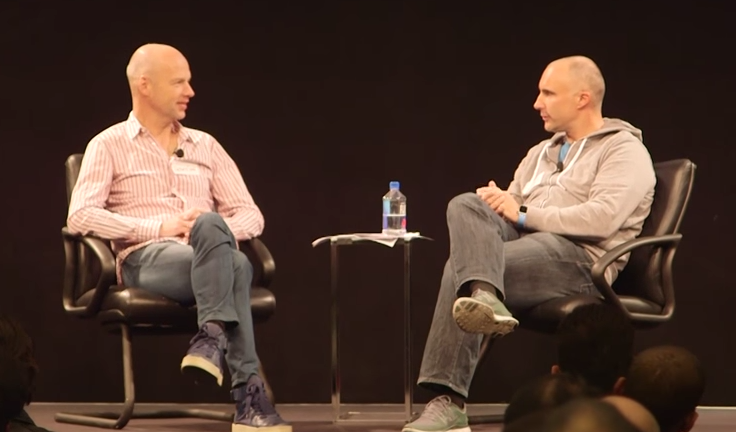
The main event was Sebastian Thrun interviewing Axel Gern, Head of Autonomous Driving at Mercedes-Benz North America:
And the encore was the ever-exciting George Hotz announcing Comma.ai’s new strategy:
Fun fact — at the beginning of George’s presentation, you’ll see him gesturing off-stage to some anonymous person to advance his slides. That was me. Working at a startup means wearing a lot of hats 😉
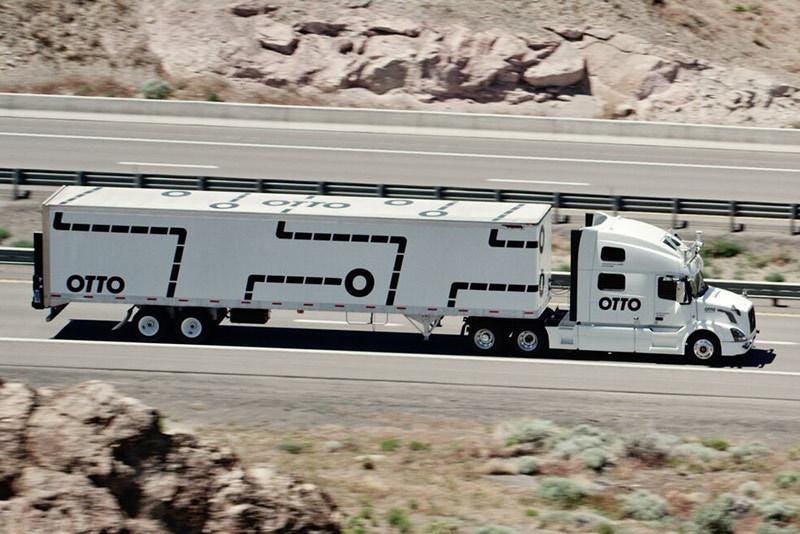
Business Insider has a great inside-baseball story on the early days of Otto, particularly the negotiations and maneuvering that took place in running their first self-driving truck tests in Nevada.
The Nevada regulatory bureaucracy is generally very amenable toward autonomous vehicles, but there’s still a certain amount of required testing and licensing.
According to the BI article, Otto had to figure out a way around that in order to keep up their frantic development pace:
Before an autonomous vehicle can be operated on the state’s roads, it must be issued a testing license and special red license plates. It has to be able to capture driving data in case of crashes, have switches to engage and disengage the autonomous systems, and have a way to alert the human operator if it fails.
To obtain a license, Otto would have had to produce evidence of 10,000 miles of previous autonomous operation and submit a truck for a self-driving test, such as the one completed by Google in 2012. It would also need to post a $5 million bond and file reams of paperwork. Even with all those requirements fulfilled, Otto’s demo would need two people seated up front, one of them poised to take over in the event of a failure.
…
Otto’s founders were faced with a stark choice. They could submit to the DMV and undertake the laborious process of modifying, testing, and licensing their truck. This would likely take a month or more, and could risk their first-mover advantage in driverless trucking. Or the engineers could continue with their test as planned.
Logistics is one of the industries most ripe for autonomous vehicles. A lot of logistics involves traversing the same areas over and over again. And the vehicles are in use more or less constantly, as opposed to personal vehicles, which are parked 95% of the time.
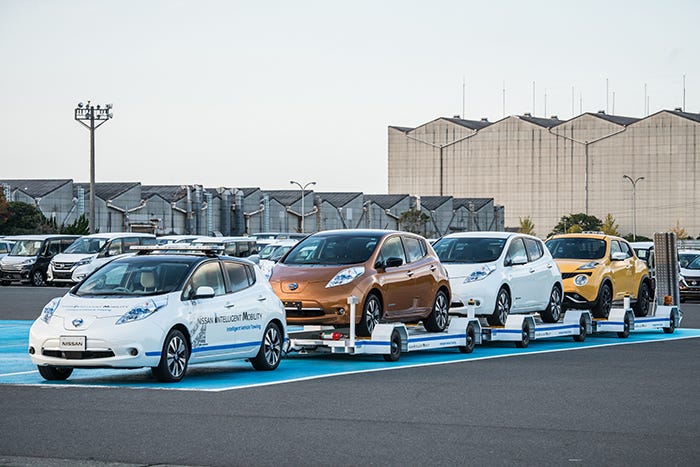
In that vein, Nissan has just announced an autonomous towing system they’ve put into use at one of their plants in Japan.



 David Silver