IAA

This week is IAA, the world’s premier automotive show, in Frankfurt, Germany.

Four years ago I had the pleasure of speaking at IAA 2017, as part of Udacity’s partnership with Mercedes-Benz on the Self-Driving Car Engineer Nanodegree Program. That was such a fun trip!

We hosted events with students, met our colleagues in Udacity Germany, and saw exciting new car concepts.

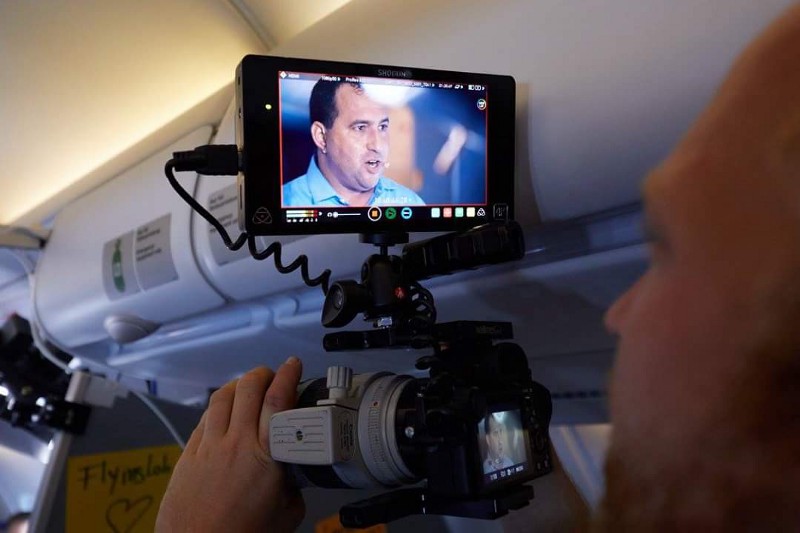
As part of the event, I participated in Lufthansa’s Flying Lab, which was kind of like TED at 35,000 feet.

That was one of the most fun business trips I’ve ever taken. I hope to return to IAA one day, under similarly exciting and joyful circumstances 😀

Sunday Autonomous Vehicle Round-Up

The Incentive by Nathan Solano
  • Alphabet halts sales of Laser Bear Honeycomb lidar sensors. The head of the division just left Waymo for Aeva, and I would guess this is a prelude to winding down the lidar effort. There are enough lidar start-up in the ecosystem now that it seems unlikely even Waymo could outperform all of them as a side project.
  • Nuro builds a test track at Las Vegas Motor Speedway. Back when I was at Udacity, we did driver safety training at Sonoma Raceway. Those track has a lot of space and are only fully utilized a few days a year. Makes sense that a permanent tenant could be valuable.
  • Autonomous vehicle TikTok stars.

NIO Requires A Quiz To Use ADAS

NIO (car company) - Wikipedia

A cascade of automotive news sites report that NIO has started requiring drivers to pass a quiz in order to use its advanced driver assistance system, called NIO Pilot. Apparently this comes in the wake of a fatal crash involving the system.

Back when I was teaching at Udacity, we used quizzes all the time. In fact, the courses we built were required to have a certain cadence of quizzes. Quizzes are great, because they force students out of passive listening and into active thinking.

Of course, there are quizzes and better quizzes – not all of them are created equal. Lots of multiple-choice quizzes, especially, are too pro forma and easy. I haven’t seen NIO’s quiz, which is presumably in Chinese, to evaluate it.

According to CnEVPost:

The video introduces the key features and things to know about NIO Pilot and re-emphasizes that NIO Pilot and NOP (Navigation on Pilot) are assisted driving features, not autonomous driving and that the driver must always be in control of the driving during use.

That seems like a pretty good start.

Gatik Raises More Money

Gatik raises $25 million for autonomous short-haul delivery trucks |  VentureBeat

Gatik just raised a big $85 million Series B funding round. While this is much smaller than other companies are raising through SPACs, IPOs, or jumbo private investments, it’s a real accomplishment.

Life has gotten pretty tough out there for small autonomous vehicle companies. Investors are skittish about backing smaller startups that will have to compete against multi-billion dollar entities.

Gatik has evidently put together a convincing story that their autonomous box trucks, focused on transportation between distribution centers, are sufficiently different from the rest of the autonomous trucking industry.

The company is currently 70 employees and plans to double in size, making it one of the few remaining autonomous vehicle startups of that size. And they have truek driverless trucks operating (albeit on only one route so far)!

Gamechangers Podcast

Image

I just finished listening to my friend, Bryan Catanzaro, on the Gamechangers podcast, from The Economist. The whole podcast series is terrific. There are only three episodes so far, but I recommend all three.

The first episode expands the history of lithium-ion batteries, including the migration away from lead-acid batteries. The episode features interviews with John Goodenough and Stanley Whittingham, two of the three recipients of the 2019 Nobel Prize for Chemistry. Tesla founder Marc Tarpenning also features prominently.

The next episode focuses on messenger RNA, the basis for the most successful COVID-19 vaccines. Drew Weissberg, who has not yet won a Nobel Prize, but will, appears, as well as Moderna co-founders Derrick Rossi and Robert Langer. I did not know that “Moderna” is an abbreviation of “modified RNA”.

The final episode explores the connection between video games, graphical processing units, and deep learning. Andrew Ng has some good stories, as does Yoshua Bengio, and Bryan Catanzaro represents NVIDIA.

Relatedly, I enjoyed this interview with Akira Yoshino, the third recipient of the 2019 Nobel Prize in Chemistry. The man just seems so excited about the future, and lithium-ions, in particular.

Farm To Fleet

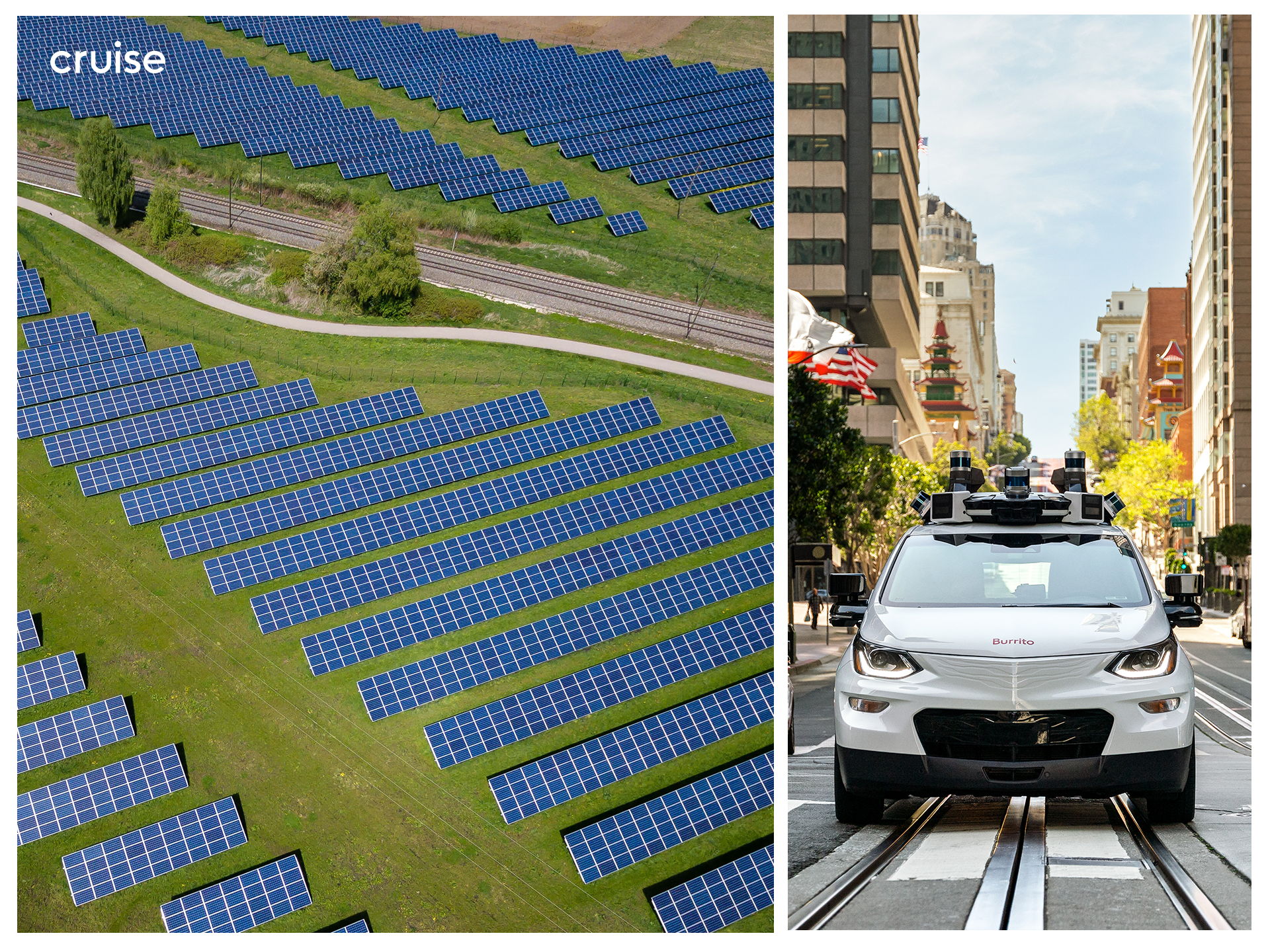
This week, Cruise announced a Farm To Fleet initiative to power our all-electric self-driving vehicle fleet with renewable energy from California’s Central Valley.

“Cruise began sourcing our solar renewable energy credits (RECs) from farms in California’s Central Valley that generate their own solar power on-site earlier this spring…
Through this initiative, every mile that Cruise drives in California helps to directly generate economic opportunity for farmers.”

I learned about this initiative right after reading Scott Alexander’s blog post about carbon credits.

“I think the most important thing it could convince you of is that if you were previously planning on letting yourself be miserable to save carbon, you should buy carbon offsets instead.”

Renewable energy credits come with some real monitoring and enforcement challenges, as Alexander explains in his blog post.

But monitoring and enforcement can make renewable energy credits, like those that Cruise is sourcing from the Central Valley, an important part of fighting climate change.

Tuesday Autonomous Vehicle Round Up

Andalusia, The Round Up by Joaquin Sorolla

Waymo Is Driving 100,000 San Francisco Miles Per Week

Waypoint - The official Waymo blog: Expanding our testing in San Francisco

They identify four core strengths:

  1. Custom sensors
  2. Machine learning
  3. Transfer learning (e.g. from Phoenix and from trucking)
  4. Focus

“Our machine learning models have observed and learned countless other small nuances that help us drive like locals. Through our experience of driving in San Francisco, for example, the Waymo Driver has learned that residents often drive slightly slower while traveling up steep slopes. Therefore, based on its experience and depending on the speed and flow of traffic, the Waymo Driver does, too, to provide San Franciscans with a familiar and comfortable experience navigating the city’s many hills.”

Lots more on the Waymo blog.