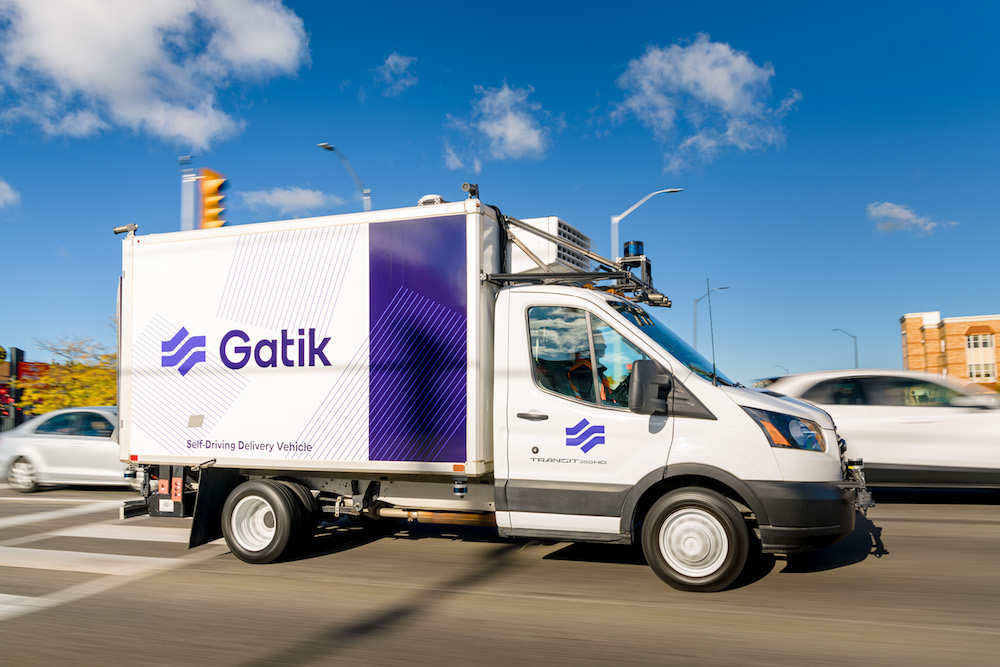
Gatik, a middle-mile self-driving truck company, last week announced a partnership with Isuzu to build self-driving medium-duty trucks. The press release states that the trucks will be deployed this year, which would be no small feat, given the lead times required for automotive production.
What impresses me most about this deal is simply Gatik’s ability to stay alive and relevant in a sea of much larger competitors.
And yet Gatik seems to be pushing the envelope and signing customers. Their Walmart pilot is expanding and going fully driverless. Now they’re supplying an autonomous driver to Isuzu.
Staying independent and financially solvent has become tough for small autonomous vehicle companies. Alex Roy, on The Autonocast, has been predicting large amounts of industry consolidation for over a year, and he’s largely been proven correct.
This is such a great thing to do. Publicly-traded companies typically hold quarterly earnings calls with Wall Street analysts. Those analysts get to ask any questions they want, and the answers are shared with the world in real time. But the general public rarely gets an opportunity to ask questions themselves.
Waymo isn’t even a public company yet (although it is under the Alphabet umbrella), so there’s certainly no expectation that Waymo would field questions from investors or anybody else. But it’s a great PR move.
I got very excited and ask several questions in succession. Then I realized it might be rude to ask more than one at a time, so I just left one up.
A company’s unit economics are pretty fundamental and sensitive data, so I’d be surprised if Waymo answered this directly, or at all. But I’d be fascinated if they were to answer, and regardless, I think it’s generous of them to provide the opportunity to ask.
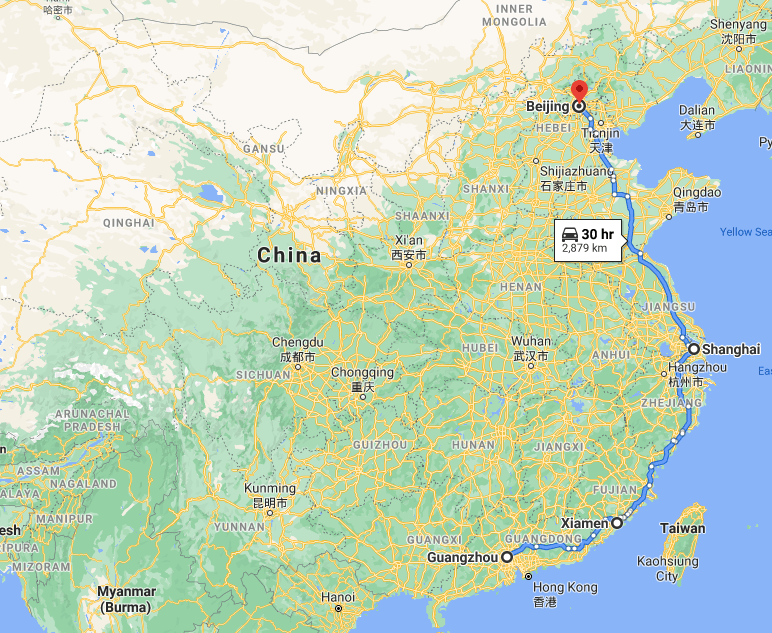
Pandailyreports that Chinese electric carmaker XPeng just completed an 8-day, 2200-mile (3600-kilometer) test of its advanced driver assistance system, called Navigation Guided Pilot (NGP).
The route began at XPeng’s headquarters in Guangzhou and proceeded along the coast, through Shanghai, to Beijing.
According to the report, driver intervention was required approximately once every 85 miles (140 kilometers), which seems pretty good but quite a ways from driver-out-of-the-loop levels.
XPeng’s CEO, He Xiaopeng, seemed to acknowledge as much, stating the company is working hard at becoming a world leader:
“However, we still have a long way to go to become the world’s No. 1. We, as a team, need to persevere and prove ourselves through actual data. The increasingly fierce competition for autonomous driving technology is driving the era of smart car revolution.”
Pandaily compares NDP explicitly to Tesla AutoPilot. Neither systems utilizes lidar, and XPeng’s system runs on NVIDIA hardware, as opposed to Tesla’s custom compute platform.
To the extent that Americans follow electric and autonomous vehicles in China, NIO tends to have more mindshare than XPeng. However, XPeng is only somewhat smaller than NIO, in terms of vehicle deliveries, and I wonder if we’ll hear more about them in the US over the next year.
One of the silver linings of the pandemic is the movement of many events online, and the access that provides to people around the world. NVIDIA’s upcoming GPU Technology Conference seems likely to be a perfect example.
Every year, NVIDIA puts on a world-class conference that is a mix of academic and industry presentations. This year, the conference is open to the world, streaming live, starting on April 12.
The speaker list includes academic luminaries, such as Geoffrey Hinton, Daphne Kohler, Raquel Urtusan, Yann LeCun, and Bryan Catanzaro, alongside industry leaders like Jesse Levinson, Drew Bagnell, and Chris Wright.
I wonder how attendance and engagement at a virtual GTC compare to the multiple in-person GTCs NVIDIA used to hold worldwide. Presumably there is the potential to reach a lot more people, and for many students and practitioners to benefit from that.
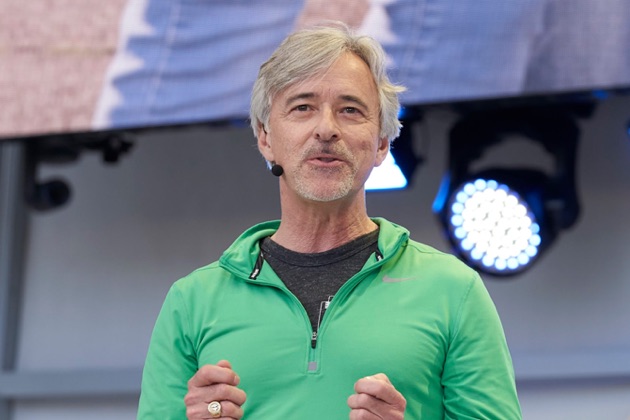
Waymo CEO John Krafcik resigned yesterday, which seemed to surprise just about everybody.
After 5 exhilarating years leading this team, I’ve decided to depart from my CEO role at Waymo & kick-off new adventures. To start, I’m looking forward to a refresh period, reconnecting with old friends & family, and discovering new parts of the world. /1 https://t.co/cP2tZTQdu0https://t.co/doPoW6wWli
Tekedra Mawakana and Dmitri Dolgov, previously the COO and CTO, will step into co-CEO positions. As of right now, Mawakana hasn’t yet updated her LinkedIn profile, which perhaps illustrates the suddenness of the announcement.
Like lots of otherfolks, I have a hard time making heads or tails of this move. Krafcik joined Waymo five years ago, in the wake of Chris Urmson’s departure. The presumptive logic was that Krafcik was a business leader (albeit with engineering chops) who could take Waymo beyond research and development, and into a business launch.
Krafcik did that, technically, by overseeing the launch of Waymo One in the Phoenix suburbs last year. But Waymo One is still small and limited, and it seems like the task of launching a product has just started.
Krafcik’s stated rationale, “I’m looking forward to a refresh period, reconnecting with old friends & family, and discovering new parts of the world,” sounds an awful lot like what a poorly performing or scandal-ridden leader might say in the wake of a forced resignation.
But Krafcik is widely admired in the autonomous vehicle industry, and Waymo is currently the only company to have launched a commercial driverless business of any sort. I’m skeptical he was forced out, although anything is possible.
Perhaps it’s simply the case that the road to fully autonomous vehicles is longer than any of us expected, Krafcik spent five years getting Waymo this far, and it’s time for a break. Like he wrote.
People sometimes ask me why I entered the autonomous vehicle world as a engineer, instead of a product manager. One reason is that, when I started working on autonomous vehicles in 2015, there were no products to manage! Self-driving cars have long been an engineering research and development effort.
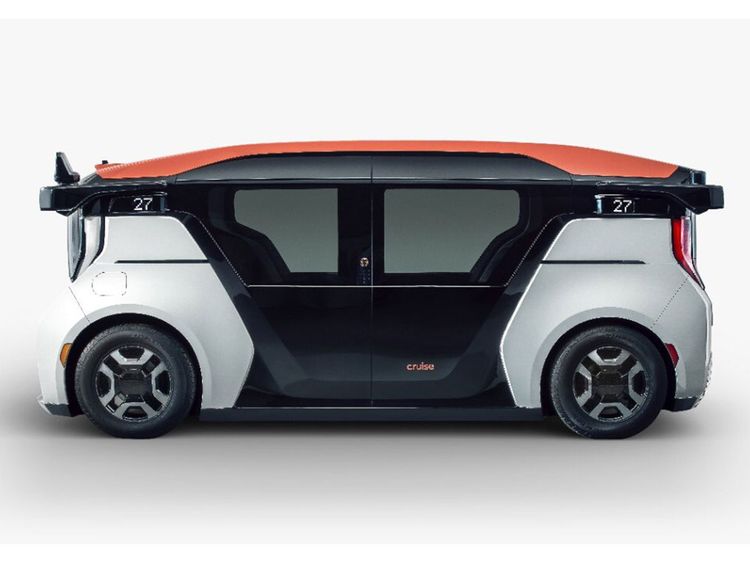
But products are starting to emerge! That means AV companies like Cruise are finally starting to hire product managers. If you are a PM, this is your moment!
Next month Volkswagen plans to rebrand in the US as “Voltswagen”, in order to focus consumer attention on its new electric vehicles. Apparently a web snafu caused the VW press team to accidentally post the press release a month early, which is why the news hit the media today, even though the rebranding is targeted for April.
Volkswagen has been calling a lot of attention to its electric platform, especially the ID. Buzz, a re-imagining of the iconic Volkswagen Bus on a battery-powered platform. Quantitatively, the company targets that by 2030 at least 70% of its European new car sales will be electric, along with over half of its new car sales in the US and China.
TechCrunchwrote recently about a possible complication faced by TuSimple in their upcoming IPO – Chinese investors.
“Sun Dream, an affiliate of Sina Corporation, which runs China’s biggest microblogging platform Sina Weibo..is TuSimple’s largest shareholder, with 20% Class A shares.”
The Committee on Foreign Investment in the US (CFIUS) is raising some concerns, although it’s not yet clear what will come of this case. What is known is that CFIUS has begun raising orders of magnitude more objections to foreign investment in the last few years. The highest-profile recent intervention was the Trump administration’s on-again-off-again insistence that ByteDance divest the US operations of TikTok.
The US government should drop the concerns and welcome China’s investment in self-driving trucks. Hosting TuSimple in the US keeps robotics knowledge in this country, and it enhances the likelihood that world-changing robotics breakthroughs will benefit US citizens.
Between Waymo, Plus, Torc, Embark, Kodiak, and Gatik, there’s no present risk that TuSimple will establish a monopoly on autonomous trucks in any way that threatens the national security United States. That’s not even taking into account Cruise, Argo, or Aurora, much less Nuro or Tesla or GM or Ford or any of the other companies working on autonomous technology that could eventually be repurposed toward trucking.
The Chinese government, controlled by the Chinese Communist Party (CCP), has killed more people than any other institution in history. The ongoing genocide against the Uyghurs in western China is nearly unbelievable in the present day, which is part of why I think it just hasn’t registered in the US. The idea that something akin to the Holocaust is happening right now, and nobody is really doing anything about it, is genuinely hard to process.
We should help the Uyghurs, ideally by facilitating immigration to the US and elsewhere. And I’d support holding up TuSimple’s IPO as a bargaining chip to end the Uyghur genocide.
But blocking investment in TuSimple isn’t even meant to reform the CCP. The CFIUS mission is to protect US national security.
Maybe in some hard-to-imagine future TuSimple will start to shape up as a real national security issue. We can deal with the problem then.
And in other situations, far afield from autonomous vehicles, maybe CFIUS should get more involved. Huawei comes to mind as a possibility, although I haven’t studied that situation closely enough to have strong opinions.
But TuSimple is not a national security concern. Instead of intimidating Chinese companies like TuSimple, we should encourage this kind of technology investment in the US.
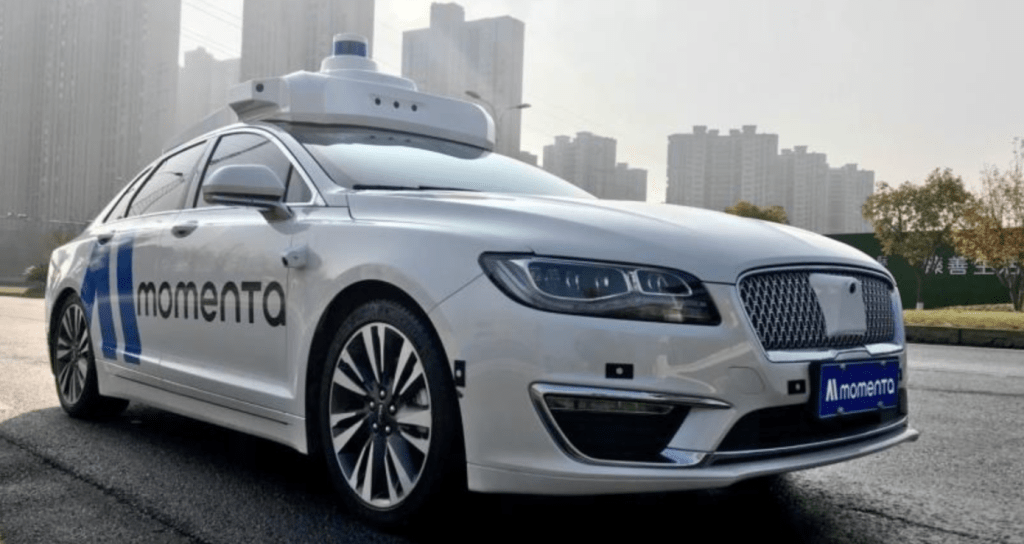
I have no special connection to Momenta, but I hadn’t read much about them recently, so I am happy to see they’re thriving. Momenta made a small splash upon their founding several years ago. The team came from Microsoft Research Asia, where they developed ResNet, still one of the foundational architectures for deep neural networks.
Momenta gets very little press in the US, probably due to the lack of a US presence. Their headquarters is in Beijing, and their only foreign office is in Stuttgart, Germany. Nonetheless, they have been and apparently still are one of the premier Chinese autonomous vehicle startups.
Unusually for an autonomous startup, they are working on both driver assistance and fully autonomous technology. Their driver assistance products fall under the Mpilot product umbrella, and their fully autonomous technology is marketed as MSD (“Momenta Self-Driving”?).
Helpfully, they have an English-language website, although it’s a little barebones and a little bit of the text has not been translated from Chinese.
The language barrier may keep them under the radar in the US for now, but they’re worth keeping an eye on.
I am joining the Motion Planning and Controls group, specifically on the Architecture & Acceleration team.
Here’s how Cruise describes my role:
“Own the SW architecture of the Motion Planning and Controls Stack and work closely with domain experts in creating an efficient and performant framework for implementing Controls and Motion Planning algorithms that control the AV”
The People Operations Team at Cruise has developed a thorough onboarding process called Ignition. As a remote employee, I’m grateful they’re prioritizing orientation inside an organization that’s much larger than either Voyage or Udacity, my previous two employers.
During the last few weeks, as we prepared for the integration of Voyage with Cruise, my fellow Voyagers and I got some sneak peaks into Cruise’s architecture, processes, and plans. I was super-impressed, and I’m join a team that has accomplished so much already! I hope there’s still work left for me to do 😉



:max_bytes(150000):strip_icc()/NvidiaGTClogo-69103e6d1cca4266a633bacee25d683a.jpg)



 David Silver