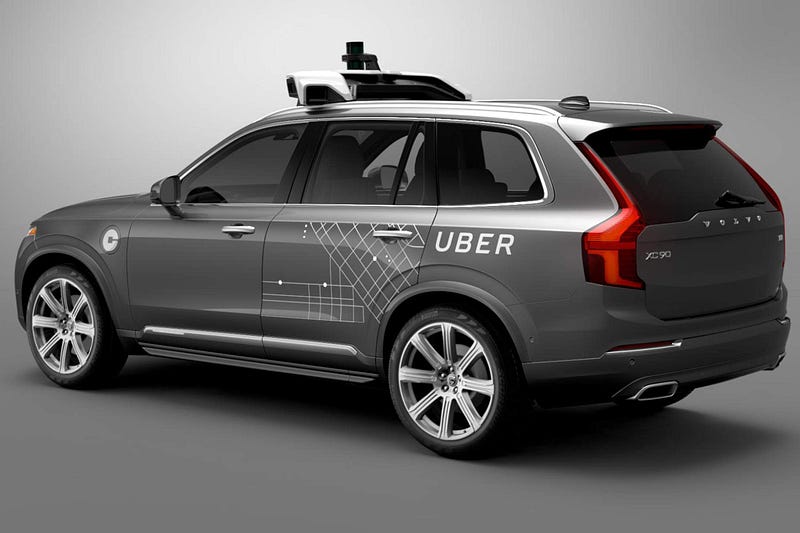
Uber has expanded its self-driving taxi trial to the home of technology and autonomous vehicles; San Francisco. Starting from 14 December, Uber customers with a credit card attached to a San Francisco billing address are eligible to ride in a fleet of five self-driving cars.
“Our cars departed for Arizona this morning by truck,” said an Uber spokesperson in an email to The Verge. “We’ll be expanding our self-driving pilot there in the next few weeks, and we’re excited to have the support of Governor Ducey.”
The move comes after California’s Department of Motor Vehicles revoked the registration of Uber’s 16 self-driving cars because the company refused to apply for the appropriate permits for testing autonomous cars.
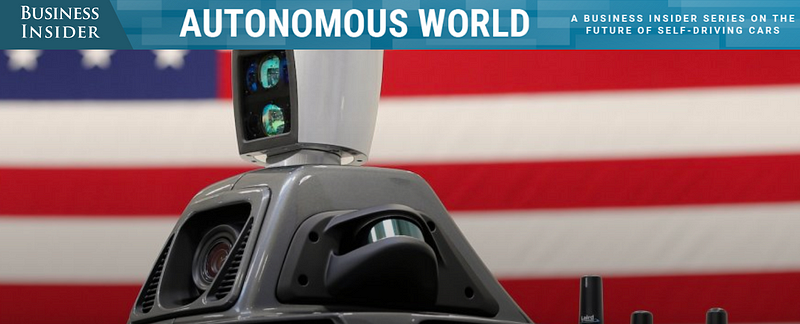
They want to embed lidar in the grill of a car. This seems like a difficult vantage point, since the sensor won’t have a 360-degree view of the environment.
They plan to deliver prototypes next summer.
Based on their website, they seem to target two markets: autonomous vehicles and the military.
They’re based in Bozeman, Montana, which is a great town, but hardly a tech hub. Given the cost of housing in Silicon Valley, though, I’m tempted to apply for a job there right now.
Chollet is the author of Keras, which is a deep learning library we use in the Udacity Self-Driving Car Program. He explains at length why artificial intelligence generally, much like autonomous driving specifically, is not a solved problem.
Overall: deep learning has made us really good at turning large datasets of perceptual inputs (images, sounds, videos) and simple human-annotated targets (e.g. the list of objects present in a picture) into models that can automatically map the inputs to the targets. That’s great, and it has a ton a transformative practical applications. But it’s still the only thing we can do really well. Let’s not mistake this fairly narrow success in supervised learning for having “solved” machine perception, or machine intelligence in general. The things about intelligence that we don’t understand still massively outnumber the things that we do understand, and while we are standing one step closer to general AI than we did ten years ago, it’s only by a small increment.
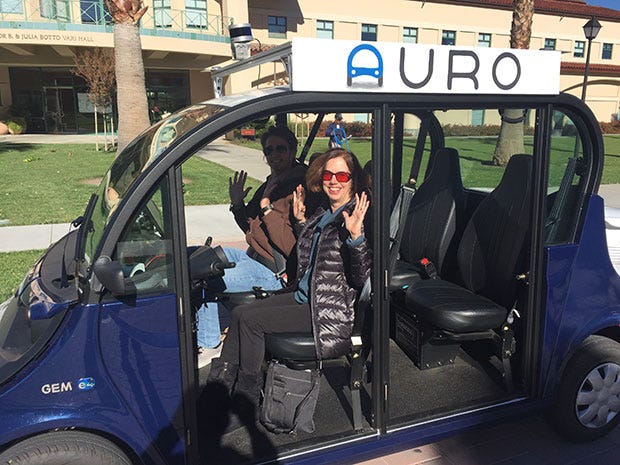
Udacity’s partner, Auro Robotics, has been testing it’s self-driving shuttle on the campus of Santa Clara University for a year. In November they turned it loose on the public for the first time.
During my rides, it was clear that the students are used to the Aero — so used to it that they don’t even think about getting out of its way. That can lead to a somewhat frustrating ride as the vehicle patiently trails a slow-walking student; it has a horn, but is too polite to beep. Visitors to campus, however, are at first puzzled, then thrilled, to learn that they are being chauffeured in a car that is driving itself. (See video, above.) And if you’re in the area, and have never had a ride in an autonomous vehicle, just stand in front of the parking garage for a while — the shuttle won’t ask to see your ID.
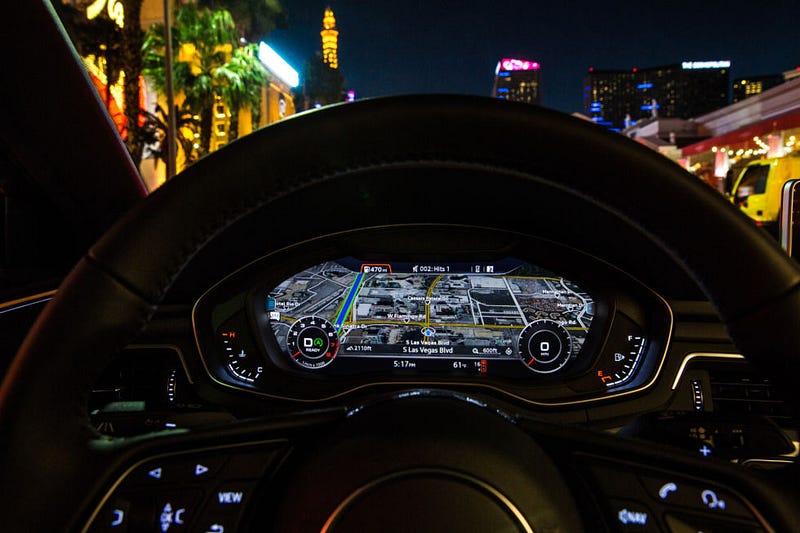
Audi’s new Traffic Light Information feature can be found on 2017 A4s, Q7s, and allroad vehicles that have Audi’s Connect Prime package — which puts customers out $10 to $30 monthly, depending on the length of the subscription.
As an Audi driver, you experience this feature as a small icon that tells you how much time is left until the next green light as you come to a stop. If you come to a protected left turn and put your left blinker on, the car will give you a countdown unique to that light as well.
This is pretty basic V2I, but so far V2I has mostly been talk and no action, so it’s awesome to see Audi pushing this live.
It’s also interesting to me that Audi charges a fee for this. That suggests there aren’t really network effects to this effort, otherwise they’d want as many people on the system as possible, even if Audi had to subsidize it.
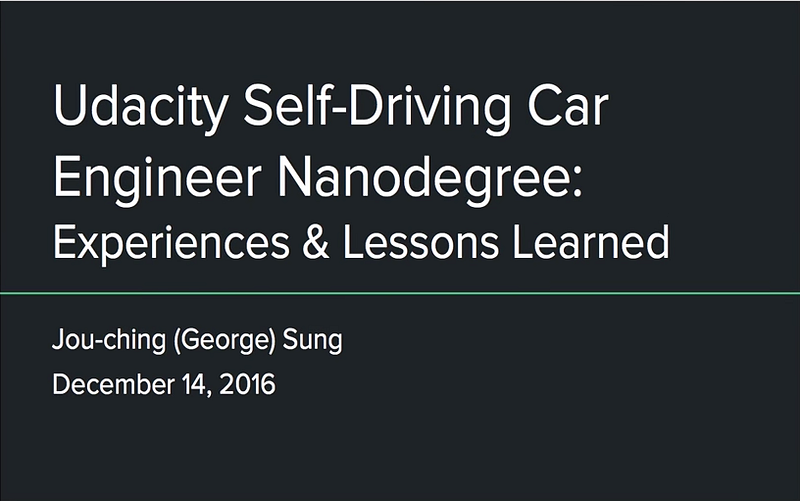
A few days ago George Sung, who is in the first cohort of students of the Udacity Self-Driving Car Nanodegree Program, gave a presentation about his experience in the program to the Boston Self-Driving Cars Meetup.
It’s a thorough overview of the program so far. If you’re interested in signing up for the Nanodegree program, or if you’re already a student and interested in how another student has experienced it, it’s worth a watch.
George’s presentation starts at about 18:40 on the video.
Last week my colleague Lisbeth organized a really fun event for Udacity Self-Driving Car Students.
We rented out an auditorium at the Computer History Museum in Mountain View, and had several amazing engineers talk about their work on autonomous vehicles.
The opening act was a tag-team of my colleagues Mac and Eric, talking about their work on Udacity’s own open-source self-driving car:
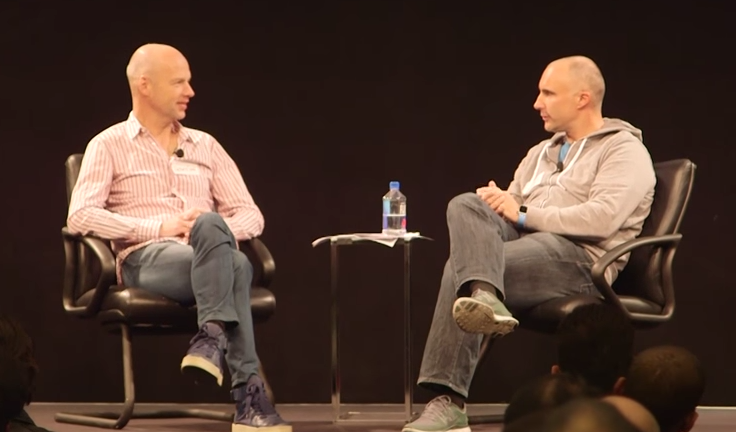
The main event was Sebastian Thrun interviewing Axel Gern, Head of Autonomous Driving at Mercedes-Benz North America:
And the encore was the ever-exciting George Hotz announcing Comma.ai’s new strategy:
Fun fact — at the beginning of George’s presentation, you’ll see him gesturing off-stage to some anonymous person to advance his slides. That was me. Working at a startup means wearing a lot of hats 😉
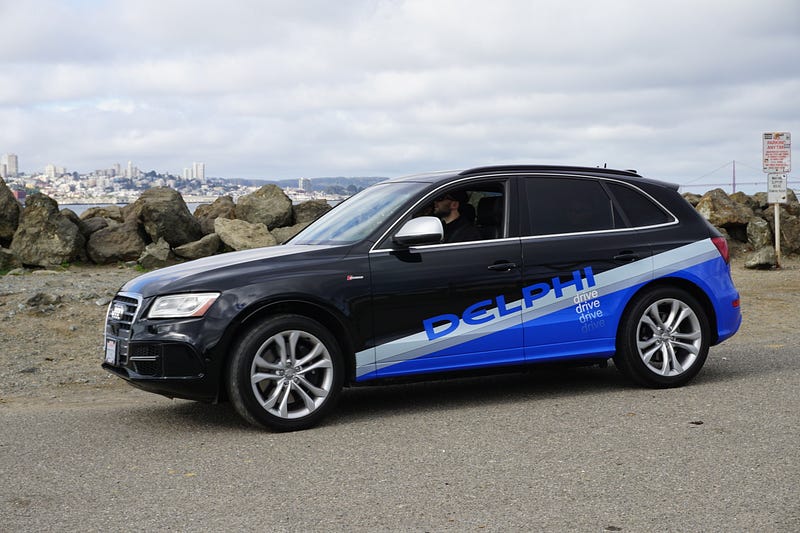
The San Francisco Chronicle got an up-close and personal look at Delphi’s partnership with Mobileye, and the self-driving cars that partnership has produced:
With the race to develop self-driving cars now at an all-out sprint, Delphi and Mobileye believe they possess an edge.
They have developed a system for crowdsourcing the hyper-detailed 3-D maps upon which autonomous vehicles rely. Millions of non-autonomous cars that use Mobileye cameras for lane keeping or collision prevention will create a constant stream of data to map roads and potential obstacles, even temporary ones such as road repair crews or double-parked cars.
Also, this:
“You can’t develop autonomous cars that just follow all the rules, because they’ll just clog cities,” [Mobileye executive Dan] Galves said. “The point is really providing the intelligence and the rules of breaking the rules, if you will — providing some human intuition into the vehicles.”
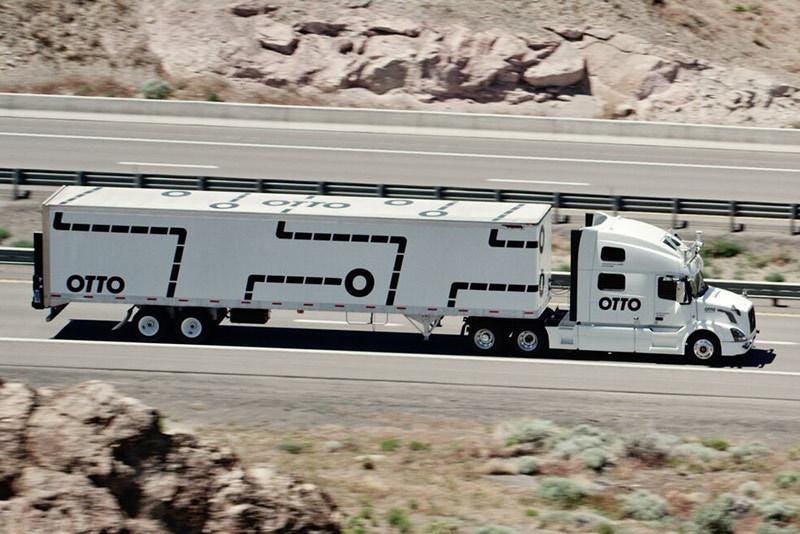
Business Insider has a great inside-baseball story on the early days of Otto, particularly the negotiations and maneuvering that took place in running their first self-driving truck tests in Nevada.
The Nevada regulatory bureaucracy is generally very amenable toward autonomous vehicles, but there’s still a certain amount of required testing and licensing.
According to the BI article, Otto had to figure out a way around that in order to keep up their frantic development pace:
Before an autonomous vehicle can be operated on the state’s roads, it must be issued a testing license and special red license plates. It has to be able to capture driving data in case of crashes, have switches to engage and disengage the autonomous systems, and have a way to alert the human operator if it fails.
To obtain a license, Otto would have had to produce evidence of 10,000 miles of previous autonomous operation and submit a truck for a self-driving test, such as the one completed by Google in 2012. It would also need to post a $5 million bond and file reams of paperwork. Even with all those requirements fulfilled, Otto’s demo would need two people seated up front, one of them poised to take over in the event of a failure.
…
Otto’s founders were faced with a stark choice. They could submit to the DMV and undertake the laborious process of modifying, testing, and licensing their truck. This would likely take a month or more, and could risk their first-mover advantage in driverless trucking. Or the engineers could continue with their test as planned.