
Ford Invests in Pivotal

Along with the rest of the public, I learned this morning that Ford invested $182.2 million in Pivotal, a software consulting firm with offices worldwide.

I am super-excited about this partnership, although I confess I don’t understand the logic for investing in Pivotal as opposed to simply contracting with them.

But Pivotal is one of the leaders in the craft of software development and in Agile product development, and I think we can learn a lot from them that will make Ford a better place to build software.

In particular, I associate Pivotal with three great software engineering practices:

Pair Programming: Everybody at Pivotal works in pairs, even the non-developers. Two people, two monitors, two keyboards, two mice, one computer.

While some people view this as inefficient, I think it’s hyper-efficient. Most people subscribe to the believe that one great software developer is worth more than two average developers, and maybe more than ten average developers.

Well, pairing together two average developers is kind of like creating one great developer, or at least one very good developer.

Even better, the developers learn from each other and leave the pairing session better than they were when they came in.

Test-Driven Development: Test-Driven Development is the art of writing a software test, then writing the production code to pass the test, and then refactoring the code so that it’s clean. Rinse, repeat.

I have found this to be my favorite way of developing software — it makes hard problems much more tractable and bite-sized.

It’s also a great way to guarantee solid test coverage, much more so than “plain old testing”.

Agile Development: Pivotal is the creator of Pivotal Tracker, a service to track project development, milestones, features, and stories.

Having Pivotal Tracker is not, by itself, a replacement for product managers, but it’s a great tool, and cheaper and faster to get started than hiring a product manager.

Even when I’ve worked as a PM, I’ve found Tracker to be a terrific tool for building software products.
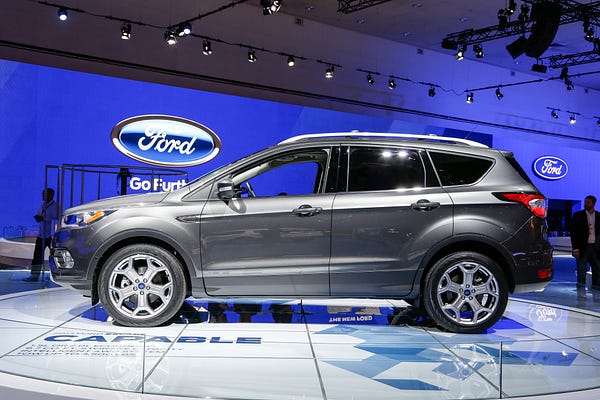
Test-Drive: 2017 Ford Escape

I took the 2017 Ford Escape for a test-drive yesterday and it is awesome!

Ford has revamped the interior, making it feel more spacious, but of course what really excited me are the self-driving features.

The 2017 Escape comes with self-parking for both left- and right-hand parallel park, and left- and right-hand perpendicular park. The driver still has to work the brakes, but the car will steer itself into the spot, including executing a three-point turn, if necessary.

The 2017 Escape also comes with true adaptive cruise control for the highway — it will slow down and speed up with traffic, at least at highway speeds.

I also noticed a little bit of steering assist for staying in the lane, and sure enough the owner’s manual describes the lane-keeping system as working above 40mph.

Of course, I’m most excited for 2020, when Ford has announced launching a Level 4 autonomous vehicle. In the meantime, I’m excited for the ADAS features on the 2017 Escape Titanium to make their way to other models. Eventually, I’d love to see these features available outside of the Titanium trim level and all the way down to base models.

This is a terrific car, and I’m not just saying that because I work for Ford. 🙂

My New Job

I am excited to write that on Monday, April 18th, I started a new job as a autonomous vehicle engineer at Ford Motor Company!

I work in Ford’s Research and Innovation Center in beautiful Palo Alto, California.

As you can imagine, I am incredibly enthusiastic about self-driving cars and I am thrilled to be working on them with one of the most advanced OEMs in the business. I am grateful to Ford for the opportunity!

Initially I was worried I might have to wind down my self-driving car posts as part of the new job, but it turns out Ford has a fairly open and well-defined social media policy.

Having taken Ford’s social media training during my first week, I will now make clear two things:

  1. I am work at Ford.
  2. I do not speak for Ford in my posts here. These posts are my own opinions and thoughts.

I will need to be a little circumspect about my new job, as a lot of the information is proprietary, but I think I am on safe ground saying that I will be splitting time between the domain controller group and the machine learning group, both on Ford’s autonomous vehicle team.

Wish me luck!

Ford Initiatives

Barron’s has an article out touting Ford’s advanced initiatives in electric and self-driving cars.

Among the Ford programs Barron’s highlights:

  • Ford Mobility — a subsidiary focused on gathering data for new business opportunities
  • Ford is the leading seller of plug-in hybrid vehicles in the U.S.
  • Ford’s fully autonomous vehicle test fleet will reach 30 vehicles by the end of 2016 — that’s more vehicles than any other company’s fleet
  • Autonomous vehicle testing in Michigan, California, and Arizona
  • GoPark — a parking app
  • GoDrive — a car-rental service
  • FordPass — a premium membership program

There’s a lot going on.

Ford and Google vs. The World

The FT has a good article breaking down the dichotomy between Ford’s approach to self-driving cars and GM’s.

For self-driving car enthusiasts, this is the Level 4 vs. Level 3 distinction.

In layman’s terms, this is the difference between fully autonomous vehicles, and vehicles that have self-driving features but require a human driver.

The Level 4 (fully autonomous) approach is championed by Google and Ford:

Ken Washington, Ford’s head of research and advanced engineering, insists there is no alternative to the company’s approach. There is “no reliable model” for handing control back to drivers in semi-autonomous vehicles at short notice, he says, as systems like GM’s Super Cruise demand in certain situations.

“If you’re told you don’t need to pay attention to something, you could go to sleep and, in a matter of a few milliseconds, you could be told you have to wake up, have your wits about you, that the vehicle needs you to take control,” he adds.

Of course, GM believes differently:

GM’s incremental strategy on self-driving cars is similar to that of most automakers, including Sweden’s Volvo. Germany’s Daimler and Tesla of the US, the electric car manufacturer, already offer systems similar to Super Cruise on some vehicles.

…

Eric Raphael, GM programme manager for Super Cruise, says the company is building up from existing systems such as cruise control because it is a “big step” to start entrusting even limited driving entirely to vehicles.

I find both approaches exciting. Ultimately, though, the sooner we can get to Level 4 and all of its attendant benefits, the better.

ADAS Test Drive: Ford Fusion

A few days ago I wrote about my visit to the local Ford dealer, where I learned about Ford’s ADAS features.

I also wrote that I wasn’t able to test-drive the features, because only the Escape Titanium has them, and the dealer didn’t have the right model in-stock.

Well, that wasn’t quite right.

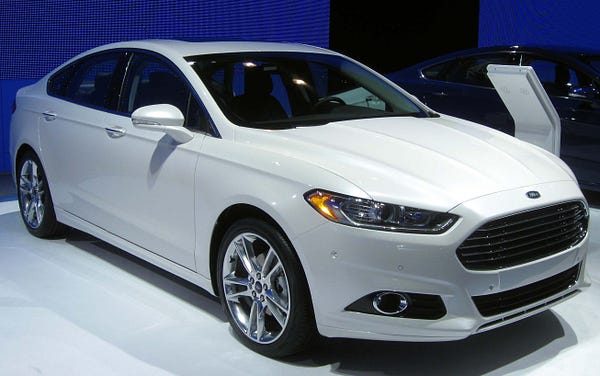
I called another dealer and learned that several other Ford models have the ADAS feature, so I drove to the next-nearest Ford dealership and test-drove a Ford Fusion Titanium with all the bells and whistles.

Parking Assist: This is so cool! The car told me when it identified a parallel parking spot next to me, had me pull up, and then took over for steering into the spot.

Adaptive Cruise Control: We passed President Obama’s motorcade on our test-drive (he was in town for fundraising), which meant that on the way back there was severe stop and go traffic. The cruise control would sense when we would approach too close to the car in front of us, and then cut off the cruise control.

Lane Assist: At speeds of 35mph or higher, the car would detect the lane lines on the road, and then alert me when I drifted.

Blind Spot Assist: The side mirrors have a blinking light if a car crept into my blind spot.

Pretty cool!

Project Nightonomy

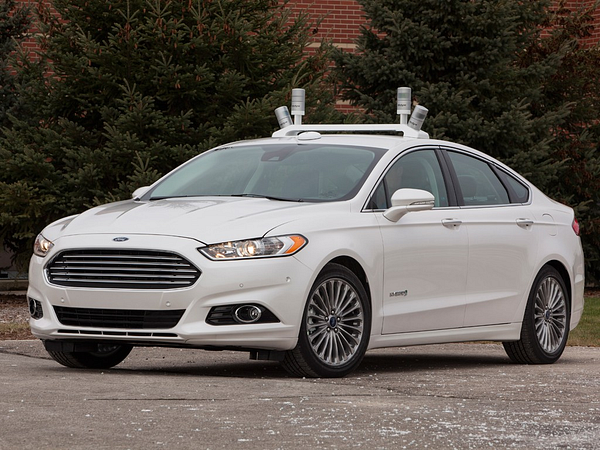
Ford just posted a kind of amazing and funny video on YouTube, showing their Fusion Hybrid self-driving vehicle making the laps around the test track at Ford’s Arizona Proving Grounds.

The catch? This exercise was at night, with no headlights.

Lidar sensing enables the vehicle to drive autonomously without any ambient light, which is pretty neat.

Of course, part of the function of headlights is so that other cars can see you, so it’s not clear if Ford would ever intentionally turn off the headlights on its production vehicles.

But it’s a pretty cool proof-of-concept.

https://www.youtube.com/watch?v=cc15Ox8UzEw

Ford’s Self-Driving Escape Titanium

Yesterday I visited my local Ford dealership to check out their self-driving car.

Ford’s most advanced ADAS (autonomous driver assistance system) features are offered on the Ford Escape Titanium, which is Ford’s premier cross-over SUV.

The features include parking assist, blind-spot information system (BLIS), adaptive cruise control, and lane-keeping.

At a feature spec level, those features match up well with Tesla, Volvo, and other car makers. I wasn’t able to test-drive an Escape to see how well the features performed on the road (my local dealer is relatively small and didn’t have the model in-stock), but I’m starting to get a better sense of how ADAS features exist in the world today.

It seems that while Tesla gets a lot of the best press coverage for self-driving technology, the gap between Tesla and other manufacturers is pretty small.

Ford’s CTO on Autonomous Vehicles

Automotive News has a short and fun interview with Raj Nair (who’s LinkedIn title is “Executive Vice President and Chief Technical Officer — Global Product Development at Ford Motor Company”).

The write-up is mercifully concise. Here’s a highlight:

The human body is an amazing array of sensors — two great optical sensors, auditory sensors and balance sensors that provide information that the brain doesn’t only perceive but also filters.

To reproduce all of that with a combination of lidar [a kind of radar based on laser beams], radar and ultrasonic sensors is a big challenge. Then there are the algorithms. They are reasonably straightforward for the basic aspects of driving. If you can see the white lines it’s not that hard to steer the vehicle between them. But for all the other things that your mind works through when driving, you need to be prepared for all of them. This increases the level of sensor capability processing you need.

Read the whole thing.