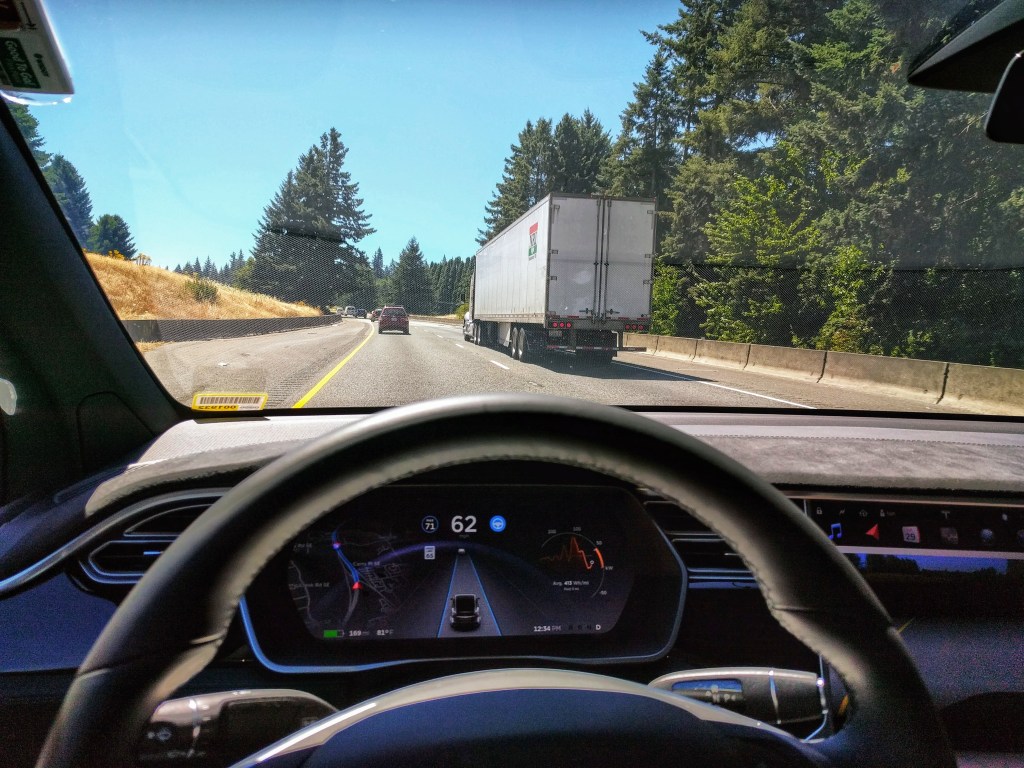
Ben Hommerding, another former Udacity colleague, continues his series reviewing his Tesla Model 3. He and his wife just took a 500-mile road trip. Autosteer worked great, Superchargers worked great, the adaptive cruise control braking was a little jerky.
JJRicks appears on The Autonocast to discuss the runaway Waymo. He estimates that Waymo One is operating 20-30 driverless AVs in the Chandler, Arizona, geofence. I assumed there were more.
Apple and Google both want to replace car keys with phones, and it seems like a good idea. But they’re having trouble getting the auto manufacturers to participate. I checked into a Hilton Garden Inn a few years ago and bypassed the front desk, because I could open the door with my room key. It was pretty great. Thanks again, Future of Transportation newsletter.
Last summer, I missed TuSimple’s announcement of plans for a future nationwide self-driving truck network. This analysis suggests that would be extremely hard to pull off. But I guess that means if they do pull it off, they’ve developed a huge competitive advantage.
The first drone (“unmanned aerial combat vehicle”) flew 19 years ago, in May 2002. It was called the X-45A and supported (required?) “significant remote piloting”. The first two models are now in the Smithsonian and an Air Force Museum. I have mixed feelings about all of this.
— A Boring Revolution (@BoringPrufrock) May 25, 2021
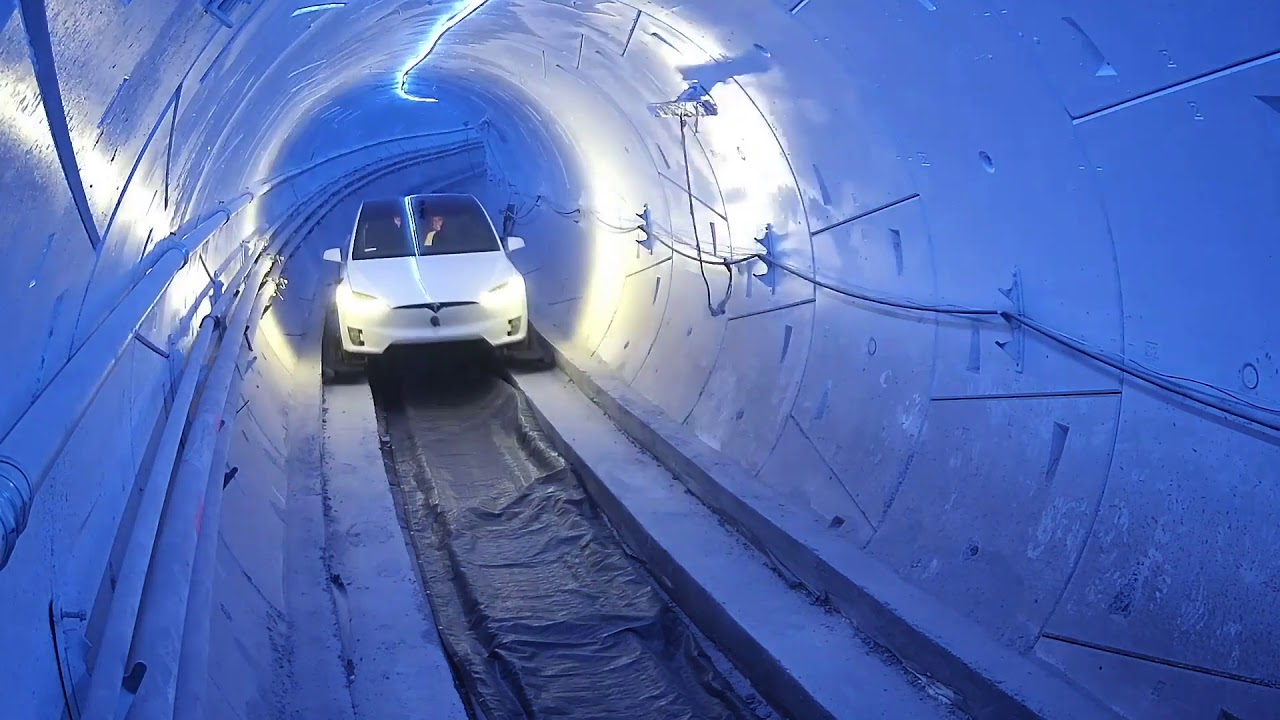
What amazes me about this is The Boring Company’s ability to build infrastructure.
Sure, there are all sorts of reasons this initial project is lame.
“The goal of The Boring Company’s $52.5 million project is to turn a 45-minute walk into a two-minute trip, but testers pointed to inefficiency in the system as they waited for cars to arrive at the stations, and cars became backed up in the tight underground spaces between tunnel roads.”
But they built a 1.7 mile tunnel underneath downtown Las Vegas for $52.5 million! You can’t even buy a startup these days for $52.5 million.
The state of California has spent billions of dollars and fifteen years on a high speed rail line that is not yet running, and may never run. New York City spent fifteen years and over four billion dollars constructing three stops on the Second Avenue Subway.
The Boring Company built the Las Vegas loop in three years, for 1% of the cost of those other projects.
The Las Vegas loop isn’t the point. The point is the boring. The point is that they can build.
FastCompany‘s write-up of the 2020 Nagorno-Karabakh (Azerbeijan-Armenia) War, which I only dimly knew was even a thing, posits that autonomous “kamikaze” drones provided Azerbeijan with a comprehensive victory of Armenia.
That sent me down a Wikipedia rabbithole, until I arrived at the concept of “loitering munitions.”
“A loitering munition (also known as a suicide drone or kamikaze drone) is a weapon system category in which the munition loiters around the target area for some time, searches for targets, and attacks once a target is located. Loitering munitions enable faster reaction times against concealed or hidden targets that emerge for short periods without placing high-value platforms close to the target area, and also allow more selective targeting as the actual attack mission can be aborted.”
Although the FastCompany article might oversell the value of these drones to the 2020 war, the concept seems pretty Terminator-esque.
The canonical loitering munition appears to be the IAI Harop and IAI Harpy drones, from Israel, although Wikipedia lists about 30 countries that have designed some version of a loitering munition.
The idea of a drone that can silently hover in the sky and attack as soon as a person steps out of a bunker is pretty scary, but I suppose it’s not radically different than missiles or bombs or attack aircraft. War is awful.
Perhaps that saving grace comes in the last half-sentence of the Wikipedia quote. The more intelligent the drones become, hopefully the less likely civilian casualties become.
SberAutoTech, the automotive arm of a Russia’s state-owned Sberbank, is building a self-driving vehicle. I’m tempted to overlook this as yet another concept car. But Yandex has quietly accumulated (or at least announced) more autonomous miles than any other autonomous vehicle company save Waymo. In my mind, that gives Russian companies more credibility, at least by osmosis.
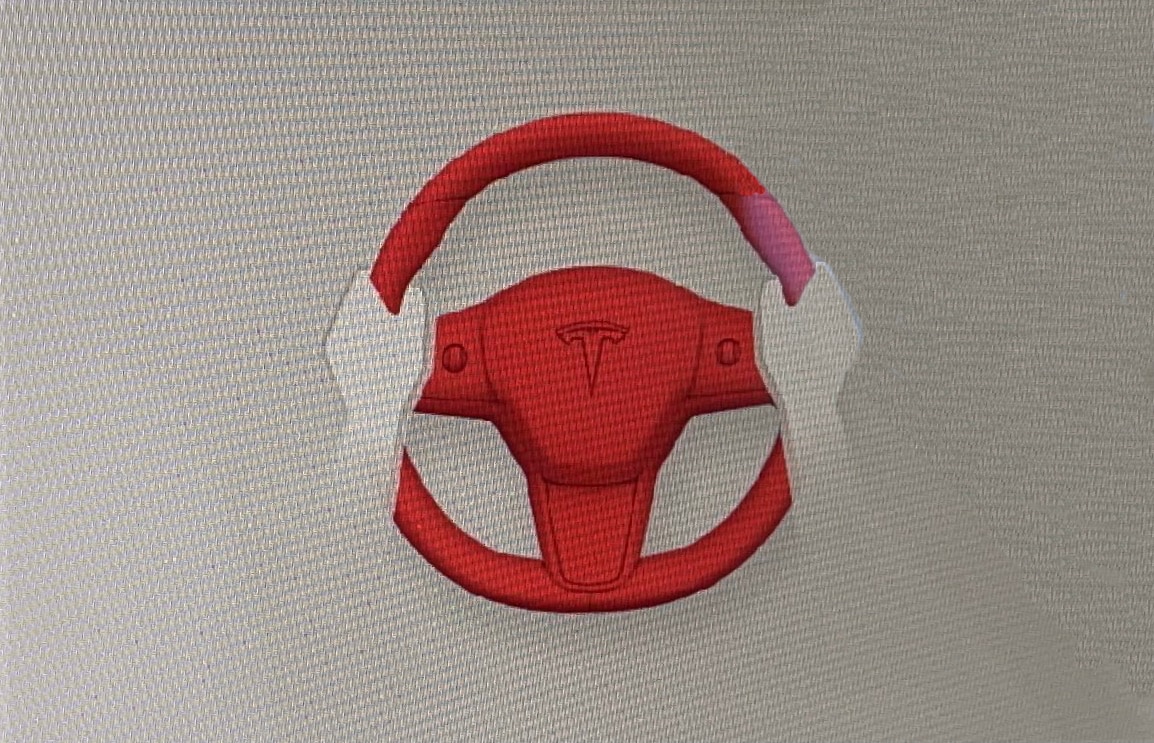
The cabin camera above your rearview mirror can now detect and alert driver inattentiveness while Autopilot is engaged. Camera data does not leave the car itself, which means the system cannot save or transmit information unless data sharing is enabled. To change your data settings, tap Controls > Safety & Security > Data Sharing on your car’s touchscreen.
This is an important change for Autopilot. As Kirsten Korosec reports on TechCrunch:
“Until now, Tesla has not used the camera installed in its vehicles and instead relied on sensors in the steering wheel that measured torque — a method that is supposed to require the driver to keep their hands on the wheel. Drivers have documented and shared on social media how to trick the sensors into thinking a human is holding the wheel.”
This is a move in the right direction that will reduce the misuse of Autopilot and risk to other drivers on the road. Although I’d love to learn more detail about the functionality of the Tesla DMS.
“Beginning with deliveries in May 2021, Model 3 and Model Y vehicles built for the North American market will no longer be equipped with radar. Instead, these will be the first Tesla vehicles to rely on camera vision and neural net processing to deliver Autopilot, Full-Self Driving and certain active safety features.”
Credit to Tesla for demonstrating the courage of their convictions. Like many outsiders, I doubt that this is the best step forward, but it’s a step consistent with Elon Musk’s long track record of public statements that sensors beyond cameras are unnecessary.
The logic has always been straightforward – humans can drive with just vision (perhaps lightly augmented by the senses of hearing and feel), and cars should be able to do that as well.
The countervailing perspective is that a vision-only approach is theoretically, and probably eventually, possible, but additional sensors will achieve self-driving capability much faster, and more safely. By way of analogy, humans can move across the ground with nothing but our own two feet, but we discovered that we can move much faster with the aid of tools like bicycles, cars, and roads.
Tesla is encountering a lot of resistance from industry experts who are unhappy, I think justifiably so, about Tesla’s lack of a driver monitoring system. Combined with the hype around Tesla’s misleadingly named, “Full Self-Driving” feature set, some Tesla drivers are abdicating their driving responsibility and endangering other cars on the road.
I distinguish the lack of a driver monitoring system, which is problematic for the public writ large, from this move toward a vision-only approach, which is a particular technology approach that Tesla is taking. I’m excited to see how it works out for them.
This is a very narrow announcement, but my wife forwarded me an email from an entity I’d never heard of called Peninsula Clean Energy. They will reimburse $200 toward electric car rentals for residents of San Mateo County, California, which we are. That’s enough for a 2-3 day rental.
They recommend Turo, although they’ll reimburse from any rental agency. Turo is a good place to start, because they have a healthy collection of EVs (at least in our area). Unlike traditional rental agencies, Turo specifies exactly which car you’re renting. So there’s no risk of renting an electric car, only to show up at the rental counter (Turo doesn’t even have rental counters, it’s more like Airbnb for cars) and learn you’ve been “upgraded” to tank.
The main caveat here is that I’m unfamiliar with Peninsula Clean Energy. They seem reputable, though. Apparently they’re “San Mateo County’s official electricity provider.” I would’ve guessed that was PG&E, but perhaps PG&E only wholesales the electricity and PCE delivers the electricity. I’m unsure.
And of course this isn’t relevant to you if you happen to live outside the very narrow boundaries of San Mateo County. But maybe there is a similar program where you live? Worth looking.
It’s small – currently there are only two of us. So you’d get to join and build your dream team, almost from the ground up. My colleague, Sean, is a much better engineer than me, but I’m better at using emojis than he is. Between the two of us you’d start with a rock solid foundation.







 David Silver